AT A GLANCE: Here are key things you will learn about urinary incontinence from Janelle Evans, MD, a urogynecologist at Reid Health, in this article:
- Stress, urge and mixed incontinence are among the most common types of urinary incontinence, and symptoms can differ depending on the cause
- Keeping a bladder diary can help track urine leakage, fluid intake and possible bladder irritants such as caffeine and alcohol.
- Treatment often starts with conservative options, including lifestyle changes, pelvic floor physical therapy and, when appropriate, medications or other therapies.
- Kegel exercises can strengthen pelvic floor muscles and may improve bladder control, particularly for people with stress urinary incontinence.
- Talk with your doctor if urine leakage is worsening, causing pain or changing your everyday activities, such as exercising, traveling or leaving home.
A laugh, a sneeze, a hard workout or even the sudden urge to get to the bathroom can lead to an unwelcome surprise: urine leakage. For millions of people, urinary incontinence can interfere with exercise, sleep, work, travel and other parts of daily life.
But embarrassment can make urinary incontinence difficult to talk about—even with a physician. Some people may also assume that leaking urine is simply an unavoidable part of getting older or something they must learn to live with.
Urinary incontinence, which is the loss of bladder control that can cause urine to leak unintentionally, can affect people at different stages of life and for different reasons. And while it becomes more common with age, there are several types of urinary incontinence and a range of ways to manage or treat symptoms.
The AMA’s What Doctors Want Patients to Know™ series gives physicians a platform to share what they want patients to understand about today’s healthcare headlines.
In this installment, Janelle Evans, MD, a urogynecologist at Reid Health, took the time to discuss what patients should know about urinary incontinence symptoms, treatment and prevention.
Reid Health is part of the AMA Health System Member Program, which provides enterprise solutions to equip leadership, physicians and care teams with resources to help drive the future of medicine.
Urinary incontinence is urine leakage
“Everyone is most likely to experience urinary incontinence for different reasons,” Dr. Evans said, noting that “urinary incontinence is the loss of urine when you are not intending to lose urine.”
While “there are many different types of urinary incontinence, the most common that I deal with are stress incontinence, which is coughing, sneezing, laughing type of incontinence,” she explained. “Urge incontinence, which is more along the spectrum of overactive bladder of either urinating too frequently, urinating a lot at night and also not having the ability to stop urinating from happening when you have that urge to go.”
“Then a combination of both or mixed incontinence is the majority of what I deal with in urogynecology,” Dr. Evans noted. “Men tend to have more bladder outlet obstruction, and they have more retention type of symptoms that lead to the incontinence that they get.”
Prevalence of urinary incontinence changes as you age
“The prevalence changes as you move on in life. So, before menopause, if you ask everybody, it ends up being somewhere along the line that 20% to 30% of women will have complaints significant enough to mention with regards to incontinence.
“And most of the time, that's more along the line of stress incontinence,” she added. “Then post menopause, we see a really big uptick in overactive bladder and urge incontinence patients, as well as worsening of stress incontinence, and that's more along the lines of 50% of people who are surveyed.”
Urinary incontinence is diagnosed in different ways
While urinary incontinence is “diagnosed in a lot of different ways, it is typically the patient’s history, their experience over time and the way the symptoms have progressed that are super important,” said Dr. Evans, “because there’s a lot of nuances behind different types of incontinence and where you might start treatment plans based on initial symptoms and the progression over time.”
“From an objective standpoint, with stress incontinence, we want to see them leak and most people don’t want you to see them leak,” she noted. “But doing an exam and making sure that you can see what the problem is from a stress incontinence standpoint is really important.”
“Overactive bladder and urge incontinence, a lot of times we have to do additional testing if it’s an unclear or a complex picture,” Dr. Evans said. For example, with “urodynamic evaluation, it’s looking at the way that the urine flows. We have a thing called a cystometrogram that we use to decide if this is a normal flow pattern or not or if there is any obstruction.
“Then also, making sure that there’s nothing else that’s complicating the incontinence, for example, having a prolapse or something else that’s there that may make it worse,” she added.
Keep a bladder diary to track urine leakage
“Anytime we’re doing additional testing, a bladder diary is absolutely essential because you need to see what the average is prior to filling the bladder and making them do different things to try to get them to leak,” Dr. Evans explained. “You want to see what their baseline is when they’re at home and they’re not nervous because they’re in an office in a weird chair and all of that.”
“The other thing that bladder diaries are really helpful for is that there’s a complex picture and you’re not quite sure what’s going on,” she said. For example, if there is “a patient who has a lot of medical issues that are in the process of being handled. A lot of times that will confuse the picture.”
“Having an accurate bladder diary is really helpful, including your fluid intake and what kinds of fluids,” Dr. Evans said, “because a lot of people don’t realize many bladder irritants they’re consuming during a day, such as caffeine, alcohol and cigarettes, until they actually write it down.”
Bladder irritants are foods, drinks or substances that can stimulate the bladder lining, trigger sudden muscle contractions and cause urgency, frequent urination or leakage. Bladder irritants include caffeinated beverages, alcohol, carbonated drinks, citrus and acidic fruits, spicy foods, fruit juices, sweeteners and treats, and supplements and medications.
Treatment for urinary incontinence begins conservatively
“We like to start conservatively with treatment for urinary incontinence if we can,” Dr. Evans said. “That can include dietary changes, such as minimizing the amount of bladder irritants that you’re consuming, as well as smoking cessation and doing the bladder diaries to try to keep track of when it is happening.”
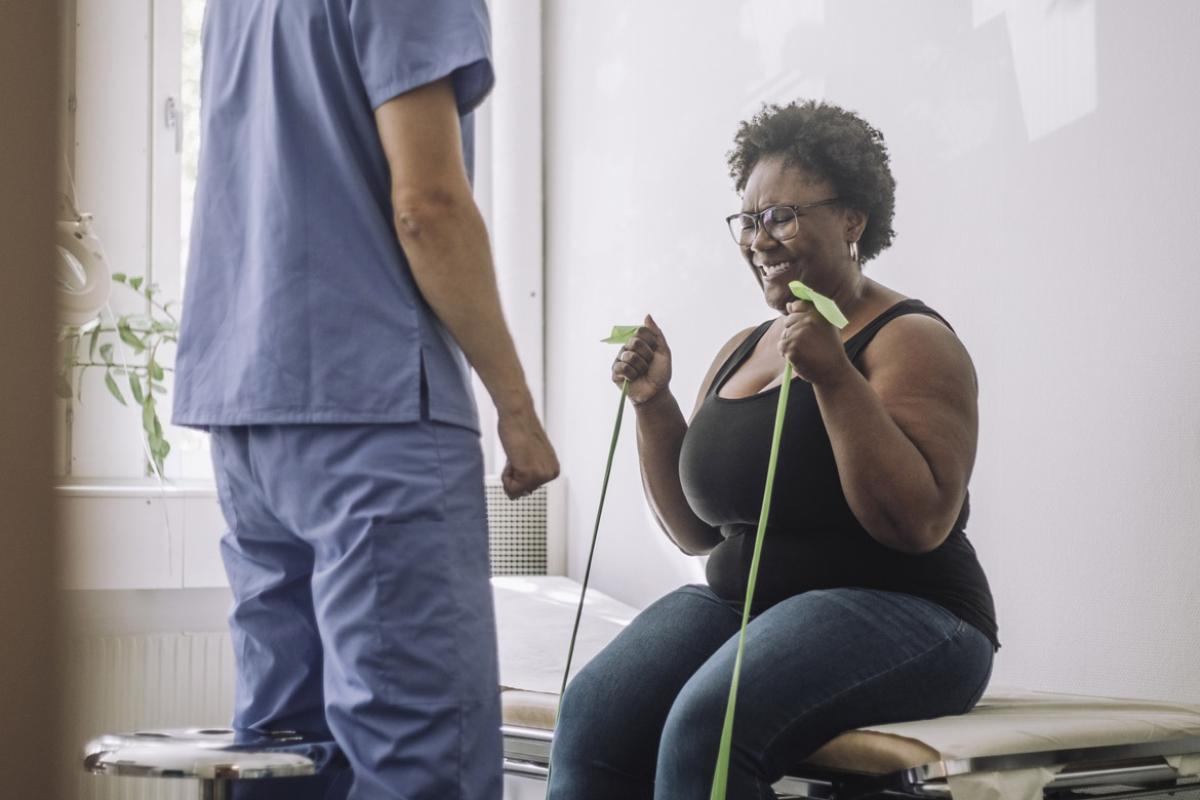
“Physical therapy is also an amazing first line option for most types of incontinence,” she said, noting “it doesn’t necessarily fix all of the incontinence, but it will definitely improve it. For people who have mild to moderate symptoms of their incontinence, it’s nice to have that as an option.”
“When we go beyond that, there are different types of medications that we use that are primarily for overactive bladder,” Dr. Evans said. That’s “because overactive bladder is more of a neurologic and medication issue whereas stress incontinence is more of an anatomy issue. It’s a lack of support of the urethra where the urethra can’t close properly.”
“Overactive bladder medications are very helpful with regards to the urge incontinence,” she said, noting “there are two different classes of those, and they act on different receptors in the bladder.”
“The older class of medications with anticholinergics, there's a bunch of those out there, but everybody's going to respond to one differently than the other,” Dr. Evans explained. “They do carry a risk of early dementia, cognitive issues, dizziness, so we try not to prescribe them in older people.”
“The other class of medications is beta-3 agonists. They have a lot fewer side effects than the older medications, a lot less contraindications as well,” she said. “From there, we have several different advanced therapies for when medications aren’t quite making a big enough difference.”
“Those include neuromodulation—which is like a pacemaker for the bladder—and Botox injections for the bladder. It’s going to stun some nerves and muscle fibers,” Dr. Evans said. “Then PTNS, which is posterior tibial nerve stimulation. That is almost like a little acupuncture needle that goes behind the bone in the middle part of the ankle.
“That has referred signals back to the bladder, so it basically controls it from a retrograde pathway,” she added. “It’s a little more time intensive, but it’s a really nice option for anybody who really doesn’t want to go to the OR for any procedures.”
“We have a lot of solutions for all the different types of urinary incontinence and not one thing is great for everybody,” Dr. Evans said, emphasizing that even if one treatment doesn’t work for your urinary incontinence, there are other options we can try. There is a urinary incontinence treatment option out there for you, so “it’s not hopeless” if one option doesn’t work.

Losing weight may prevent urinary incontinence
“Weight loss is one thing that has been shown pretty consistently in the literature that for every percentage of weight loss you have, you’ll notice an improvement in overactive bladder symptoms,” Dr. Evans said. “For stress incontinence, the data’s a little mixed on that with regards to weight loss.”
“We do know the more you weigh, the less the stress incontinence surgeries are going to work for you, but it doesn’t seem to be correlated with losing weight and decreasing stress incontinence,” she said.
Try Kegel exercises for bladder control
Kegel exercises can help strengthen the pelvic floor muscles, which support the bladder and help control urination. They may be especially helpful for people with stress urinary incontinence, which causes urine leakage during activities such as coughing, sneezing, laughing or exercising.
The first step is identifying the right muscles. One way to recognize them is to imagine trying to stop the flow of urine or prevent passing gas. Once those muscles are identified, tighten them for several seconds, relax and repeat. The goal is to work the pelvic floor without tightening the abdominal, thigh or buttock muscles.
But technique matters. Regularly stopping urine midstream is not recommended as an exercise because it can interfere with normal bladder emptying. Instead, Kegels should be practiced when the bladder is empty and incorporated into a regular routine.
Patients should also know that improvement may take time. Pelvic floor exercises often need to be performed consistently for weeks or months before symptoms improve. A physician or pelvic floor physical therapist can help confirm that the exercises are being done correctly and recommend a routine based on the type and severity of urinary incontinence.
If Kegel exercises do not help—or if urinary leakage is worsening, painful or accompanied by other symptoms—patients should talk with their physician about other possible causes and treatment options."
Be your own best advocate
“A lot of times people will go without treatment because they don’t realize that there’s something wrong enough that they need to ask about in that respect,” Dr. Evans said. “From an advocate standpoint, patients and family members should be their own best advocates but just knowing that leakage is almost always—at least partially, if not completely—solvable, so if there are any concerns whatsoever about it, it’s really important to bring it up.”
“Also, don’t take no for an answer. It is not just a normal part of aging,” she said. “Sure, technically, it is a normal part of aging, but that doesn’t mean that you actually have to live with it. There are a lot of things that are a normal part of aging that we treat with medications.”
Contact your doctor if urinary incontinence is disruptive
“If you’re changing your everyday lifestyle, for example, I’m not going to the gym anymore because I’m embarrassed because I’m not sure if I’m going to leak on the seat at the gym or I can only go five miles from home because I’m going to get a sudden urge and I’m going to change my pants, it’s things like that,” Dr. Evans noted. “If your bladder’s super full on an occasion and somebody makes you laugh too hard and you have a little leak, sometimes that’s not enough for anybody to be particularly bothered by.
“But everybody’s an individual, so your amount of bother is the differentiation from what you expect as well,” she added. “We have people come in who their only stress incontinence is during significant exercise, and that’s bothersome enough for them.”
Even if “they’re not leaking any other time of the day or the week, that means enough to them that it’s making them change something in their lifestyle and that’s when we decide that we’re going to do something,” Dr. Evans said.
You don’t have to live with urinary incontinence
One thing Dr. Evans wants everyone to know about urinary incontinence is that you don’t have to live with it in silence.
“A lot of people go on and minimize the issues as long as they possibly can until it’s bad enough to actually have your lifestyle significantly impacted,” she said. “If you’re worried about it and things seem to be getting worse, it’s definitely worth saying something to everybody because if you bring it up with your friends, your friends may be experiencing it too. That kind of camaraderie gives people a little bit more oomph to go out there and try to get a treatment for it.”