
Presented with an opportunity to educate local high school students about its new cancer detection tool and grow the health care workforce, Bayhealth decided to get creative.
The Ion by Intuitive® robotic bronchoscopy system has made inroads in detecting and diagnosing lung cancer, a disease that causes 160,000 deaths a year in the U.S. In fact, 20% of lung cancer deaths are preventable, but only 30% of lung cancer cases are diagnosed at the early stages.
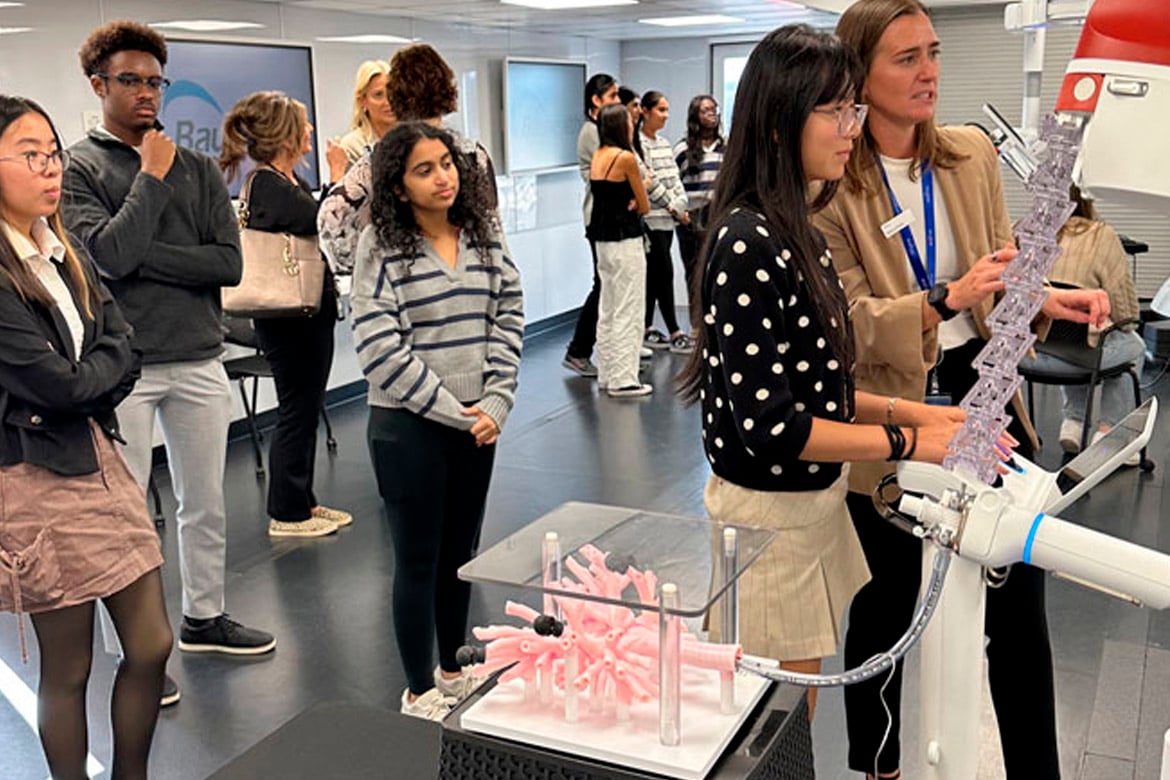
In use at Bayhealth Hospital’s Kent Campus, the Ion enables physicians to identify and biopsy lung nodules that are small and difficult to access. To celebrate this recent investment, Bayhealth acquired Intuitive’s Thoracic Oncology Mobile Experience (TOME) truck to host a hands-on tutorial for students interested in the Ion and other technologies.
The event was held to market the Ion technology’s integration into Bayhealth’s lung audio clinic, according to Bilal Shahid Bangash, MD, a pulmonologist and critical care physician at Bayhealth.
“With the introduction of this technology in our system, we're going to have improved diagnostic yield. We'll be seeing more lung nodules in our clinic, and most importantly, we'll be able to diagnose lung cancer earlier and improve survival,” Dr. Bangash explained in an interview with the AMA.
Bayhealth is a member of the AMA Health System Program, which provides enterprise solutions to equip leadership, physicians and care teams with resources to help drive the future of medicine.
Students get hands-on experience
The Ion tool complements Bayhealth’s Da Vinci® robotic surgery program, “which enables surgeons to perform minimally invasive procedures—including the removal of cancerous lung nodules—with greater precision and faster recovery times,” says a Bayhealth press release.
Inside the Thoracic Oncology Mobile Experience, an 80,000-pound thoracic oncology mobile education truck, students learned all about the Ion robotic bronchoscopy and Da Vinci robotic surgery platforms and how physicians use these tools to diagnose lung nodules in clinic.

“In the earlier part of the day, we had students from different high schools come and see the technology firsthand, up close,” said Dr. Bangash.
With the integration of the Ion technology, “we’ve been able to get more biopsies, detect the lung cancer earlier and then help these patients with early treatment and cures,” he said. With that insight, students gained awareness of the importance of lung cancer screening and how the integration of this new technology is helping to increase diagnostic yield of cancer and improve survival rates.
The young participants also had an opportunity to speak with physicians, surgeons and respiratory care experts who work with these technologies. They also got some hands-on experience with the model under guidance from the experts.
By sharing Bayhealth’s experiences with students, the anticipation is that this will pique interest in health care careers.
“Watching students engage with this technology was truly inspiring,” John Shevock, ACHE, oncology service line senior director and executive director of the Bayhealth Cancer Institute, said in the Bayhealth statement. “It’s our hope that today’s experience sparks a lasting interest in health care and shows these young people that they can build meaningful, rewarding careers right here in Delaware.”
The Ion’s impact on community wellness
Many people hear about this type of technology, but they don't really understand what it is or how it works. This is especially true for students who are interested in this field.
“The main thing we noticed in the event is we were able to help demystify a lot of this medical and robotic technology,” said Dr. Bangash, who offered his own perspectives and experiences with the Ion technology.
Going into a career where there are all these new technologies or a high prevalence of cancers and diagnoses can be daunting, Dr. Bangash admitted.
Events like the Thoracic Oncology Mobile Experience classroom “make them understand what exactly is going on, what their role might be moving forward, and how they can really help the community,” he said of the student participants.
Bayhealth hosted an additional tour of the Thoracic Oncology Mobile Experience truck to educate physicians, donors, team members and community partners on this lung cancer care technology. The hope is the education module for lung cancer technology will continue to grow “and we'll have more interest from the community as well,” said Dr. Bangash.
A tool like the Ion can have a significant impact on community wellness, he emphasized. Hosting educational modules is useful for spreading information about the Ion technology to the community, to encourage screening and boost rates of early detection.
“We do encourage everyone to get their screening done if they're at risk so that we can offer that help and reduce the incidence of lung cancer and improve overall survival,” Dr. Bangash said.
The goal is to continue to build on the number of patients who are diagnosed early for lung cancer.
More work needs to be done with oncology and cancer detection, he said, but educational platforms associated with these technologies can identify what gaps remain as Bayhealth continues to find more lung cancer and ensure early treatments for patients.



