Addressing the nation’s drug-overdose epidemic requires teamwork. At Nashville-based HCA Healthcare, physicians, nurses, administrators and community partners work together to improve care and prevent harm at the bedside, in the exam room and even in patients’ home medicine cabinets.
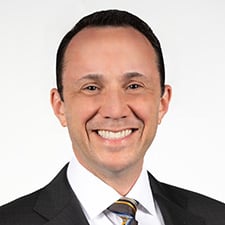
“Front-line physicians and health professionals are the backbone of innovation,” said Randy Fagin, MD, senior vice president and chief quality officer at HCA Healthcare. “Our health system encourages physicians, nurses and others to bring forward ideas for improving care, using a structured system of committees and workgroups to evaluate, test and spread successful practices across its hospitals.”
HCA Healthcare is part of the AMA Health System Member Program, which provides enterprise solutions to equip leadership, physicians and care teams with resources to help drive the future of medicine.
“Hospitals can’t just focus on what happens during a patient’s stay. What happens before and after people leave is also important”, said Dr. Fagin. “Our health system cultivates an environment in which local ideas are brought forward, piloted and refined before being scaled across our network of 190 hospitals and approximately 2,500 ambulatory sites of care. The strongest solutions are those that take hold organically because they matter to our nurses, our physicians and make a real difference for our patients,” said Dr. Fagin.
HCA Healthcare’s strategy operates on several fronts: reducing leftover medications in communities, improving prescribing practices, leveraging large-scale data and technology, supporting education for physicians and other health professionals, and building strong community partnerships.
“We are public health partners with our patients,” Dr. Fagin said in an interview with the AMA.
Although opioid-related overdose deaths have fallen in recent years, the drug-overdose epidemic remains widespread and increasingly complex, driven by illegally made fentanyl and other toxic substances that make up an unpredictable illicit drug supply, according to a recent report from the AMA.
The “2025 AMA Report on Substance Use and Treatment: Progress, Policy and Future Directions” (PDF) outlines five areas of concern and actionable steps to address the nation’s overdose epidemic and increase access to evidence-based treatment to patients with pain and substance use disorders.
Going beyond hospital walls
HCA Healthcare is responsible for delivering care through about 47 million patient encounters annually, which is why its stewardship needs to go beyond hospital walls.
“It has to be about creating systems that benefit our patients and communities and not just implementing a program,” said Dr. Fagin. “HCA Healthcare approaches opioid stewardship as a closed-loop system. During clinical care, we aim to reduce unnecessary exposure to opioids and following care we are working to help remove unused medications from our communities.”
“This isn’t contingent on one single program or solution,” he said.
HCA Healthcare has the capacity to pilot ideas across its health care ecosystem and test them in different environments. One prime example of this is “Crush the Crisis,” an initiative that offers members of the community an opportunity to safely and conveniently dispose of unused or expired medications.
The program began after an orthopaedic surgeon and a nurse began discussing steps that could be taken to reduce the risk of misuse of opioid medications in patients’ homes. What started as a local effort has since grown into an enterprisewide initiative. Today, HCA Healthcare’s annual fall event for medication take back and disposal is in October. It aligns with the U.S. Drug Enforcement Administration’s National Take Back Day, which happens twice a year in April and October, with more than 4,000 sites participating nationwide. The DEA’s 30th National Take Back Day will take place this year on Saturday, April 25.
In HCA Healthcare’s home state of Tennessee, nearly 4,000 people died from drug overdoses in 2023, a figure that “exceeds deaths from traffic accidents and homicides combined,” Dr. Fagin wrote in an op-ed published in The Tennessean in December. “These statistics underscore why this work is so important, and how working together, each one of us, can impact so many,” he added.
Working alongside local law enforcement, HCA Healthcare has expanded drug take-back efforts nationwide, collecting more than 108,000 pounds of medications—nearly 14 million doses—since launching Crush the Crisis as an enterprisewide initiative in 2019.
“The program has succeeded because it makes it easy for people to do the right thing,” said Dr. Fagin.

Grassroots event leads to big changes
HCA Healthcare’s TriStar Centennial Medical Center in Nashville was the first site to pilot this endeavor.
“This local event scaled across HCA Healthcare has led to safer communities,” noted Dr. Fagin.
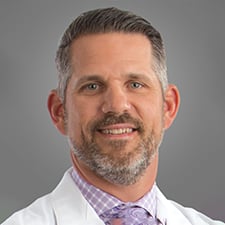
Jeffrey T. Hodrick, MD, is an orthopaedic surgeon at Southern Joint Replacement Institute, an affiliate of HCA Healthcare’s TriStar Centennial Medical Center.
Aware of the DEA’s efforts, Dr. Hodrick realized his own community didn’t have a drug take-back day. Working with colleague Sara Stedman, RN, Dr. Hodrick explored how TriStar Centennial Medical Center could play a more proactive role in managing the drugs they prescribed, while educating their patients about the importance of disposing of superfluous medications. From this idea, HCA Healthcare’s first “Crush the Crisis” take-back day took place in 2017.
“We had full support locally, both at our hospital and HCA Healthcare’s TriStar Division,” said Dr. Hodrick, who worked with Nashville police to dispose of the medication.
During that first event, they collected 21 pounds of medication.
To spread the word, his team engaged with colleagues at the hospital and the Nashville community.
“Patients need to know these resources are available. Social media helps, but word of mouth is still powerful. When someone encourages you to think about it, then you may be more likely to attend,” he said.
The more sites of care that participate, the more effective the program is, Dr. Hodrick added. Across HCA Healthcare’s 19-state footprint, many different hospitals—and sometimes freestanding emergency rooms—can serve as drop-off sites with dedicated receptacles. Typically, there’s just one drop-off point at each individual hospital campus, even if the campus is large.
Each participating location appoints a local champion—an emergency physician, a pharmacist, hospital administrator or a clinical leader—who partners with local law enforcement to ensure a successful, DEA-aligned take-back event.
This type of leader was crucial in scaling up such an event, said Dr. Hodrick, the original physician champion for “Crush the Crisis.” Once it expanded from a single-site initiative in Nashville to the entire health system, Dr. Fagin stepped into the role of enterprise physician champion, to guide and scale the effort nationally.
While the facilities hold the events, law enforcement oversees the collection and disposal of medication. Hospital colleagues are present, but they don’t touch or manage the medications, he said.
“This is a low-cost intervention with significant impact,” Dr. Hodrick said. “Participation is simple and provides an opportunity to educate community members about the risks associated with retaining unused medications in the home.”

A better approach after surgery
“On the front end of this work is opioid stewardship—ensuring patients receive appropriate, evidence-based pain management,” Dr. Fagin said. At HCA Healthcare, this approach is now part of everyday clinical practice, including efforts to improve pain control.
In 2019, the health system piloted its Enhanced Surgical Recovery (ESR) program, a patient-centered, multidisciplinary approach that enables patients to proactively manage their recovery.
ESR was adapted from the Enhanced Recovery After Surgery protocol, an evidence-based model that includes up to 21 components. HCA Healthcare’s ESR program focuses on six tactics identified as having the greatest impact on patient outcomes, based on clinical research, peer‑reviewed literature and HCA Healthcare’s own internal data.
One of those tactics, multimodal pain management, prioritizes nonopioid medications and other pain-management techniques. The approach helps patients recover faster, leave the hospital sooner, and have fewer complications or return visits.
Physicians at HCA Healthcare adopted this approach because the data showed it works, said Dr. Fagin. The multimodal approach to addressing postsurgical pain can speed recovery. This approach is one that works to tailor treatments to patients’ individualized needs.
Tallying data from more than 140,000 joint replacements and other surgeries at nearly 170 HCA Healthcare facilities, the ESR protocol contributed to a 2.1-day drop in length of stay and a 54% decline in 30-day readmissions. Opioid prescriptions also fell.
Dr. Hodrick has long been focused on improving pain management and recovery methods.
Advances in anesthesia and multimodal pain management—not just surgical techniques—make faster recovery possible, he said. He noted that strong pain medicines alone aren’t always very effective and can cause side effects.
“It’s better to mobilize and avoid all the side effects that come with that medicine,” said Dr. Hodrick.
He has collaborated with his colleagues at the Southern Joint Replacement Institute to promote multimodal pain management and find ways to help patients recover faster. These efforts have helped make it possible to move many surgeries from the hospital to outpatient settings, said Dr. Hodrick.
The surgical recovery program provided guidance, tools and documentation to help improve patient care and collect data. HCA Healthcare researchers analyze these results carefully, adjusting for factors such as age, community differences and other variables to ensure accurate comparisons. Because the results have been so strong, these practices have become part of everyday medical care.
“Physicians adopted them because the evidence showed they worked,” noted Dr. Fagin. “Physicians and nurses saw the impact on our patients. And, from that data changed their practice to make it a part of how they care for our community.”
Data plays a central role in HCA Healthcare’s approach. Because the organization operates hundreds of hospitals and treats millions of patients annually, it can analyze large amounts of clinical information to identify best care practices and share findings with the broader medical community.
“By centralizing our clinical data and leveraging the clinical workforce on our corporate campus, we're able to learn at scale and then turn that learning into enterprise knowledge in a systematic way that benefits all of the communities we serve,” Dr. Fagin said.
The AMA believes that science, evidence and compassion must continue to guide patient care and policy change as the nation’s drug-overdose epidemic has become a more dangerous and complicated polysubstance overdose epidemic. Learn more at AMA’s End the Epidemic website.
Three stewardship goals
Looking ahead, Dr. Fagin described the importance of “opioid stewardship” to help end the epidemic.
“The opioid crisis isn’t solved by a single program,” Dr. Fagin said. “It takes coordinated action across care delivery and community partnerships. Our focus is on building systems that improve how we care for our patients while creating lasting impact in the communities we serve.”
Such an approach, he said, will depend on three main priorities. First, health systems must use technology and advanced analytics to help physicians make better-informed decisions about pain management and prescribing.
“This is about using technology thoughtfully,” he said. HCA Healthcare has, for example, made substantial investments in augmented intelligence (AI), often called artificial intelligence. Physician training and capability-building are another priority.
“Sustainable opioid stewardship depends on how physicians are trained and supported. This includes ongoing education on multimodal pain management,” said Dr. Fagin, who emphasized the need to move beyond one-time training toward continuous learning that becomes part of daily practice.
Finally, Dr. Fagin highlighted the continued importance of community partnerships. In many of the areas that HCA Healthcare serves, the organization is one of the largest employers and plays a central role in the community, making those relationships critical to improving care.
For Dr. Hodrick, HCA Healthcare has given him a voice in growing these efforts to combat the drug-overdose epidemic. These programs, he said, are “a prime example of physician's voice being grown into an effort across the entire enterprise because they offer their scale and resources.”