After Hurricane Katrina made landfall on August 29, 2005, Louisiana State University’s 13,000-seat Pete Maravich Assembly Center (PMAC) was transformed into the largest triage and acute care field hospital ever assembled in the U.S.
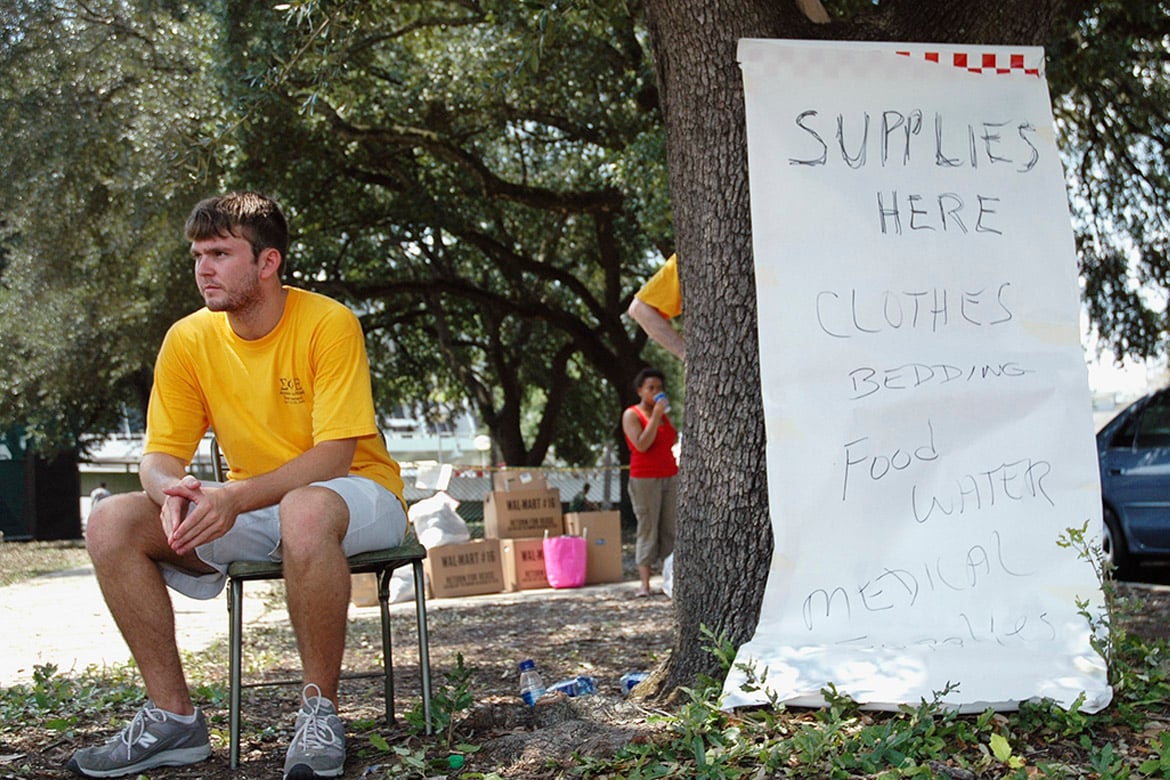
Among the many volunteers was 19-year-old Matthew Giglia, MD, then a sophomore at LSU. His photo—bearded and scruffy—appeared in a New Orleans Times-Picayune story covering the PMAC response.
“It was surreal, and definitely not something you ever want to go through again,” recalled Dr. Giglia, now a colon and rectal surgeon at Ochsner MD Anderson Cancer Center in Baton Rouge. “But it helped shape things going forward.”
In an interview with the AMA, Dr. Giglia reflected upon the 20th anniversary of Hurricane Katrina, sharing his memories and how that experience impacted his career in medicine.
Ochsner Health is part of the AMA Health System Member Program, which provides enterprise solutions to equip leadership, physicians and care teams with resources to help drive the future of medicine.
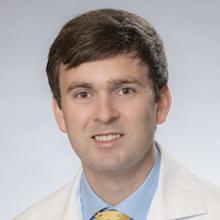
AMA: What do you remember most about the first few days after Hurricane Katrina and volunteering at the PMAC?
Dr. Giglia: I was just two or three weeks into my sophomore year, one moment settling into campus life and the next, everything shut down. Military helicopters were landing next to the PMAC. What made it even stranger was that all of Baton Rouge lost electricity, but LSU got it back first, the only place in the city with power. It looked like daytime at midnight while the rest of the city was dark.
Our apartment was on LSU’s power grid and so we had power and running water. We invited a Times-Picayune reporter over to shower because they hadn’t in days. That’s how my photo ended up in the paper.
AMA: What made you want to volunteer with PMAC?
Dr. Giglia: People all over campus wanted to help. The first thing we did was set up a donation center because people were wanting to drop stuff off. We organized it through some people in our fraternity, other Greek organizations and student government. People had clothes, blankets, baby food and other supplies but had no idea where to take them, so we organized a drive-through drop-off, loaded donations into trucks, and delivered them to shelters or wherever we needed to.
Then we learned about the medical response at the PMAC. I had worked in a hospital during high school in the emergency room as a volunteer, taking vital signs, helping with triage and delivering supplies, so we went to the PMAC to help whatever way we could, which mostly wasn’t medical. We did a little bit of vital signs and triage, but it was mainly transporting patients and helping the doctors and nurses with supplies. It was just doing whatever we could.
AMA: How did it feel to suddenly shift from student life to being part of this emergency response effort?
Dr. Giglia: It was surreal. I was pre-med. I was in biological sciences and thinking about going to medical school, but I didn't know for sure. My dad's a physician and my mom was a nurse and a hospital administrator. So, I had been around it and was thinking about it.
It was definitely something that made me realize I wanted to do it for my own reasons and for the right reasons, not just because I've been around it my whole life or that's what my family did. I'd been around hospitals, so it was very normal to be in a setting like that to some degree, but definitely different because of the scale of it.
But this was not a well-oiled machine. This was thrown together by local people at LSU and from Baton Rouge. There was not a Red Cross there or a massive federal response ready to go, unfortunately, because this had never happened on this scale.
We learned a lot of things from Hurricane Katrina about what not to do and some of that was the preparation and organization required for such a disaster response. It was definitely chaos and disorganized, but people did the best they could. Given the situation, people did amazing things.
AMA: What did you learn that still influences how you practice medicine today?
Dr. Giglia: You can provide a level of comfort and emotional support even in situations where you're not directly providing medical care. It's all a team effort and there's not one specific person responsible. Everybody on the team should be empathetic and sympathetic to the patient's needs. It shapes how you treat your future patients as well.
AMA: How did the response at PMAC lead to changes in how physicians volunteer during disasters?
Dr. Giglia: Busloads of people from around the country arrived to help. You want these people to come in and help your state when you’re in such dire need. The problem was we didn’t have a way to verify if they were actually doctors or nurses.
After Hurricane Katrina, there was a verification system that was put in place to verify that you are indeed who you say you are, because not everybody carries around their medical license. Back in 2005, there weren’t iPhones where you could check state medical websites to verify that someone is a physician. The other thing that happened in Louisiana was that we also changed laws to allow state crossing of licenses and privileges whenever you have an emergency event like Hurricane Katrina.
I went back about three years later to volunteer for Hurricane Gustav, and we had to open up PMAC again. I was a first-year medical student at that time, and it was a more well-oiled machine. For Hurricane Gustav there was the verification system and what roles each person had compared to during Katrina when we were making things up as we went. It worked, but there are more efficient, better ways to do it and they were figuring that out with Gustav.
AMA: How did your experience during Hurricane Katrina shape your identity as a doctor and a leader?
Dr. Giglia: To me, one of the most important qualities of leadership is setting an example at all times. It’s when you do the right thing in the moment, even when you’re not going to get recognition. When you’re not expected to do these things or noticed for your work, that’s the moment when it’s the most important because anybody can show leadership when they’re up on the stage getting an award for it.
The character that is required to be a good leader is shown in the unrecognized moments. The same holds true for our roles as physicians. Our duty is to our patients, and we must strive to always do what is right for them regardless of recognition, praise or gratitude.
AMA: Looking back on Hurricane Katrina, do you have any final thoughts?
Dr. Giglia: I can’t believe it’s been 20 years since Hurricane Katrina. Looking back on it now, it was heartwarming that not just the students on campus, but the citizens from around the state and other states came together to help people who were the most vulnerable at the time. It spoke to the resilience of the state and how we band together. I’m extremely proud of the response that everybody gave.
I was just a small part of it. Everybody else made the wheels turn more than I did and they’re the ones who really deserve the credit. The people who were affected by Katrina also deserve to be highlighted more than anybody because it was their world that got upended. Even though all our lives changed, they’re the ones who suffered.
Subscribe to learn how innovative health systems reduce physician burnout.