
As health systems nationwide confront rising demand from aging populations and simultaneously shrinking clinical workforces, Virginia Mason Franciscan Health (VMFH) is moving decisively to stabilize the future of care delivery.
The Pacific Northwest–based system, known for more than a century of clinical excellence, believes the foundation for recruitment and retention starts with ensuring physicians have a meaningful voice in shaping the conditions under which they practice.
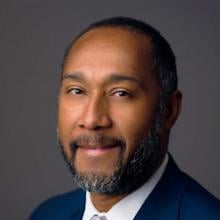
Hans P. Cassagnol, MD, MMM, an ob-gyn and chief medical officer for VMFH and the Northwest Region of CommonSpirit Health, said that this philosophy has been central to the system’s success across decades. For him, the link between physician engagement and organizational performance is impossible to separate.
“We believe the outcome that we've been able to sustain at Virginia Mason Franciscan Health over the past decades is directly correlated to the level of engagement we've had for our physicians as a whole,” Dr. Cassagnol said.
To maintain that level of engagement, VMFH—part of the AMA Health System Member Program, which provides enterprise solutions to equip leadership, physicians and care teams with resources to help drive the future of medicine—has built a system of regular, structured opportunities that bring physicians directly into conversations with leadership. Rather than relying on ad hoc feedback or periodic input, the organization has intentionally woven ongoing communication into the fabric of leadership governance.
“Our physician and medical staff leaders have an opportunity on a monthly basis to speak to our board directly—what's going well, what's not going well, and what support they need to be successful,” Dr. Cassagnol said. “They have forums with the executive leadership team in the Northwest to do the same thing.
“We have forums in the hospital setting as well,” he added. Each hospital campus has a process where they either have lunches on a monthly basis, or they call it physician cafés, with our other medical staff members. We have peer-to-peer meetings where—in every single level of the organization—there are many opportunities for voices to be expressed and heard.”
Beyond these in-person avenues, VMFH ensures physicians can consistently influence priorities through its annual physician engagement survey. The survey itself is not unusual. What distinguishes VMFH is how quickly results are analyzed and turned into shared plans for change.
“Our physicians have the opportunity to share their thoughts–from executive leadership to the manager level,” Dr. Cassagnol said. “They can address the things that we're doing well, what are the things that we need to improve on and what are the things that we should not be doing anymore.”
He added that the turnaround between survey distribution and visible action is deliberately swift.
“We usually send the survey sometime in May,” Dr. Cassagnol said. “By June and July, we get the summary and a synopsis. We share that over the next month or two and we articulate the plan—with their input—for what we're going to do in order to improve the area that’s needed.”
The engagement process is powerful not just because it identifies gaps, but because it demonstrates that leadership is listening—and responding.
Empowering physicians to improve care delivery
VMFH has long believed that physicians must have the authority—and the tools—to shape their own workflows. This principle is at the heart of the Virginia Mason Production System, a performance-improvement method inspired by lean production.
“The No. 1 way to keep a physician satisfied and engaged is their capacity to impact the day-to-day workflow,” Dr. Cassagnol said. “The philosophy of the Virginia Mason Production System is that the person who performs the work has the duty, the capacity and the force behind them to change their work for the better.”
VMFH supports this effort through a dedicated institute that trains physicians and clinical leaders in problem-solving, workflow design and continuous improvement.
Physician well-being is also built into VMFH’s broader cultural aspiration—one that prioritizes respect and compassion as essential elements of a healthy care environment.
“We need to not only care for our patients, but we also need to make sure we're caring for our caregivers and our physicians at the bedside,” Dr. Cassagnol said.
Leadership development is another key component, helping physicians build the skills needed to influence change at scale, including seminars that focus on medical staff leadership, in the hope of fostering future leaders.
As the leader in physician well-being, the AMA is reducing physician burnout by removing administrative burdens and providing real-world solutions to help doctors rediscover the Joy in Medicine®.

Confronting today’s workforce crisis
Similar to health systems nationwide, VMFH is experiencing the strain of an aging physician workforce without as many up-and-coming physicians, and escalating demand for care among older adults. These overlapping trends exacerbate burnout and intensify competition for talent.
“The number of clinicians that we have practicing right now that are physicians—most of them are over 50 years old,” Dr. Cassagnol said. “The number of individuals who will need care over the next decades will continue to increase.”
Burnout, Dr. Cassagnol noted, is no longer a looming threat but a present-day emergency. One way VMFH mitigates stress is by ensuring physicians and other health professionals work at the top of their license, supported by systems and tools that minimize unnecessary tasks.
“We try to make sure every single clinician at the bedside is working at the top of their license,” he said. “This means our physicians are doing only the things that physicians need to do. Our nurses are doing only the things that nurses need to do, and so on.”
Clarity and transparency also define Virginia Mason Franciscan Health’s recruitment philosophy. By being upfront about resources, tools and expectations from the outset, VMFH strives to set new physicians up for sustainable, long-term success.
A proven pipeline for stability
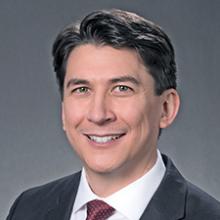
While VMFH invests heavily in retaining experienced physicians, its residency programs are a central strategy for attracting and developing the next generation of physicians. Ryan Pong, MD, vice president and chief academic officer, said that the programs are deliberately designed around community need.
“We found that there was a real need for internal medicine in the South Sound and Tacoma areas of Washington state,” Dr. Pong said. “So, we opened up an internal medicine program there and began meeting both the treatment needs patients had and providing the training experiences we wanted to offer our residents in that environment.”
Research supports that physicians often stay where they train—a trend VMFH sees reflected in its own workforce. Residency programs also help fill care gaps during training.
“They have opened up capacity for people who are being discharged, who don't have an assigned physician to get continuing care,” Dr. Pong said. “That helps us deliver on quality, while decreasing the length of stay, and getting patients where they need to get to see their health improve.”
Dr. Pong’s connection to VMFH dates back more than two decades, and his story reflects the loyalty many clinicians develop.
“I came to Seattle to train because it's the closest I could get to my hometown,” he said. “During my training, I just fell in love with how Virginia Mason Medical Center was providing the highest quality of care at the lowest possible cost to our community here. And you get to practice in an area that’s very academic, with research happening, and many possibilities to develop a career.”
Trainees note that alignment with VMFH’s mission and care philosophy inspires them to stay or return after fellowship. And because medical students experience this culture firsthand during rotations and interviews, many become part of the system’s recruitment pipeline.
“Our mission-driven elements about providing care for our community helps us attract applicants,” Dr. Pong said. “But it's also our relentless focus on our processes and looking at how we remove waste from the health care system. And our residents, our trainees, our fellows, they're all encouraged to participate.”
Through a combination of deeply embedded engagement structures, robust training pathways, and a culture that elevates both patient and physician well-being, Virginia Mason Franciscan Health is charting a sustainable path forward—even as workforce pressures mount nationally. By continuing to align organizational priorities with physician values, VMFH is ensuring that physicians feel supported, connected and empowered to deliver exceptional care for generations to come.



