
Dallas Nephrology Associates has been taking a close look at what helps its physicians thrive—and where more support is needed. After completing the AMA’s Organizational Biopsy®, leaders met with the Association to walk through the results in detail. Those conversations helped crystalize a clearer picture of the daily pressures physicians face and the systemic barriers that hold teams back.
“We first reviewed all of our data with our executive board, and the AMA team was part of that meeting,” said Archana Rao, MD, a nephrologist and executive vice president of Dallas Nephrology Associates. Then “we delved into it and created next steps. And at our all-physician meeting, we shared the findings and intended next steps.”
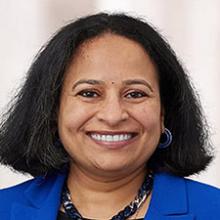
“Armed with those insights, Dallas Nephrology Associates launched a project to create the steps and begin to implement various initiatives,” Dr. Rao said, noting that each step of the journey will require communication to keep physicians updated, whether it is to talk about a new initiative, share more results or ask for more feedback.
Additionally, “we have regularly scheduled meetings with several teams,” she said. “Those are the times that we’re going to transmit all the information and try to implement all of the steps that we have envisioned and learn along the way.”
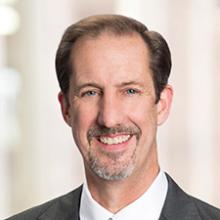
“While we have done several things to promote physician well-being in the past, I believe this year has been more focused,” said David Knop, director of human resources at Dallas Nephrology. “This has included increasing physician base pay, spending more on physician health benefits, promoting access to free counseling and wellness resources through the Texas Medical Association and conducting our first physician specific biopsy survey.
Looking at the data from the Organizational Biopsy, Dallas Nephrology Associates determined several key initiatives to focus on out of the gate. While the work is still early, the organization is committed to using what it learned to guide meaningful changes that can better support physicians and the patients they serve.
Dallas Nephrology Associates is part of the AMA Health System Member Program, which provides enterprise solutions to equip leadership, physicians and care teams with resources to help drive the future of medicine.
Improve time efficiency
The first initiative is on improving time efficiency and reducing the EHR burdens physicians continue to face, such as pajama time.
While it may be a “no-brainer” to focus on efficiency of practice, it is a complex initiative that has many different areas to address, Dr. Rao said. “How do we minimize work time at home? It’s very important. Relaxation time equals less stress. It’s a simple equation.”
“We’re really working on creating some steps and options for our physicians,” she said. “It’s going to take a little while, but we’re quite committed to trying to move this forward.”
For example, one of Dallas Nephrology Associates’ EHR efficiency practices is a project that will allow the group to learn from their partners “because some of them are doing fantastic with their time efficiency and some of us are struggling,” said Dr. Rao. “So, how do we learn from those who are doing this well already? What are the tips and tricks they have so we can make it relevant to everybody else?”
“This is a work in progress. We don’t have all the answers, but we’re going to learn from everybody as we go forward,” she emphasized.
As Dallas Nephrology Associates works to find the best solutions to implement for practice efficiency, the AMA has been there to help every step of the way.
“The AMA did help us with a lot of helpful tips on EHR efficiency,” said Dr. Rao, noting that while “we’re going to go to the physicians and learn best practices of time efficiency with the EHR, the AMA provided us with that guidance too, sharing effective tips and validated tools.”
“In order to achieve EHR efficiency, the strategy we used was to identify the current best practices within our own organization,” she said, noting “this was an idea that the AMA team shared with us.
“We identified individual physicians and providers within each sector who spent very little outside of work time to complete their charting. They shared their insight and we shared it with the entire team and created some tips and tricks for everybody,” Dr. Rao shared. “We hope to recheck with them in a few months to see if this has made an impact.”
“That was very positive, but the AMA has a lot more tools and existent ways for us to utilize their help,” she said. “We’re looking forward to implementing some of those very ideas from the AMA that they shared with us during our meetings.”
As the leader in physician well-being, the AMA is reducing physician burnout by removing administrative burdens and providing real-world solutions to help doctors rediscover the Joy in Medicine®.

Focus on mentorship
“For the second initiative, we really want to create a good mentorship program for our young physicians who have just come out of fellowship into our practice,” said Dr. Rao. Doing this will help Dallas Nephrology Associates “guide them better and help navigate their early careers.”
“We have identified young physicians and those early on in the practice—less than five years,” she said. “All of those physicians were given the option to choose a mentor.”
“We are very happy to report that there were very willing mentors within our practice,” Dr. Rao said. “One of our executive board members, Dr. Chowdhury, has taken the initiative to create the framework for mentorship, create guidelines and check in with all of the physicians to ensure that there is robust support and we are getting our goals of effective mentorship.”
Enhance career growth
“The third initiative is to focus and intensify our efforts in career growth for our mid-career physicians, so they don't feel burned out—they feel the love of practice in nephrology,” Dr. Rao said. But “how do we create that?”
“We have identified leadership learning pathways and have invested in skill building in the making so that we can create good career growth and hopefully address the frustration of the mid-career physicians,” she explained.
Create leadership opportunities
“Job satisfaction and fulfillment often come from being in leadership roles and we want to create a track of leadership for more career growth opportunities,” said Dr. Rao. “That’s something in our control. We’re really getting into the data from the Organizational Biopsy to help us determine the best route for this.”
“We are happy that we are not starting at a very low point. We’re starting at a fairly high level of job satisfaction, so we feel validated that we are on the right track,” she said. “When we started measuring, we didn’t know what we would find, to be honest. Was everyone going to say that they hate coming to work?
“But we were validated that we are on the right track with some work to do, and one area is leadership development and career growth,” Dr. Rao said.
As Dallas Nephrology Associates continues to work through different initiatives, “because of the relationship we’ve established with the AMA, we can look to them for any and all resources that we can use,” said Knop. “We’re at the beginning stage of that, so we haven’t necessarily identified all the resources that might be beneficial."
Leadership is a pillar of the AMA’s Joy in Medicine Health System Recognition Program, which empowers health systems to reduce burnout and build well-being so that physicians and their patients can thrive.
Advocate for nephrologists
“Nephrology as a subspecialty has not been financially compensated very well over the years,” said Dr. Rao. “It has now really fallen to the bottom rung of how physicians are compensated. This is one of the reasons that several nephrology fellowship spots do not get filled.”
“The work is very hard. It is a very intensely involved specialty. It is not easy,” she said, noting “there’s no limitation in hours—we’re often required to take care of patients in the middle of the night.
“We care for some of the sickest people, such as those who are on dialysis and battle kidney disease,” Dr. Rao added. “So, this job is very, very hard, but over the years, policies and different aspects beyond our personal control have not been favorable financially for nephrologists, so we feel that might be a source of a lot of angst.”
“Of course, how our specialty gets paid isn’t something that we as a practice can fix, but we can go out and speak at places,” she said. “We need to speak to people who make the policies so that they hear what we need in nephrology.”
Sharing best practices
Beyond working within Dallas Nephrology Associates to share best practices, the group is also very open to collaboration with other health systems and organizations.
“We’re very happy to share our best practices and see how we can be of benefit to other practices,” Dr. Rao said, noting “we have already done a lot of collaborative work and teamed up with like-minded organizations such as the American Society of Nephrology and the Renal Physicians Association, which is the representative organization for all nephrology practices in the country.”
“Any effort that has a positive effect on nephrologists, we would like to do because we want to support the nephrology pipeline in the future,” she said.
For example, Dallas Nephrology Associates is a member of the Renal Executive Forum, and this is an organization of nephrology practices across the country—large and small—that meet twice a year in the spring and fall,” said Knop. At these meetings “we share best practices among other nephrology practices across the U.S.”
“I’ve been there and presented before. Even if I don’t attend one of those meetings, I’ll get emails from other administrators or other leaders in those organizations about best practices,” he said. “So, we’re all collaborating and sharing best practices on a whole range of topics.”
“It’s that ‘iron sharpens iron’ concept. That’s something we’ve been involved in for a number of years now and that’s a way for us to share best practices and gain insight into what other nephrology practices are doing,” Knop said. “But then having Dr. Liang as the president of the RPA, that will create even more opportunities for us to share. We’re not trying to silo what we know. We want to share best practices. We want to learn from others, and we feel that’s our responsibility as an organization that’s been around, doing this for so long.”



