While systemic solutions remain central to addressing physician burnout, Delaware-based Bayhealth is adding another tool: art therapy. In partnership with the Biggs Museum of American Art in Dover, Bayhealth—a nonprofit health system with more than 450 physicians and 200 nonphysician providers—is using creative expression to help physicians and other health professionals manage stress, restore energy and reconnect with balance.
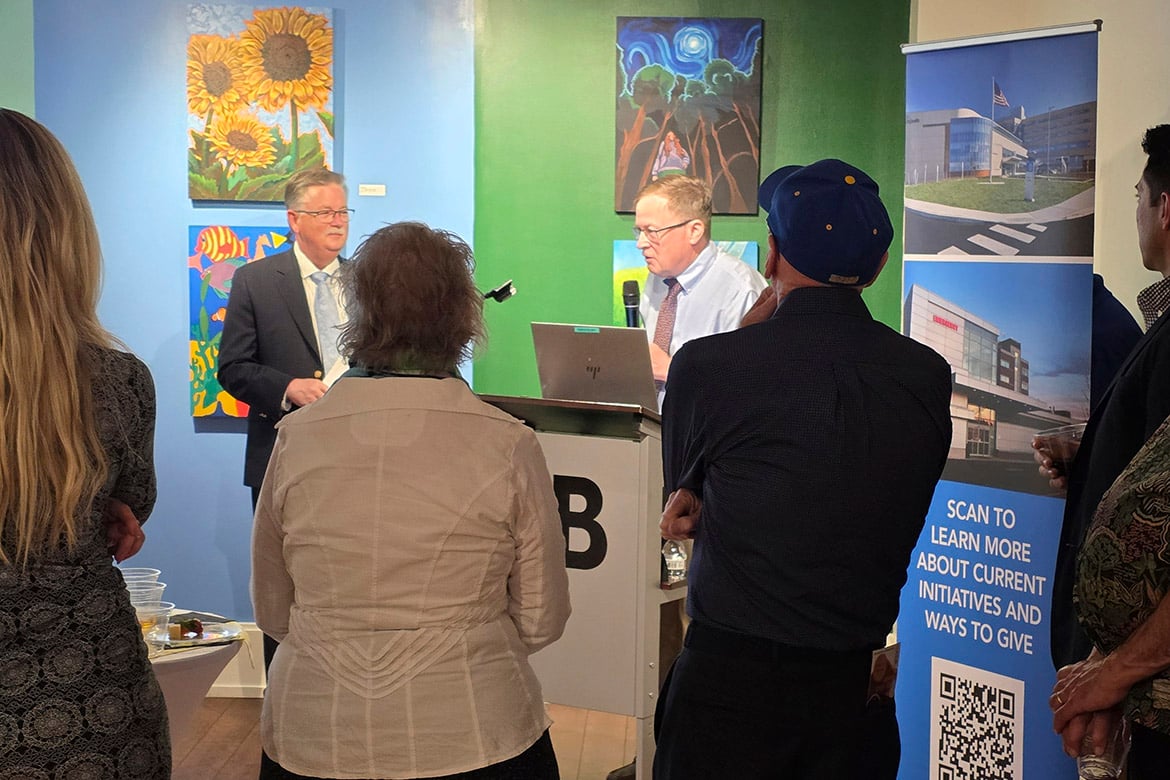
This collaboration was formally highlighted during a June reception hosted by the Bayhealth Foundation and the Biggs Museum, where health care leaders, donors and community members gathered to explore how art can be more than inspiration—it can be healing. The event featured a presentation by Thomas Vaughan, MD, chief wellness officer for Bayhealth, who underscored how creative outlets such as painting, drawing and interactive exhibits are being woven into health care settings to combat burnout.
By linking the arts with medicine, Bayhealth and the Biggs Museum are not only celebrating community collaboration but also charting a path toward innovative, evidence-based approaches that place physician well-being at the center of care.
Bayhealth is part of the AMA Health System Member Program, which provides enterprise solutions to equip leadership, physicians and care teams with resources to help drive the future of medicine.
As the leader in physician well-being, the AMA is reducing physician burnout by removing administrative burdens and providing real-world solutions to help doctors rediscover the Joy in Medicine®.
“There is a growing body of compelling evidence that art can positively impact well-being, and the arts and well-being was the theme of last year’s American Alliance of Museums Annual Conference,” said Sandra James, deputy director of the Biggs Museum of American Art.
To take just one example, a JAMA Internal Medicine systematic review of studies involving nearly 1,600 patients living with cancer found that creative arts therapies—including music therapy, dance or movement therapy, various forms of art therapy—helped reduce anxiety, depression and pain while boosting quality of life.
James said the power of art to heal “really hit home for me, especially with Biggs being less than a mile from Bayhealth’s headquarters and facility in Dover.”
James noted that in 2022, Biggs convened a summit dubbed “Arts, Meds and Eds” to explore collaborations among Bayhealth, Delaware State University and the museum—part of an effort to elevate community well-being.
“Their leadership had some experience with health systems and working on well-being and burnout,” said Dr. Vaughan.
Bayhealth’s collaboration with the Biggs Museum points to a broader shift in how well-being is defined and nurtured. Beyond policies and programs, it’s about creating environments where creativity and healing intersect—spaces where physicians, care teams and patients can find renewal through art.
Art is about sharing and education
Dr. Vaughan noted the collaboration aims to “raise the water for everybody” by bringing museum resources into the hospital and university. Plans include rotating galleries to showcase the creativity of Bayhealth staff and local students, along with interactive displays to spark innovation.
James added that the museum will provide reproductions from its permanent collection for hospital spaces. Biggs has garnered national recognition for its collections spanning American decorative arts of Delaware and the Mid-Atlantic, exhibiting a comprehensive array of American art from the 1700s to now. The museum also will launch educational programming, including a December lecture with Susan Magsamen, author of Your Brain on Art: How the Arts Transform Us.
“Art can really have a big impact on physicians because it makes you think of things differently and pay a little more attention to details,” Dr. Vaughan said. “It opens your mind to think maybe there’s something else going on. It might get people talking about things and in the long run, help them out with their stress and burnout.”
“The goal is to integrate humanities and arts as a way of enhancing joy and to develop critical thinking and empathy in physicians and other health care workers,” he said. In fact, “Literature and art remind us we can learn a lot by not being so quick to judge what belongs and what doesn’t belong in the patient’s story.”
Learn more with the July issue of AMA Journal of Ethics®, which explores what medicine can learn from and contribute to the arts, and vice versa.

Art is accessible to all
“Art has the capacity to elevate mood and provide a respite,” said James. “It can also serve as training for health professionals in observation and what we call ‘long looking,’ which can help with holistic care and diagnoses when a physician is looking at a patient.
“It can provide a place to come to and have a peaceful engagement with something visual,” she added. “That can be so helpful from a well-being standpoint.”
“Art is also accessible to just about everybody. Even if you don’t know the first thing about art, you can appreciate it and you can go and see things and learn about art,” said Dr. Vaughan.
In fact, “doctors have been prescribing museum visits to address loneliness and dementia and many other physical and mental health concerns,” said James, noting that it is the focus of a 2024 book, The Connection Cure: The Prescriptive Power of Movement, Nature, Art, Service, and Belonging, recently featured on NPR’s “Morning Edition.”
“Another aspect of this program is that doctors have the ability to prescribe to their patients an opportunity to engage with art to assist them and their mental health or well-being,” she said.
Discover how this psychiatrist uses creative expression with haiku to deal with burnout and improve his well-being.
Art strengthens the community
“There are 4,500 team members at Bayhealth and this will expose them more to the Biggs Museum—many who may have not known anything about the museum,” said Dr. Vaughan. “But there’s a high awareness of a lot of the well-being stuff that is certainly going to enhance the community.”
“Anything that lets physicians, residents and health professionals break away from their daily work and brings something else into it can only be a positive,” he said.
“It strengthens the community, and the museum enhances the region’s vitality through partnerships like this that advance the arts as essential to civic well-being,” said James. “Bayhealth also has as its mission strengthening the health of the community, so this collaboration is a great fit.”
This collaboration “opens up the possibilities for the physicians, medical staff, or patients, for their families to engage with art, which has innumerable benefits,” she said. “My brother was recently in a hospital in Houston, and he made a point of reaching out to me to say that despite going through this potentially negative experience, he was elevated when they walked into the facility because there was art and there was the opportunity to refocus and think about something more positive and beautiful.”
“I hope to make this a longstanding collaboration,” Dr. Vaughan said. “Even bigger than that, I would like to see us start something with our residents and learners to expand on art therapy even more.”
AMA STEPS Forward® open-access resources offer innovative strategies that allow physicians and their staff to thrive in the new health care environment. These resources can help you prevent burnout, create the organizational foundation for joy in medicine and improve practice efficiency.