In late 2023, Henry Ford Health and Ascension SE Michigan announced a joint venture. This would combine Ascension’s eight southeast Michigan hospitals and outpatient assets with Henry Ford Health's existing facilities. The joint venture was finalized and launched in the fall of 2024.
Henry Ford Health grew from five to 13 acute care hospitals, and to 50,000 employees, including almost 3,000 employed physicians across more than 500 sites. This doubled the system’s footprint in southeast Michigan, making Henry Ford the largest employer in the state.
While the overarching goal was to expand access to quality health care, research and education, preserving the Catholic identity of the former Ascension facilities was equally important. From the start, Henry Ford Health leadership determined that merging a secular and a Catholic system together into a single, distinct cultural identity would be carried out mindfully and respectfully.
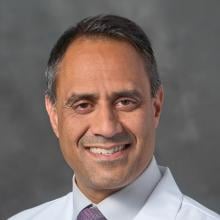
“We did not want to give the impression that our new colleagues coming from Ascension were expected to simply become part of our culture,” Manu Malhotra, MD, an emergency physician and senior vice president and regional chief medical officer at Henry Ford Health, said during the inaugural AMA Insight Network Summit in Chicago. Dr. Malhotra is also large group seat for the AMA Integrated Physician Practice Section Governing Council.
“We spent a lot of time examining what, exactly, our culture was and what we needed to learn about theirs,” he said. “We wanted to build something together that's the best of both, and in which people could see themselves reflected.”
Henry Ford Health is part of the AMA Health System Member Program, which provides enterprise solutions to equip leadership, physicians and care teams with resources to help drive the future of medicine.
Engaging physicians from the start
Long before the joint venture was finalized, the leadership team began organizing a physician advisory council comprised of leaders from both systems. The intention was to build trust at the leadership level and establish processes for cultural integration. In-person roundtables and town halls gathered up to 50 Henry Ford Health and Ascension colleagues at a time.
“We wanted to engage people in the problem phase instead of just selling them the solution,” Dr. Malhotra explained. “Those were very productive conversations because the people at those tables represented the full spectrum of clinical affiliations and perspectives, including primary care and specialty physicians, private practice physicians, PSA-affiliated groups, and medical group members, as well as administrative and frontline physicians.”
The initiative also included surveys, listening sessions, focus groups and weekly joint venture newsletters to keep every stakeholder, at every level and in every role, fully informed. They also encouraged feedback.
“The intent was to learn the landscape across the board, share best practices, and chart the course forward together,” he said. “A lot of great ideas came out of this, including how we could better communicate and share information bi-directionally.”
Maintaining identity in a larger system
Henry Ford Health’s existing sites were secular, but preserving Ascension’s former hospitals’ Catholic identity was crucial for genuinely thoughtful integration. A statement from Henry Ford Health announcing the merger stated that both organizations were committed to maintaining the Catholic identity of the Ascension Michigan facilities and their traditional religious and ethical practices.
“The Catholic identity was preserved at those hospitals” said Dr. Malhotra. “It was part of the definitive agreement, but more importantly, it mattered to a lot of people who were joining our family.”
Keeping long-trusted hospital names also assured former Ascension physicians, care teams, staff and the communities they serve that their values and traditions were respected and valued even as they became part of the new, larger system of Henry Ford Health.
The standard of care in physician well-being recognition
Institutions in this article have been honored by the Joy in Medicine® Health System Recognition Program.
Building trust with listening, respect
The principle that trust must be earned, not assumed, was embraced by leadership of both legacy organizations, which helped both navigate all aspects of a complex cultural integration. Rather than imposing new directives and expecting unquestioning adherence to them, leaders asked questions and listened to the answers, quickly responding with sensitivity to the concerns of everyone affected by the change.
Identities were preserved through agreements and branding that recognized the distinct histories and values each organization brought to the joint venture. This intentional respect for identity and open dialogue clearly signaled that the goal was collaboration and shared efforts to build something based on the best parts of both entities.
Leadership is a pillar of the AMA’s Joy in Medicine® Health System Recognition Program, which empowers health systems to reduce burnout and build well-being so that physicians and their patients can thrive.
Experiencing early signs of success
Henry Ford Health’s investment of time and thought into cultural alignment appears to be succeeding. Legacy Ascension medical group members were brought in as clinical affiliates with the option to integrate further, and despite requiring the transition of more than 1,000 contracts, there have been no terminated physician relationships.
Retention appears strong, with some newly integrated acute care sites reporting increased volumes. Financial and operational metrics are promising too. There has been growth in clinical delivery system revenue, improved recruitment fill rates and market performance that has outpaced local competitors in terms of engagement, retention and satisfaction measures.
The success of the Henry Ford Health and Ascension joint venture is thanks in no small part to their recognition of culture as a uniquely pivotal factor in a unique integration strategy, and as a result identities were preserved, not erased.
Integrating culture is a cornerstone
Henry Ford Health successfully expanded access across Michigan while fostering unity, trust and continuity. The venture did not erase differences. Instead, it blended them and, at the same time, celebrated them.
Recognizing the value of including culture as a crucial part of a larger and more complex whole contributed elegantly to an aligned vision that preserved identity, respected tradition and delivered results.
AMA STEPS Forward® open-access resources offer innovative strategies that allow physicians and their staff to thrive in the new health care environment. These resources can help you prevent burnout, create the organizational foundation for joy in medicine and improve practice efficiency.