When Deborah Mensch, MD, saw the musical “Hamilton,” it was a no-brainer for her to purchase the “I’ll Never Be Satisfied” T-shirt from the merch stand.
“For me, it means that there’s always more to discover, especially in medicine,” Dr. Mensch said. “We should always be pushing ourselves to treat our patients more effectively and efficiently, while also balancing operational needs, clinical needs and physician well-being.”
This drive to create positive change and foster growth in medicine led Dr. Mensch to the field of clinical informatics. In her current roles as a pediatric cardiologist and the chief medical information officer (CMIO) for Northwell Health, she views technology as a tool to drive solutions—not the solution itself.
“Technology shouldn’t just be used for technology’s sake,” she said. “It’s about how to use digital technologies to improve patient care, improve quality outcomes, enhance productivity and prioritize physician wellness.”
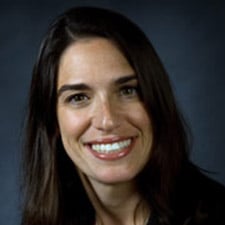
Dr. Mensch’s guiding principles are central to Northwell Health’s transition to a new EHR system. As one of the largest health systems in the country to transition to Epic, Northwell Health is consolidating more than two dozen primary EHRs into one unified platform.
Northwell Health is part of the AMA Health System Member Program, which provides enterprise solutions to equip leadership, physicians and care teams with resources to help drive the future of medicine.
In an interview with the AMA, Dr. Mensch discusses the EHR initiative at Northwell Health, the role of informatics in health care and how emerging technologies—such as augmented intelligence (AI)—are helping to support efforts to improve patient care and physician well-being.
From AI implementation to digital health adoption and EHR usability, the AMA is fighting to make technology work for physicians, ensuring that it is an asset to doctors. That includes recently launching the AMA Center for Digital Health and AI to give physicians a powerful voice in shaping how AI and other digital tools are harnessed to improve the patient and clinician experience.
AMA: How do you balance your dual role as a practicing pediatric cardiologist and CMIO when evaluating new health IT solutions?
Dr. Mensch: For me, it’s about keeping the patient at the center. If you keep improving patient care as the goal, it becomes easier to understand when a compromise or balance is needed in terms of the operational impacts or how physician-facing tools support patient care.
AMA: How do you maintain that human-centered focus with new technologies emerging so quickly?
Dr. Mensch: When it comes to technology, there's always a shiny new penny. But we need to use data to understand how we’ll measure patient outcomes and physician wellness with these tools. There are lot of tools out there, so it’s about identifying the problem first and then choosing the right tool to help solve it.
AMA: What advice would you give women physicians early in their careers who want to explore digital health or informatics?
Dr. Mensch: Informatics is a relatively new field, but it offers tremendous opportunities to think on a macro scale, identify burdens and help other physicians. If you like thinking about—and solving—those types of problems, get involved with opportunities in your health system.
If your organization has a builder program, try to join it and understand how systems are built. That way, when you or a colleague have a problem or there is an opportunity to improve quality, you can start thinking like an informaticist by understanding what tools and resources you have.
AMA: What kind of builder programs do you have at Northwell Health?
Dr. Mensch: We have started our LIFT program, which stands for Leveraging Informatics For Transformation. Through LIFT, mid-level physicians at Northwell work on projects that can make a difference in their service line or practice.
The idea behind this program is that physicians understand their practice needs better than anyone. The physicians put together a capstone project, learn about the tools available and partner with informaticists. With the support of their leadership, participants also attend monthly lectures and networking events with senior informaticists.
This process helps physicians connect with the right people who help them make even just the smallest change. Many informaticists are drawn into the field through small projects like these. They see an opportunity to fix something in their own practice, and they get drawn in by being able to affect their entire practice with even the smallest changes.

AMA: What are the biggest opportunities transitioning to a new EHR offers Northwell Health?
Dr. Mensch: One of the biggest values of Epic is data transparency. It allows us to see the continuity of care for each patient across the system. We’re really excited about that because we can drive more efficient care when we have visibility into the data. For example, we can avoid unnecessary lab tests if we can see what’s already been done. That transparency also helps us understand the thought process that led to a patient’s care plan.
There are also a lot of opportunities with machine learning and predictive models. For instance, if 10 patients have the same diagnosis, the models can help us identify who might need to be admitted, who might need to come back, or who might need surgery.
The EHR can show us every doctor’s visit, medications, urgent care visits and flu shots. That is going to provide huge benefits in terms of quality of care. The key is figuring out how these tools can complement physicians’ expertise and the patient-doctor relationship.
AMA: What role did physician input play in helping Northwell Health shift to one EHR?
Dr. Mensch: One consistent outlier in our physician satisfaction surveys every year is our EHR. Physicians do not like its usability, the difficulty in interacting with patients and the lack of continuity between the inpatient and the outpatient space. Physicians were otherwise very happy, but they didn't like our EHR.
We spent a lot of time and effort trying to optimize our EHRs by building our own health information exchange to improve visibility across EHRs. But it was still very clunky.
Our leadership recognized the cost and long-term challenges of maintaining that system and began evaluating other EHRs. Epic has knowledge and expertise across a lot of specialties. It offers greater transparency and collaboration opportunities for both patient care and research.
AMA: How do you see digital health innovations supporting physician well-being?
Dr. Mensch: The No. 1 complaint from almost every physician nationwide is documentation burden, which has ballooned over the past 10–15 years. The burden it puts on doctors during “pajama time” is really overwhelming. We have studies showing doctors are charting all hours of the night and on weekends.
But this is an exciting time. The rise of ambient listening and AI-based tools can help reduce documentation burden, allowing physicians to take care of themselves. That means better work-life balance, improved physician wellness, more engaged doctors and better patient care. It all ties into one another.
In the next few years, I think we're going to see these tools improve a lot of the documentation burden.
AMA: How do you see AI reshaping physician workflows?
Dr. Mensch: I am very excited to see where AI takes us. I think it’s going to transform not only how we practice medicine, but also how we teach it in medical education.
Right now, though, AI technology is still in the shiny penny phase. Everything looks exciting, and we want to try everything. Within the next year or two, I think we'll figure out which tools rise to the top and which ones don’t bring a lot of value.
Learning how to use these tools to enhance patient care, not to replace patient care, is really going to be the sweet spot that we need to get to.
AMA: How do you envision being able to use AI to enhance patient care?
Dr. Mensch: I was recently talking with some colleagues in the medical school about how AI is simply the next tool in medical training. For example, when they first introduced stethoscopes, many doctors didn’t use them right away. And some of my mentors in pediatric cardiology trained before echocardiograms were common, but now echo is their primary tool.
As tools evolve in medicine, they help us better diagnose and treat patients. Therefore, we should view AI tools the same way: as enablers rather than crutches. We need to figure out how we can use it to help push the next generation of doctors to go even further than we can imagine.
AMA: What inspires you most about working in informatics with so many emerging technologies?
Dr. Mensch:What continues to inspire me is the knowledge that we can do something bigger. Our country’s health care system has so many opportunities. We have the best and brightest minds in the world, and we have all this technology.
If we can harness it all to truly advance patient care, we can be so innovative and push the envelope. Then, the sky is the limit.