Augmented intelligence (AI)—also known as artificial intelligence—has quickly become one of the most talked-about forces shaping health care. But at Virginia Mason Franciscan Health (VMFH), it’s not simply a promise of the future, it’s a practical, operational reality reshaping how physicians deliver care right now.
Across the Pacific Northwest, the health system is deploying AI tools to close care gaps, support diagnostic and preventive care workflows, streamline clinical documentation, and significantly reduce administrative burden for physicians and care teams.
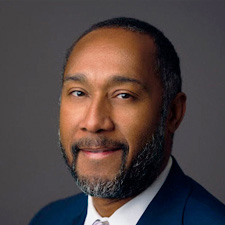
For Hans P. Cassagnol, MD, MMM, an ob-gyn and chief medical officer for Virginia Mason Franciscan Health, the mission is straightforward: deploying technology that strengthens high-quality patient care and meaningfully elevates the day-to-day experience for physicians. In each area where VMFH is using AI—care gap identification, dictation support and discharge summary generation—the health system is already seeing measurable results.
Dr. Cassagnol described AI as “another tool” during a recent interview with the AMA, but in the hands of physicians and care teams, these customized applications are proving to have a notable impact on patient care and medical team well-being.
Virginia Mason Franciscan Health is part of the AMA Health System Member Program, which provides enterprise solutions to equip leadership, physicians and care teams with resources to help drive the future of medicine.
From AI implementation to digital health adoption and EHR usability, the AMA is fighting to make technology work for physicians, ensuring that it is an asset to doctors. That includes recently launching the AMA Center for Digital Health and AI to give physicians a powerful voice in shaping how AI and other digital tools are harnessed to improve the patient and clinician experience.
Closing care gaps with accuracy
One of VMFH’s most advanced uses of AI focuses on more quickly identifying and closing care gaps—areas where recommended screenings, diagnostics or follow-up care have not yet occurred. The health system began embedding AI into its EHR several months ago, focusing first on colon cancer screening and later expanding to aortic stenosis.
Virginia Mason Franciscan Health’s early results around colonoscopy screening are promising.
“Looking at the data, we've increased our colon screening rate by 58% post implementation,” Dr. Cassagnol said.
For physicians, this level of real-time insight replaces a labor-intensive manual process of reviewing charts for missed labs, overdue screenings or missed vaccinations—work that traditionally added to administrative overload.
“When you talk about physician workflow on the front line, and you think about a care gap as an obstetrician, we used to go back and literally review the charts to make sure we're not missing a vaccination or a blood test as a whole,” said Dr. Cassagnol. “By embedding AI in our electronic medical record, the moment I click open to the patient's chart, I actually have a clear reminder in terms of some of the things that have not occurred already.”
The AI, he emphasized, isn’t replacing clinical judgment—it's enhancing it.
Ensuring safety, equity and “human in the loop”
But high-functioning care-gap detection must be deployed safely and equitably. At VMFH, safeguards are built in.
“There are opportunities for any tools that we use, but none of them will ever remove the human touch to provide care,” Dr. Cassagnol said. “The electronic medical record, just like the AI that we use within, is just a tool that helps us convey what we want to do in the care process.”
He added that validation happens every time a note or recommendation is finalized.
“At the end of a note or a transcription, the individual physicians actually go through the notes, through the recommendations in terms of care gap, and make sure it's warranted,” said Dr. Cassagnol. “They then have a discussion with the patient and actually make a decision in terms of how to proceed forward. The human touch is what we're doing to make sure we're not actually introducing biases within the care delivery process.”
Beyond care-gap identification, VMFH is piloting AI tools that assist with patient note dictation, initially at St. Michael Medical Center on the Kitsap Peninsula. The goal is to give physicians more time to connect with their patients, and doctors reported that was indeed happening early into the adoption.
“We have actually had some really good success thus far over the past six months or so,” said Dr. Cassagnol. “The note dictation tool helps physicians be even more engaged and better connected with the patient. And it's been clearly outlined that a more engaged patient equals better care, which means better outcomes for all of us.”

Streamlining discharge summaries
For inpatient settings, one of the most time-consuming documentation tasks is the discharge summary, especially when a patient has had a long, medically complex stay. AI is making a significant difference there as well.
AI-generated summaries deliver major time savings, whether it's after five days or 15 days.
“It’s saving a significant amount of time for our clinicians, especially for longer stays,” he said. “Some of our colleagues have said that the process of using our tool to create a discharge summary saves them up to 20 to 30 minutes per patient. And if you're doing three to four or five discharges a day, that adds up.”
“That goes directly to them spending more time having discussions with patients and being able to make sure we are clearly articulating their specific plan of care. That helps us build trust and understanding,” Dr. Cassagnol added.
Regardless of the time saved, however, accuracy still depends on a physician reviewing and validating the final summary.
“Again, with accuracy, whenever you're going to use any tool whatsoever, the human touch cannot be lost,” said Dr. Cassagnol. “At the end of any notes or the short summary that's created, our physicians actually go through themselves, making sure the accuracy is aligned in terms of what they're telling the patient.”
Scaling AI across the EHR to reduce burden
Dr. Cassagnol sees tremendous opportunity ahead for expanding AI-supported workflows throughout the EHR given the early successes seen. And one of the clearest areas where VMFH is already experiencing the impact is in reducing after-hours documentation.
“One of the biggest things that's been burdening physicians for eons now is not having the capacity during office hours, whether it's in the hospital, whether it's in the clinic, to be able to complete their work and actually go home and not have to do more work,” said Dr. Cassagnol. “We've seen a significant decrease in our clinician's burden in the pajama time, both in the inpatient setting and also in the outpatient setting.”
VMFH is also using physicians and other health professionals as peer champions to accelerate adoption.
“We want everyone to be able to support their fellow peers in terms of the adoption process,” Dr. Cassagnol said. “But also to articulate what we should do as a health system and really disseminate that information to our colleagues in the entire northwest.”
Strengthening relationships
Looking ahead, Dr. Cassagnol sees AI strengthening—not replacing—the human relationships at the center of care.
“For patients, the capacity to have readily accessible information about your care is significant,” he said. “It helps to develop trust in us, the physicians, and helps them understand what’s happening with their treatment.”
Nearly instant availability of notes and instructions is already improving communication across the care team, including patients and their families.
“Improving the communication between the care team and the patient's loved ones is really significant in terms of improving the care and increasing the safety around the care we deliver,” Dr. Cassagnol said.
AI will likely continue taking on some of the mundane tasks that pull physicians away from patients.
“As we implement different ways of using artificial intelligence to remove certain processes, we can focus even more on the human interaction and care,” Dr. Cassagnol said.
And when it comes to trust—a foundational element of any AI implementation—Dr. Cassagnol believes it must be earned through transparency and human connection.
“For me, and for my colleagues in general, trust only can be earned through human interactions,” he said. “Once our patients realize the way we're using new tools is really for the betterment of their care and improving the services they receive, I believe the trust will come.”
AMA STEPS Forward® open-access resources offer innovative strategies that allow physicians and their staff to thrive in the new health care environment. These resources can help you prevent burnout, create the organizational foundation for joy in medicine, improve practice efficiency and establish a governance framework to implement, manage and scale AI solutions.