As a medical student, do you ever wonder what it's like to specialize in pediatric cardiology? Meet AMA member Zachary Coffman, MD, a pediatric cardiologist and a featured doctor in the AMA's “Shadow Me” Specialty Series, which offers advice directly from doctors about life in their specialties. Check out his insights to help determine whether a career in pediatric cardiology might be a good fit for you.
The AMA's Specialty Guide simplifies medical students' specialty selection process by highlighting major specialties, detailing training information and providing access to related association information. It is produced by FREIDA™, the AMA Residency & Fellowship Database®.
Learn more with the AMA about the broader medical specialty of pediatric cardiology
“Shadowing” Dr. Zachary Coffman
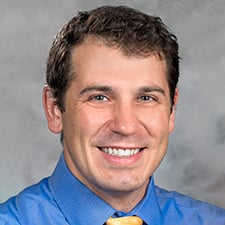
Specialty: Pediatric cardiology, with a subspecialty in pediatric cardiac critical care.
Practice setting: Hospital.
Employment type: Employed by Atrium Health Levine Children’s Hospital, part of Advocate Health, in Charlotte, North Carolina. Advocate Health is part of the AMA Health System Member Program, which provides enterprise solutions to equip leadership, physicians and care teams with resources to help drive the future of medicine.
Years in practice: Six.
What the specialty of pediatric cardiology is: I did my residency in pediatrics and a fellowship in pediatric cardiology, and I completed an extra year of fellowship to work primarily in a pediatric cardiac intensive care unit (ICU). I help to care for children born with congenital heart disease, as well as pediatric patients who acquired various forms of heart disease over the course of their lives.
I care for patients with structural and functional heart disease, and I work specifically in a cardiac ICU. My patients are typically admitted for cardiac surgery, but they can also be admitted for medical management of their heart disease either before or after they have had a surgical procedure.
A typical day and week in my practice: The physicians in our group, like other intensive care physicians, care for patients 24/7, so a typical day is a mix of day and night shifts. We usually spend mornings and early evenings rounding on our patients and making plans for their care. There is a mixture of education and discussion of medical management during rounds, followed by communication with other subspecialists and procedures, based on our rounding decisions. Our surgical cases will usually come out from the cardiovascular operating room late morning or early afternoon, depending on the complexity, so we will complete all of our rounding tasks and procedures either after rounds or after our surgical cases are settled into the unit.
In a typical week, our physicians work between five to seven days at a time, with 10- to 12-hour shifts based on the acuity of the unit. We also work a specified number of nights, and our unit always has an nonphysician provider to help manage the clinical responsibilities.
One of the best parts of the job is flexibility in the schedule. It is a bit of shift work, but day shifts tend to be clustered a week at a time to keep consistency with clinical plans for our patients.
The most challenging and rewarding aspects of pediatric cardiology: The cardiovascular ICU is, by definition, an intense place to work. We have arguably the sickest patients in the hospital, and their physiology and anatomy can be incredibly complex. It takes a significant amount of dedication to understand cardiovascular physiology and congenital heart disease, and caring for patients in an intensive care unit both before and after surgery can be intimidating.
The most rewarding part is seeing that patients and their families in the congenital heart community are an incredibly tight knit group. We get to see an incredible variety of patients, from those with simple congenital heart disease (CHD) that only requires a single procedure to those who have planned, staged palliations over several years. Because of how closely we must work and communicate with these families, we can become very close and generate an amazing bond of trust with them. While this can be difficult when these patients get very sick, it’s also incredibly rewarding to have such a great relationship with our patients and their families. It’s even better when you see pictures of these children as they grow up. You get to see the impact of all your hard work.
The impact burnout has on pediatric cardiology: Burnout can be relatively high compared with other specialties. Intensive care units can be very taxing, and the schedule can be somewhat chaotic if you are looking for a more structured 8–5 schedule. The flexibility in our schedule does allow for a good bit of balance, however, which is especially useful when you work with a great group that helps support your work-life balance.
How Advocate Health is reducing physician burnout: My health system is really good at coming up with events outside of work that help medical professionals both bond with each other and spend time with their families. We have a number of community events and partnerships that encourage family participation to ensure that they support our work and mental health.
How my lifestyle matches, or differs from, what I had envisioned: While I didn’t know that I would end up in an ICU when I was a medical student, I’m very glad about my decision. My schedule can put me in the hospital for call shifts on random nights throughout the week, but I’m also able to request off time to go on vacation and spend time with my family quite frequently.
Not being in a clinic or in the hospital day in and day out also gives me the flexibility to go on school field trips with my kids and hang out with them when they have teacher workdays or time during their summer vacation. I anticipated an 8–5 schedule while I was in medical school, but I’m very glad that I ended up with the one I have.
Skills every physician in training should have for pediatric cardiology but won’t be tested for on the board exam: How to communicate a diagnosis of congenital heart disease with families. With our technological advances, this is something we often now identify during pregnancy. Getting through a pregnancy is, in and of itself, an incredibly difficult experience, but knowing that your child may need surgery within the first year of their life for a heart defect can be overwhelming.
Learning to appropriately communicate with a family is just as important as learning to communicate with a patient, especially when your patient is a young child, a newborn or still in utero. While knowing how to communicate a diagnosis is a skill that is needed for every specialty, it can be especially important—and difficult—when trying to discuss CHD with a new or soon-to-be parent.
One question physicians in training should ask themselves before pursuing pediatric cardiology: Do you love it? That doesn’t mean you have to love every part of the specialty, nor do you have to dedicate every moment of your life to it. But do you truly get invigorated by understanding cardiac physiology and the amazing work a cardiac surgeon can do to re-route a patient’s blood flow?
I frequently tell our nurses and rotating students and residents that cardiologists are basically glorified plumbers. We work with a different pump and a different set of pipes, but figuring it all out can be a lot of fun and is always interesting.
Books, podcasts or other resources every medical student interested in pediatric cardiology should be reading or listening to: I frequently listen to the Pediatric Cardiac Intensive Care Society (PCICS) Podcast and The Checkup with Dr. Mike—the PCICS podcast mainly for exposure and updates on the different parts of the cardiac critical care world, and Dr. Mike because he takes on both serious and fun topics for physicians.
Any book by Atul Gawande, MD, is great as well. He really helps physicians understand that there is more to being a physician than just understanding physiology and writing some orders. It is an intense and rewarding role that is an incredible privilege to experience day in and day out.
Additional advice I would give students who are considering pediatric cardiology: Don’t be intimidated by the heart. Of course it can be a complex organ system, but it’s also very logical, when it wants to be.
At the same time, don’t be afraid to ask questions or get more clarity on the specialty. Pediatricians are some of the nicest physicians out there, and we are incredibly excited to meet people who share an interest in our specialty. Pediatric cardiologists are also huge nerds, and we will be very happy to discuss our specialty with you if you are interested!