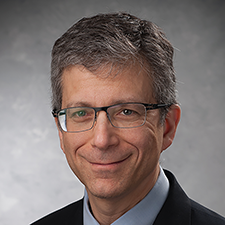
As a resident physician, are you thinking about where you want to build your future in medicine? Meet Darren Gitelman, MD, a behavioral neurology specialist and a featured voice in the AMA’s “Finding My Place in Medicine” series.
In this series, physicians reflect on what influenced their decisions when choosing where to work—and what they wish they had known earlier. Explore his journey to help guide your own path toward a fulfilling medical career.
The AMA Transitioning to Practice series has guidance and resources on deciding where to practice, negotiating an employment contract, managing work-life balance, and other essential tips about starting in practice—including in private practice.
"Following” Dr. Darren Gitelman.
Specialty: Behavioral neurology.
Practice setting: Group.
Employment type: Employed by Advocate Health, in Park Ridge, Illinois. Advocate Health is part of the AMA Health System Member Program, which provides enterprise solutions to equip leadership, physicians and care teams with resources to help drive the future of medicine.
Years in practice: 32.
Key factors that led to me choosing to work at Advocate Health: I worked at Northwestern Medicine for 20 years, and then was recruited to Advocate Health Care, to develop a new memory center, which had been my desire. Advocate was already a large system in Illinois at the time, but it didn't have a memory center, and there wasn't an organized effort at that time in the health system to take care of patients with Alzheimer's disease and other dementias, which was my area of expertise. So, the ability to design a center was very significant to me.
One of the other reasons the Advocate position was attractive was that there was philanthropy available for the memory center. This was important since memory centers can be difficult to sustain financially as they have not typically had many reimbursable procedures as with other specialties.
The other important aspect of the position was that Advocate was so big and had so many locations, and I was very interested in clinical trials. From the South Side to the northern suburbs and out west, I saw an opportunity to recruit a diverse population for clinical trials, which I considered scientifically as well as personally important. People should have the opportunity to participate in trials and receive the benefits. Also, we should understand who research applies to and that it's safe for people of varying backgrounds.
What stood out to me during the interview and hiring process: There seemed to be an understanding of the need for the specialty, which isn’t always the case, because, again, we don't do high-margin procedures. Now that the population is aging, everybody worries about Alzheimer's disease, but there are not a lot of us that do this work. It was important that the people who recruited me really seemed to understand the importance of the specialty to their patients. In addition, the benefactor for the center made both research and clinical care part of the donor intent statement, so this ensured we would have the funding for both activities.
How feedback from peers and mentors influenced my evaluation process: I was at Northwestern, which was very academic, and this role was at a community hospital, a very different environment. The advice my peers gave me was to look at the job and think about what I could do with it, the ways in which I could excel. Today, the Advocate Memory Center is one of the top Alzheimer's and dementia care programs in Illinois.
Why I chose to work in this practice setting: It was important that I didn’t have to do hospital service at Advocate, and was able to focus entirely on outpatient care, research and education. This allowed me to concentrate my efforts and develop the program more quickly into an excellent center of care.
The top qualities for a great place to work for physicians: The institution needs to recognize what the contributions are of each specialty and foster excellence in those areas. Also, leadership needs to be able to listen to people and have the foresight to develop new programs and new ways of taking care of patients.
For example, Advocate has a strategy program called Care Model Engineering, which seeks to find new pathways to care for patients that can lead to an earlier diagnosis or better treatment. You can't just do things the same way all the time. Change can be scary, but organizations can navigate it by involving and listening to stakeholders so that it works both for patients and staff.
How my current practice supports physician well-being and work-life balance: Advocate has a variety of programs for well-being, and it tests out a variety of technological and practical tools to help clinicians get their work done. Physicians sometimes have trouble achieving work-life balance, but the institution is trying to find ways to get the mundane aspects of the work done more easily so that we can take care of ourselves and our patients better.
The workplace attributes that contribute most to my job satisfaction at Advocate Health: Beyond the employee benefits at Advocate Health, the ability to be involved in program development is huge, and I work with wonderful colleagues and staff at the memory center. Additionally, our Advocate neurosciences national service line leadership has the foresight to develop plans for brain health—and fortunately includes me in developing those plans. This has been very exciting.
The biggest challenges I faced when transitioning from residency to practice: In residency, you're focused on taking care of your patients and there is little time to do anything else. However, when you transition to practice, there's a whole slew of other things to do. You may have to consider whether to be involved with the education of students, residents and fellows. You have to think about research, and you have to design that research as well as get it funded and published. You have to figure out what committees to join. You have to decide what you will focus on in order for your career to develop over time.

What I wish I had known about evaluating a job offer before choosing my first position: I was very naive when I transitioned to practice in 1994. There was not an easy way to get information on salaries or institutional support. I didn't know what my bargaining position was. It was a struggle to figure this out over time.
What I would have done differently when choosing my first job after residency: There are a million things, but for residents and fellows going into practice, you need to have an idea of your worth and also what your goals are, at least in the short term.
I can't say what I would change now. We all make mistakes. I would say learn from what you've been through and try not to make the same mistakes twice.
Why I changed practice settings midcareer: Being able to lead a memory center wasn't going to happen at Northwestern for me since the people who were leading the center when I was there are still leading it to this day. So being able to work with colleagues to design a program where there wasn't one was very exciting. Chance favors the prepared mind, as they say.
How my current role compares with what I imagined: I don't know what I imagined. Even though I switched jobs when I was more senior in my career, I knew I couldn’t predict what the future would hold day to day. I do some clinical, educational, research, program development and administrative work, and I'm not sure I imagined working on all these things. I would suggest that younger doctors make a variety of plans, and if an opportunity you want arises, take it.