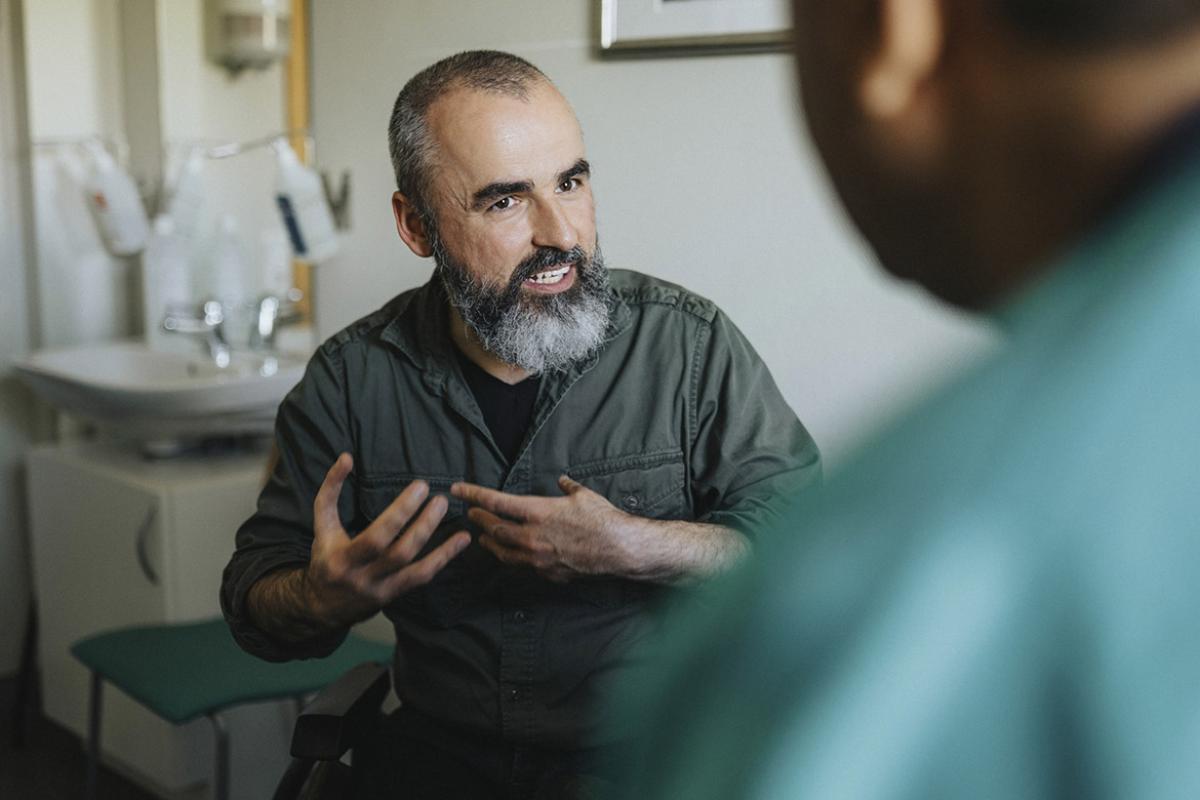
The diagnosis and treatment of mental illness can raise a lot of ethical questions and concerns that challenge the patient-physician relationship. Focusing on minimizing stigma and communicating in ways that emphasize a patient’s strengths can help reinforce the patient-physician bond. But as physicians know, not all courses of treatment have the desired result.
The June issue of the AMA Journal of Ethics® explores some of the critical social, cultural and ethical dimensions of mental illness. Articles featured in this issue include:
- “Ethical and clinical dilemmas in using psychotropic medications during pregnancy.” Pregnant women with mental illness tend to overestimate the risks of medication and underestimate the risks of untreated mental illness. Learn how to address this perceived ethical dilemma and provide optimum care for pregnant patients.
- “Psychiatric diagnostic uncertainty: Challenges to patient-centered care.” In a case study, a patient requests to be treated for depression without including the diagnostic label of bipolar II disorder in her health record. Find out how to ethically diagnose appropriately while also remaining sensitive to your patient’s request.
- “Psychosis risk: What is it, and how should we talk about it?” Researchers and clinicians face ethical and policy-based challenges in disclosing, preventing and treating psychosis. Learn which diagnostic labels should be considered to motivate more effective public and professional dialogue about psychosis risk.
- “When is depression a terminal illness? Deliberative suicide in chronic mental illness.” When a patient whose autonomy is intact vocalizes suicidal intent and is doubtful that any course of treatment will alter that intent, how should a physician respond? Explore the concept of hope and its therapeutic limitations.
In the journal’s June podcast, Srijan Sen, MD, an associate professor of psychiatry at University of Michigan Medical School, discusses how mental health care and medical culture can be changed to benefit medical trainees.
Submit an article
The journal’s editorial focus is on commentaries and articles that offer practical advice and insights for medical students and physicians. Submit your work for publication.