In a special address at the 2014 AMA Interim Meeting, an expert from the Centers for Disease Control and Prevention (CDC) told physicians that the chance of encountering patients with Ebola in ambulatory settings is very low—but physicians need to be prepared nonetheless.
Arjun Srinivasan, MD, associate director for health care-associated infection prevention programs at the CDC and captain in the U.S. Public Health Service, provided an update on the current Ebola outbreak in West Africa and gave information about the cases treated in the United States.
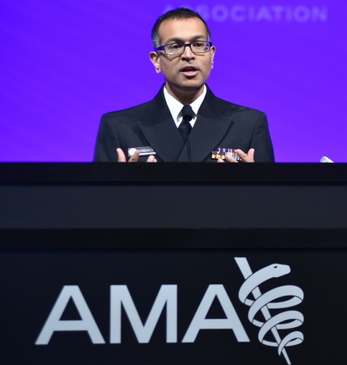
“Without question, we’ve learned that the care of patients with Ebola virus disease in U.S. hospitals and health care settings is enormously complex and very challenging,” Dr. Srinivasan said. “We’ve also learned this can be done safely and effectively if we have strong quality and safety systems in place.”
Dr. Srinivasan gave physicians information about:
- Opportunities for human-to-human transmission of the virus
- How the virus presents in various body fluids and transmission dynamics
- The onset of symptoms over time
- Laboratory findings
- How to detect and diagnose the virus
- Lessons learned about personal protective equipment
- Clinical management of Ebola patients
He stressed to physicians that it is unlikely a patient with Ebola would come to an ambulatory setting, particularly because of the monitoring plans currently in place for people with potential exposures.
Still, physicians should have plans in place, including aggressive screening at clinic points of entry. If a patient comes to a clinic with potential Ebola exposure and exhibiting symptoms, physicians should immediately place the patient in a private room and call their local health department to arrange for the patient’s transfer.
Physicians can use the CDC’s ambulatory care evaluation guidance to learn how to prepare their practices. The CDC also has resources specifically for pediatric physicians.
Dr. Srinivasan also outlined how emergency departments and hospitals should prepare for Ebola patients. While the CDC is preparing specific hospitals for treatment of Ebola patients, all hospitals should know how to screen for Ebola patients.
“We’re eager to partner with you, to collaborate with you,” Dr. Srinivasan said. “This is a fast-evolving situation … things are changing as we learn.”
You can watch Dr. Srinivasan’s entire presentation online and download the slides. The on-demand recording includes questions and comments from physicians.
The AMA’s Ebola Resource Center offers up-to-date Ebola materials developed for physicians and the public by the CDC and other national experts.