For Vasanth Kainkaryam, MD, MS, becoming a physician entrepreneur enabled him to practice medicine the way he wanted, in the areas he wanted, and to pursue a wider range of related interests as well.
As the internist-pediatrician put it in a recent interview with the AMA, “Entrepreneurship is freedom for physicians.” He is well-positioned to know, as the founder, physician owner and medical director of 4 Elements Direct Primary Care & Wellness Space in South Windsor, Conn. A direct primary care practice, 4 Elements has grown to offer aesthetic medicine, medical weight loss and immigration exams as well.
Dr. Kainkaryam will share his experience and the insights he’s gained from it at the AMA Physician Entrepreneur Forum, which will be held Aug. 7–8 at the AMA headquarters in Chicago. Designed for physicians, residents and students interested in health care entrepreneurship and business leadership, the event will feature health care leaders such as Dr. Kainkaryam who have built successful businesses, practices and ventures.
Early registration for the event is open through April 30 at a $500 discount for physicians and $350 off for residents, fellows and medical students. Learn more and register now.
A care model specialists can follow
“There's a lot that happens in the startup world that is very late to come into mainstream medicine,” Dr. Kainkaryam told the AMA. “Physicians who are really interested in doing something that's cutting edge and new, you just don't know unless you get exposure.”
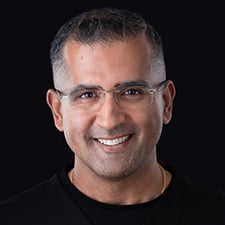
Dr. Kainkaryam had been the chief medical officer of a network of community health centers in Connecticut and hoped he could implement top-down changes to care delivery. Instead, he found his innovative ideas stifled by regulations, leading him to found 4 Elements as a direct primary care practice in 2019.
In launching 4 Elements, Dr. Kainkaryam drew on his experience as the medical director of a branch of Iora Health, an innovative primary care group that was founded by Rushika Fernandopulle, MD, MPP, who also will be among the featured speakers at the Physician Entrepreneur Forum. The experience at Iora, eventually acquired by Amazon, “taught me to how to think out of the box,” he said.
As the American Academy of Family Physicians explains, direct primary care is a practice model that provides comprehensive primary care to a patient in exchange for a recurring retainer fee, typically billed monthly, rather than charging for services paid by the patient or an insurer. It is akin to concierge care and similarly provides prompt access to a physician, but is differentiated from it by lower retainer fees.
“For a low monthly subscription fee, you get an all-access pass directly to your doctor,” Dr. Kainkaryam says in a TedX talk, “A Health Care Choice You Didn't Know You Could Afford.” As described in his talk, the care he provides includes in-person visits, telehealth, phone calls, email and text messages, all without co-pays. It also includes some tests without added costs and can offer lower-cost labs, imaging and medications.
While mostly associated with primary care, the direct care model can be applied to most nonsurgical medical specialties, Dr. Kainkaryam told the AMA, citing rheumatology, endocrinology, gynecology and neurology as examples.
“More physicians, they're seeing it happen in primary care, and they're saying, ‘Wait a minute, we're not that different in the way I practice. Let me take that chance and adopt that model into what I'm doing.’”
Varied patients, consistent care
4 Elements, which Dr. Kainkaryam runs with a physician partner, Diana Rodriguez, MD, now has about 700 patients who pay the practice’s monthly membership fee. He says a direct-care physician should be able to care for panel of between 400 to 600 patients, compared with 2,500 to 5,000 for a traditional practice.
Patients from many walks of life are drawn to getting care from a direct-care physician practice, Dr. Kainkaryam said.
“I’ve got patients who are living paycheck to paycheck, for whom I am their only access to health care,” he says. “I have patients who are human trafficking victims ... I have patients who are on Medicaid, Medicare, who say, ‘I'd rather just pay my membership and see the doc.’”
While Dr. Kainkaryam’s practice includes affluent patients too, “everyone, despite your socioeconomic status, gets the same level of care. Just cause you’re wealthy doesn’t get you more, and just cause you’re not doesn’t get you less with respect to your primary care access.”
In addition to patients seeking a high level of preventive care, Dr. Kainkaryam also has patients with complex medical conditions who sought him out because the standard care model wasn’t meeting their needs. These patients, whose conditions include muscular dystrophies, rare congenital malformations, and autism spectrum disorders, “really want that personalized care,” he said.
Similarly, while 4 Elements has contracts with large employers, the practice also provides care for employees of numerous small businesses. Reflecting his own entrepreneurial nature, Dr. Kainkaryam said he loves working with the latter clients and helping them with their business.
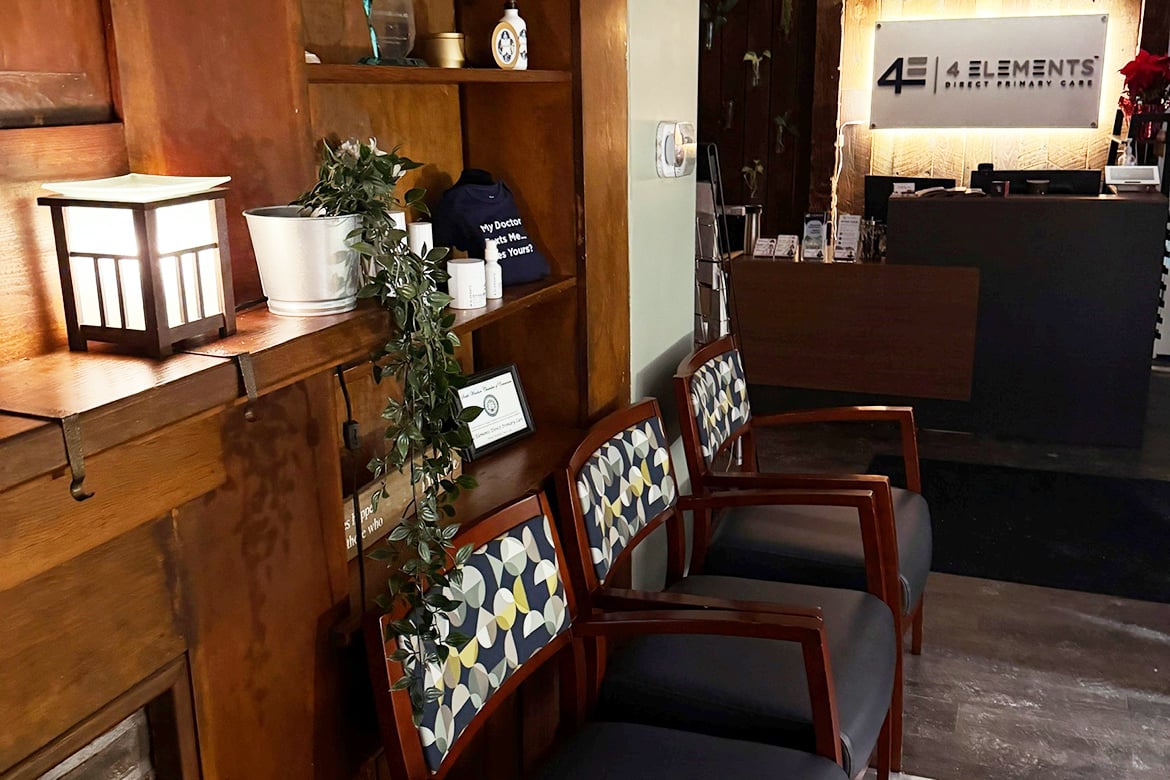
Freedom to be your kind of physician
While most of the practice’s revenue comes from direct primary care, Dr. Kainkaryam has diversified his business by expanding into 4 Elements’ other services. That is the kind of freedom that goes along with a physician-entrepreneurial spirit, he said.
“I'm someone who likes a lot of different things,” Dr. Kainkaryam says. “Those of us who are like that, we tend to seek what else can we add and how do we turn that into a business model.”
He treasures the freedom to pursue these opportunities. “I get to do what I want to do in my practice. I want to have a podcast, I have a podcast. I want to do house calls, I do house calls. I want to have a clothing line, I do. I have found a way to take everything I love and do it through my practice.
“There's a lot of freedom that comes with entrepreneurship. And I think you get to really think of who you are as a physician, what you believe in, and your style of practice becomes an extension of you.”