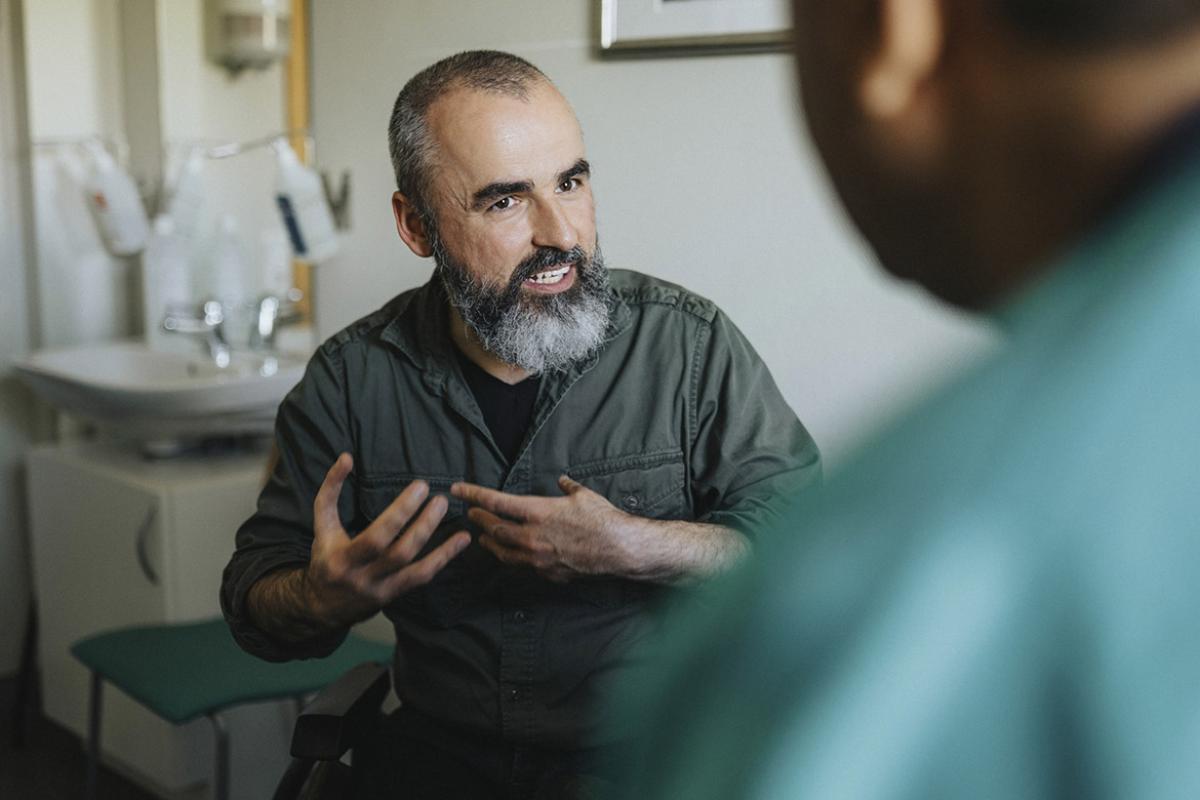
Addison Shenk, a fourth-year medical student from Edward Via Virginia College of Osteopathic Medicine, was the winner of the 2025 AMA Research Challenge and was awarded the grand prize of $10,000, presented by Laurel Road.
- Poster: Hands-On Naloxone Training: Advancing Curriculum and Assessment Through Simulated Manikins Learning (PDF)
- Video presentation
- Topic: Medical Education
- School: Edward Via Virginia College of Osteopathic Medicine
- People’s Choice Recognition: Outstanding Presentation Award
Watch the 2025 finals!
Who will take home the top prize? AMA President, Bobby Mukkamala, MD, hosts the AMA Research Challenge Finals, the largest national, multi-specialty medical research conference for medical students, residents and international medical graduates. Tune in now to watch the passion, dedication, and skill of the five finalists as they compete on the national stage for their chance to win the $10,000 grand prize presented by Laurel Road!
Host
Bobby Mukkamala, MD: President, AMA
2025 finalists
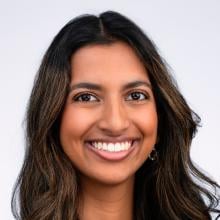
Bijoya Basu
Third year medical student
- Poster: A hormone circuit from fat to hippocampus drives a novel, druggable anxiety pathway (PDF)
- Video presentation
- Topic: Basic Science
- Medical institution: Case Western Reserve University School of Medicine
- People’s Choice Recognition: Rising Star in Medical Research
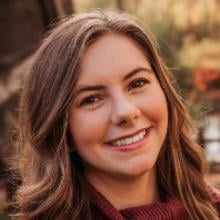
Tiffany Bellomo, MD
Resident, vascular surgery
- Poster: Lipoprotein(a) is a Prognostic Marker of Extracoronary Atherosclerotic Vascular Disease Progression (PDF)
- Video presentation
- Topic: Clinical and Translational research
- Medical institution: Massachusetts General Hospital
- People’s Choice Recognition: Outstanding Research Award
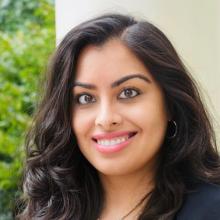
Karishma Popli, MD, MBE
Chief resident, adult neurology
- Poster: Development, Implementation and Evaluation of a Novel Neuropalliative Care Education Curriculum (PDF)
- Video presentation
- Topic: Medical Education
- Medical institution: Johns Hopkins University School of Medicine
- People’s Choice Recognition: Outstanding Poster Design Award
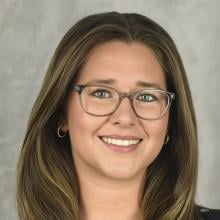
Addison Shenk
Fourth year medical student
- Poster: Hands-On Naloxone Training: Advancing Curriculum and Assessment Through Simulated Manikins Learning (PDF)
- Video presentation
- Topic: Medical Education
- School: Edward Via Virginia College of Osteopathic Medicine
- People’s Choice Recognition: Outstanding Presentation Award
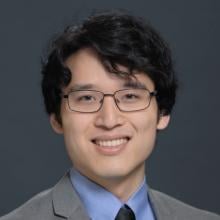
Anthony Wong
Fourth year medical student
- Poster: Machine Learning-Guided Design of Next-Generation Triple Agonist Peptide Therapeutics for Metabolic Disease (PDF)
- Video presentation
- Topic: Basic Science
- Medical institution: Carle Illinois College of Medicine
- People’s Choice Recognition: Innovative Research Award
Panel of judges
John Andrews, MD: Vice president for graduate medical education innovations, AMA
Kirsten Bibbins-Domingo, MD, PhD, MAS: Editor-in-chief, JAMA and the JAMA Network™
Sanjay Desai, MD, MACP: Chief academic officer, AMA
Transcript
Dr. Mukkamala: Every great competition is a journey, and the 2025 AMA Research Challenge is no exception. This journey began last summer with 1,400 submissions from more than 180 medical schools. Over 1,000 were selected for presentation in our virtual poster symposium, and the top 50 posters then advanced to the semi-finals in October. The road that started last year now comes down to today—five finalists, five remarkable medical students and residents, and one stage—The 2025 AMA Research Challenge Finals.
On behalf of the American Medical Association, welcome. I'm Dr. Bobby Mukkamala, president of the AMA and your host for today's exciting event. I'm thrilled to be coming to you from Rush Medical College in the heart of Chicago, a fitting backdrop for this year's AMA Research Challenge. The AMA Research Challenge is the largest event of its kind, and for the fifth year in a row, the winner will take home a $10,000 grand prize, presented by Laurel Road, a brand of KeyBank. Laurel Road offers customized financial solutions to our AMA members, and we're thrilled that they are once again presenting the grand prize today. Thank you, Laurel Road, for your continued support of the next generation of physicians.
For more than 20 years, the AMA Research Challenge has been the premier event for showcasing outstanding research by medical students and residents. Today, when our judges select this year's winner, that long-standing tradition of excellence continues. And that brings us to today's five finalists, an extraordinary group whose work represents the innovative thinking that moves medicine forward. Let's meet our finalists.
Basu: My name is Bijoya Basu. I'm an MD-PhD student at Case Western Reserve University. I'm finishing up the fifth year of my PhD, and I'll be starting Med school for my third year in May. I got into rare books because I found a really old copy from the 1800s of one of my favorite books, which is The Three Musketeers. One thing that I thought was really cool is the original owner had her name written in it, and she had done like a little drawing in it, and I just thought that it's such a cool way for stories to pass over time. Not just the stories of the books, but the stories of the people who own those books.
In 2020, I started a nonprofit called No Longer Voiceless, and we create books for patients who have terminal diagnoses or who are at end of life, where they can choose how they're going to be remembered. This was actually inspired by my grandfather, who had Alzheimer's disease. I think a lot about his end of life and maybe what would have mattered to him.
Unfortunately for a lot of our neurological conditions, we don't have cures for some of them, we don't have treatments. I want to be able to be there for my patients when they're going through the trauma of this diagnosis, and they're losing the sense of who they are.
Something that I've learned about myself, and what I'm excited about is the ability to translate my research into things that could help people. The goal of my research in the lab has been trying to figure out the function of this hormone in the brain, and I found a new function of it in anxiety. And specifically, when the hormone is elevated, it causes more anxiety. And when it's decreased, it causes less anxiety.
What I'm excited about is the ability to discover and develop new medications that can actually help patients. So I'm excited to continue to take this work forward.
Dr. Bellomo: My name is Tiffany Bellomo. I am in vascular surgery residency training, and I'm at Massachusetts General Hospital.
When I was in medical school, I actually did a lot of archery. And so that's where I first learned about technical skill and precision. And I found a similar thing in surgery when I did my surgery rotation. Vascular surgery is one of the coolest surgeries of all time. I think it requires a lot of technical excellence. The vascular surgeon is the surgeon’s surgeon. It takes a lot of precision, skill, practice. I'd say I like to be a perfectionist to get it just right.
Vascular disease is actually really high morbidity, high mortality. What does that mean? A lot of people get leg amputations, die, they can get strokes from this. What we wanted to know is are there any additional risk factors that we can modify or change for people so that this lowers their risk of disease? We look at cardiology. We see they actually have just started developing a drug, and so that presents an opportunity to not only identify people early on who might be at high risk, but also treat it early on and hopefully prevent the progression of disease. And so what we want to do is say, hey, if they're doing that in cardiology with the heart arteries, why can't we do that for all the other arteries?
Residency is definitely a challenging time, but what really keeps me motivated is the successes. I find a lot of satisfaction in looking at the problems clinically and bringing it back to the lab where we can say, hey, how can we work on this, and how can we make this better for patients out there?
Dr. Popli: I'm Karishma Popli, I'm a PGY-4 executive chief resident at Johns Hopkins University School of Medicine doing neurology residency.
I think what I find most rewarding about this job is being able to make a difference in a patient and family member's lives. Being able to help them through the most challenging moments, sometimes frankly the worst moments of their lives in the hospital. It was really seeing my grandparents both go through strokes, and I decided to become a vascular neurologist because of them.
Seeing how their lives changed, it was really devastating. And it's not just the moment that it happens, it's the rest of your life that gets changed forever. How do you break that news to people? How do you help them through that recovery, and how do you broach that in a way that uses compassionate care with neuropalliative care?
We don't normally get training on this in residency. This isn't something that we have formal education on. So I really wanted this project to help develop a curriculum that can standardize that for residents and help them in their careers.
Simulation is something that is often underutilized, but really helpful, because we're often just thrown into clinical scenarios and have to know how to deal with them on the fly. It's really important that we continue to learn and understand the best ways to communicate this news and discuss with family members.
I think my grandparents would be really proud of the person that I've become today, and the type of research that I'm doing to help others and other family members deal with the same things that I saw my family go through.
Shenk: I'm Addison Shenk, I'm a fourth year in medical school at VCOM, the Virginia campus. I've always been into wine, learning about it, how it's made, where it's grown, how temperature and climate all affect these different things. It's actually very similar to medicine in that regard. Always something else you can learn.
When I decided I wanted to go to medical school is when I decided I wanted to do anesthesia. I've been wanting to do it since I was like 12 or 13 years old. My mom kind of introduced me to the field because she was a labor and delivery nurse.
I actually have somebody in my life who suffered from addiction and it was really difficult for me. There was an overdose that I witnessed very early on in college during my freshman year. I was so scared in that moment.
The research project is we're training people in Narcan use, and there's this protocol for it called the Revive Protocol, but it's never been studied for efficacy. Does this protocol actually work to train people well? And so the project focused on testing the Revive Protocol and then adding a simulation component to see if that trained people better. And we did actually see that the people who were trained in simulation knew it a lot better, did better at the simulation, and were way more confident in their abilities to then translate it into the real world. To see that we got positive results was really excellent.
Wong: My name is Anthony Wong. I'm a fourth-year medical student at Carle Illinois College of Medicine.
My journey into medical school was a pretty long and winding path. I started my undergraduate in engineering before making that transition into medicine. What really led me to pursue medicine was seeing my dad get really sick. I was around 22-ish, right after college, when we found out that he had advanced stage colorectal cancer. Seeing him navigate the healthcare system and all the barriers he faced made me really want to be a physician for people like my father.
My research project focused on how we can use machine learning to design better GLP-1 drugs to be more effective for patients while reducing their side effects. A lot of this project leveraged my previous degree in software engineering. The main part of this project was building what is called a graph attention network. Using that model, we then were able to generate about 20 new different protein sequences that biologists can use to then design these new drugs.
One of the key people in keeping me sane throughout this research process would have to be my partner, Priya. Whenever I'd have the code running in the background, we'd be playing board games or watching TV while I was keeping the research in the back of my mind.
With research, there's a lot of ups and downs, setbacks, but what's most important is to keep going and keep iterating and trying new things in order to see your project through.
As for dad, I think he'd be extremely proud of me and how far I've come on this journey.
Dr. Mukkamala: Now let's meet the judges who will be carefully evaluating the finalist’s research projects and ultimately deciding the winner of this year's challenge. First up, we have Dr. Kirsten Bibbins-Domingo, the editor-in-chief of JAMA and the JAMA Network. Dr. John Andrews, vice president of graduate medical education innovations at the AMA. And finally, Dr. Sanjay Desai, the AMA'S chief academic officer.
Choosing the winner of this year's AMA Research Challenge will be no easy task. So tell me, what are you looking for in today's presentations that will help you determine the final winner?
Dr. Desai: Well, I'm happy to kick us off. It's a great question, and I think you're absolutely right, it's no easy task. So we look forward to looking at all of these accomplished presentations. I think for me, the originality and the methodology they used to pursue that original idea will be very important as I listen to these presentations.
Dr. Bibbins-Domingo: I'm really focused a lot on just the delivery, the ability to communicate. These are complex areas that we're going to hear about research in, but to be able to communicate more clearly why this question is important, what are the series of scientific steps that yield the insights? That's what I'm going to really focus on.
Dr. Andrews: And in addition to those things, I'm really interested in the impact that these projects will have on populations now and in the future. They all address important issues and the degree that they move the needle on the way we approach those issues in the future will be a significant area of interest for me.
Dr. Mukkamala: That's great insight into what you think will make a winning presentation. Now it's time. Let's get to the 2025 AMA Research Challenge Finals.
Dr. Bibbins-Domingo: Thank you, Dr. Mukkamala. Let's get started.
Shenk: Hello, my name is Addison Shenk. I'm an OMS-IV from VCOM, Virginia. This study focuses on evaluating the Revive Narcan training protocol used here in Virginia to train people in Narcan use.
Dr. Desai: It was really exciting to see what Ms. Shenk has put together addressing this urgent need around opiate use disorder.
Shenk: They not only responded to the situation and their confidence in their real world performance was higher.
Dr. Bibbins-Domingo: We like to believe that a new training program is effective.
Dr. Andrews: I don't think you're going to address a public health crisis like this by simply training doctors.
Wong: My name is Anthony Wong, a fourth-year medical student at Carle Illinois College of Medicine. Today, I'll be presenting our work on applying graph-based neural networks to design therapeutic peptides targeting multiple receptors for metabolic disease.
Dr. Andrews: Wow, that was fascinating. I feel a little bit like I needed a dictionary to get through it.
Wong: Our results highlight receptor dependent modeling performance, substantially reducing the number of peptides requiring physical synthesis.
Dr. Desai: It is very impressive to listen to Mr. Wong and his description of his science.
Dr. Andrews: It seems to me to be an application of AI that is really productive.
Basu: Hi, my name is Bijoya Basu. I'm an MD-PhD student at Case Western Reserve University School of Medicine. I study a hormone called asprosin, and asprosin is secreted from white adipose tissue. I wanted to figure out what asprosin is doing in other parts of the brain.
Dr. Bibbins-Domingo: That was a very cool project.
Dr. Desai: And you're reminded how complex the body is.
Basu: A lot of patients probably have anxiety being caused by pathways that are yet to be discovered that our current drugs don't address, and so I'm hoping that this is one step forward to helping all patients get adequate relief from their symptoms.
Dr. Bibbins-Domingo: What she's done a really nice job of describing is where she's trying to go with this. And so I think that that's really terrific.
Dr. Popli: My name is Karishma Popli, and I'm a current fourth-year neurology resident at Johns Hopkins. Formal neuropalliative care training remains limited in neurology, residency and fellowship programs. Our objective was to develop and evaluate a novel, scalable neuropalliative care curriculum.
Dr. Andrews: It's wonderful to see a project that's focused on skills that are actually highly relevant to the delivery of care to patients.
Dr. Popli: Preliminary findings demonstrate high feasibility and strong learner engagement.
Dr. Bibbins-Domingo: I would like to ultimately see what do patients experience. And that really has to be part of it, I think ultimately.
Dr. Bellomo: Hi, everyone. My name is Tiffany Bellomo and I'm a vascular surgery resident at the Massachusetts General Hospital. So the objective of this study was to quantify the risk between Lp(a) and both incident vascular disease and progression to major complications.
Dr. Andrews: This addresses a really prevalent and burdensome condition. I just wonder where its utility is going to be.
Dr. Bellomo: Lp(a) may serve as a really important early life predictive biomarker for vascular risk beyond the heart.
Dr. Desai: Is this a predictor or is this a therapeutic target? And I think that will be very interesting to learn as this research continues.
Dr. Mukkamala: Judges, you've had time to deliberate. I'm sure this wasn't easy. Our finalists have all delivered outstanding work, but the moment has arrived. Have you reached a decision on who will be named this year's AMA Research Challenge winner?
Dr. Bibbins-Domingo: Yes we have. It took us a little bit of time because as you suggest, all five were really outstanding, but we have arrived at a final.
Dr. Andrews: Yeah, it was so, so difficult. Such terrific presentations from five really talented trainees.
Dr. Desai: Yeah, incredibly impressive presentations. And I think on behalf of all of us, we congratulate all of our finalists for their tremendous contributions to science.
Dr. Mukkamala: Thank you, judges, for your time, expertise and thoughtful evaluations today. May I have the envelope, please?
Dr. Bibbins-Domingo: Yes.
Dr. Mukkamala: Right now, our five finalists are eagerly standing by. Finalists, the judges have had the difficult task of choosing a winner, but they have come to a decision. And here it is, the moment we've all been waiting for. The winner of the 2025 AMA Research Challenge and the $10,000 grand prize presented by Laurel Road is ... Addison Shenk.
Shenk: Oh my gosh.
Dr. Mukkamala: Congratulations, Addison. How does it feel to be the 2025 AMA Research Challenge winner?
Shenk: I mean, to be honest, I don't have a lot of words right now. I mean, it's absolutely incredible. Thank you so much. I feel so honored and so blessed that my research could have I mean, inspired you guys to choose us. It's such an important project to me. So I'm just oh, I'm just so thankful. Thank you guys so much.
Dr. Mukkamala: 1,400 abstracts were submitted to this year's Research Challenge. Did you ever think you'd be standing here as the winner?
Shenk: To be honest, not at all. I mean, I applied and I was like, OK, well, this is as far as I'll get but to be honest, I had no recollection that I could have ever achieved this or won this. It's just genuinely incredible.
Dr. Mukkamala: Research is so often a team effort. Are there any mentors or teammates you’d like to recognize?
Shenk: Yeah, I mean, Austin and Brooke, who are my co-chairs. They have been with me since the beginning of this. I want to thank them. They've been absolutely incredible in helping me do this. The OPTF chairs that were the year ahead of me, who conceptualized this project and kind of gave it to us. I mean, I can't thank them enough. They were the masterminds behind the beginning of this, the very beginning. They're incredible. And then the OPTF chairs below us and the current OPTF chairs now who are continuing this project and helping us out and getting data and helping me analyze that data and helping me write the manuscript. I mean, without them, this project would have been dead a long time ago. So they … genuinely I've not worked with a better team than I have right now. They are incredible.
Dr. Mukkamala: Thank you to all who support the research efforts of our future physicians. And a special shout out to Laurel Road, for making the grand prize possible. Have you thought about what you're going to do with this prize money?
Shenk: I mean, to be honest, I didn't think I'd get to this point, so I've not thought a lot about it. Genuinely, I’ve got a lot of loans, so some of it's going to go towards that, saving up, helping with the move to residency, making it a little bit easier to start living in a new city. That's kind of where my mind's at right now.
Dr. Mukkamala: Addison, I hope you keep up the great work and continue to do research. We're excited to see what's ahead for you.
Shenk: Thank you so much, guys. I mean, this is truly one of the greatest achievements that I've had in my field. And so thank you again so, so much. This is incredible.
Dr. Mukkamala: Congratulations again to Addison Shenk for being our 2025 AMA Research Challenge winner. Congratulations also to all our finalists.
New to the Research Challenge this year, our People's Choice Voting invited the public to vote for the finalists across five different categories. Congratulations to our finalists for winning their respective awards. On behalf of the entire AMA, a heartfelt thank you to all our participants, co-authors and mentors for your contributions to research and this year's projects. Again, a huge thank you to Laurel Road, a brand of KeyBank, for presenting our grand prize and offering customized financial solutions to our AMA members.
Today and throughout this year's Research Challenge, we've seen some really inspiring and innovative work. Medical research is what drives progress in medicine. It's how we expand knowledge, discover new treatments, bring hope to patients and save lives. Let's continue to recognize, champion and support the essential role research plays in shaping the future of medicine.
Thank you for being part of today's incredible journey. We're grateful you could join us.