AT A GLANCE: Here are key things you will learn about joint replacement from Herrick Siegel, MD, orthopaedic surgeon at Jefferson Bucks Hospital, in this article:
- Pain that disrupts quality of life—from recreational activities to daily tasks such as climbing stairs—is the most common reason patients seek joint replacement.
- Non-surgical options such as physical therapy, steroid injections and activity modification should be tried first, but repeated cortisone injections can damage cartilage over time.
- Artificial joints are made of metal and plastic and typically last about 20 years, though newer PressFit technology may extend that to 30–40 years for younger patients.
- Revision surgery such as replacing worn plastic components is often an outpatient procedure with a relatively short recovery.
- Healthy patients in their 50s may actually be stronger surgical candidates than older adults with multiple chronic conditions.
Joint replacement surgery has long been associated with patients in their 60s and 70s seeking relief from years of accumulated arthritis. That picture is changing. Adults in their 40s and 50s are increasingly presenting to orthopaedic surgeons with debilitating joint pain—caused by early arthritis, prior trauma or underlying disease—and finding that joint replacement may be the best path back to the activities that matter most in their lives. The procedure has also become more familiar to the public, lowering the barrier for younger patients to ask whether it might apply to them.
The AMA’s What Doctors Want Patients to Know™ series gives physicians a platform to share what they want patients to understand about today’s healthcare headlines.
In this installment, Herrick Siegel, MD, orthopaedic surgeon at Jefferson Bucks Hospital specializing in hip and knee replacement surgery, shares what he wants patients to better understand about joint replacement.
Jefferson Health is part of the AMA Health System Member Program, which provides enterprise solutions to equip leadership, physicians and care teams with resources to help drive the future of medicine.
Joint pain and impact on everyday tasks lead to care
“It's pain that brings patients in,” Dr. Siegel said. “If it's impacting their quality of life—meaning activities they want to perform in general for recreation, or if it's impacting even things like activities of daily living such as not being able to get in and out of their car well, they can't go up and down stairs, get in and out of chairs—that brings them in even quicker.”
The diagnostic process is simpler than many patients expect.
“We typically order an X-ray to confirm arthritis,” he said. “It's a pretty obvious diagnosis on X-ray. You don't need fancy imaging. Nothing costly has to be done.
“It's basically looking at an image, an X-ray, and hearing the symptoms. And if they correlate well, then we can consider joint replacement,” Dr. Siegel added, noting that “many of them have already undergone other non-operative treatments before they come to orthopaedics. They've had physical therapy and injections, even prescribed by their primary care doctors.”
Younger adults are increasingly seeking joint replacement
"Joint replacement is a common operation that most people have heard about and are familiar with,” Dr. Siegel said. “We all know people who’ve had a joint replacement and see how well they're doing.”
“Even younger patients who come in with trauma to their joints, an underlying disease process, or early arthritis in general,” he said, “if they're having pretty significant debilitating pain that keeps them from doing things they want to do, we'll discuss possible joint replacement.”
Nonsurgical treatments should come first
Understanding what non-operative therapies can and cannot do helps patients make informed decisions on next steps when they've exhausted those options.
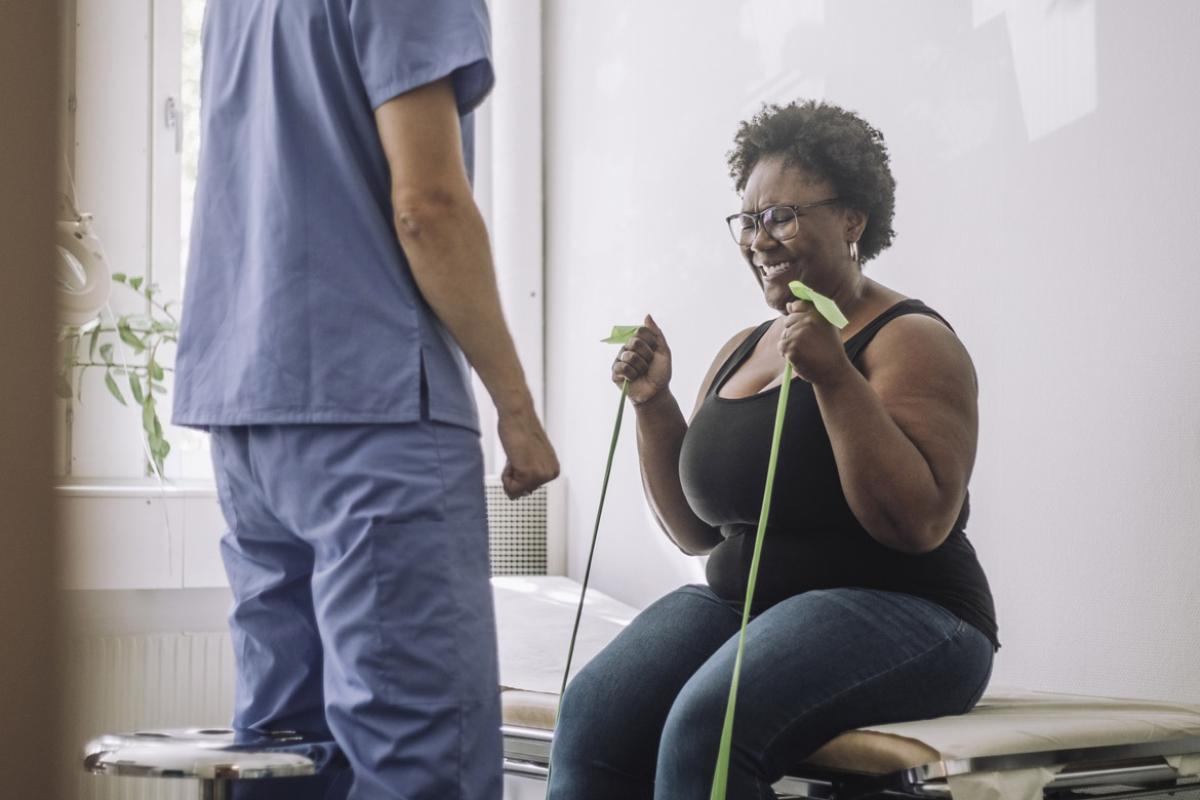
"We try to treat patients initially with non-operative treatments such as physical therapy,” Dr. Siegel said. “Therapists can consider a wide range of modalities to reduce inflammation, increase muscle strength and achieve balance of the joint. Therapy is very effective early on.”
"There are patients who see some benefit but whose symptoms return. We include additional therapies for those individuals, such as injections,” he said. “Although cortisone is helpful to reduce inflammation, repeated injections over time do have negative effects on the cartilage itself. So, it's not ideal for a young patient to have multiple steroid injections.”
Additionally, “braces can be helpful, but very few patients are compliant with wearing a brace,” Dr. Siegel said. “Other procedures can be done to address the pain itself, but they're not addressing the underlying problem."
A broader review of the patient's overall health is also part of the picture.
"We also may discuss weight loss. If patients have chronic medical issues or obesity, we'll address the medical problems that may be leading to joint pain,” Dr. Siegel said. “And some of the medications that patients are on—particularly cholesterol-reducing medications—can cause muscle and joint pain.
“So, we'd also want to make sure that taking them off a medication they're on would not significantly improve their symptoms before considering surgery,” he added.
Age matters but so do symptoms and what imaging finds
With joint replacement, it is important for patients “to have a realistic expectation,” Dr. Siegel said. “If they're coming in because they want to improve their tennis game, that's probably not the best indication.
“But if they're telling me they can't walk farther than two blocks without significant pain, it may be impacting their work and impacting their life,” he added. “Also, we have to make a correlation between their symptoms and what we see on the X-rays.”
“If a patient has a good amount of cartilage left but has a lot of pain, then we wouldn't necessarily consider joint replacement,” Dr. Siegel explained. “But if the cartilage loss on the X-ray matches their symptoms, then joint replacement is an option, depending on their issues and how it's impacting them."
Implant longevity has improved but revisions are real possibilities
For joint replacement, "the implants are made of metal and plastic, so there's no way for the body to repair metal and plastic,” Dr. Siegel noted. “If there's an injury or damage to a component from overuse or any kind of injury, there's no way for the body to repair the implant.”
“Sometimes that leads to increased wear and earlier problems,” he said, emphasizing that “there is always that possibility of needing an additional surgery.”
“Replaced joints typically last 20 years. We don't really have a great number to put on the length, because some patients will have implants in for 40 years, and some may need a revision after two years if something happens,” Dr. Siegel explained. “So, it does vary a lot. But when we talk about normal wear, we say about 20 years is what's expected. The polyethylene has also improved significantly in the past 10 to 15 years and is lasting longer.”
Newer technology is extending that timeline, particularly for younger patients.
"The implants have improved over the past five to 10 years. We're using less cement for younger patients, using what's called PressFit, which allows the body to in-grow into the metal. It theoretically has a longer-lasting impact for younger people,” he said. “So perhaps instead of a 20-year life of the implant, it may extend it to 30 or 40 years.”
“Our techniques are better too. People are recovering a little quicker,” Dr. Siegel noted. “Younger patients obviously do place higher demands on implants, but if they're having significant symptoms, it's not worth having them suffer for another 10 years before getting an implant.”
When revision is eventually needed, it is often far less daunting than patients imagine.
“The joint revision tends to be pretty straightforward most of the time. If it's just wear of the plastic, we can exchange it during an outpatient procedure that doesn't take a long time to recover from," he noted.

Recovery from joint replacement varies
"A younger patient with arthritis should be able to return to pretty much everything they want to do,” Dr. Siegel said, noting “many surgeons don't put restrictions on patients. We let them do any activity they feel comfortable doing.”
“People with medical issues, such as osteoporosis or other conditions that would place restrictions on their activity, would need those conditions addressed on an individual basis,” he said.
The recovery experience is notably different between hips and knees.
“Hips recover faster. Often, patients will even forget they had a hip replacement. “You can walk right after hip surgery. You use a cane or a walker just because sometimes you'll have instability and may not feel comfortable putting all your weight on it right away.”
“For knees, it's a little less common to feel like you don't remember you had a joint replacement,” Dr. Siegel explained. “The muscles around the knee are sometimes a little weaker after surgery, so using a walker or crutches protects them.
“After about two to three weeks, most patients are walking pretty comfortably with a cane or without any assistive devices,” he added.
A referral to an orthopaedic surgeon opens a conversation
"Sometimes patients are referred for a knee replacement, and they don't often need it,” Dr. Siegel noted. “It's really an orthopaedic surgeon-patient discussion. If they're referred to an orthopaedic surgeon and are told, 'You need a knee replacement,' it still requires an additional discussion—an examination, more details—before committing to knee surgery.
“It is a surgery that we can't go back on once a knee replacement is done, so we really want to make sure the indications are solid and the patients have reasonable expectations," he added.
The formal path to surgery typically begins at the primary care level.
"Initially patients are screened by their primary care doctor. They're having knee, hip or ankle pain, and X-rays can be done at that point,” Dr. Siegel explained. “If there are advanced changes occurring with cartilage loss, then patients can be referred at that point.”
X-ray studies are typically a prerequisite for patients wishing to see an orthopaedic surgeon. However, Dr. Siegel noted that “many non-operative orthopaedic doctors and sports medicine doctors will see patients prior to referral to an orthopedic surgeon that does total joint replacement, just to make sure that they're a candidate.”
For healthy adults in their 50s, acting sooner may be better
"As a younger patient, one of the big benefits is that they tend to be healthier,” Dr. Siegel said. “As you get into your 60s, 70s with more comorbidities, or if you've lived with diabetes for a long time, it does make it harder to recover—it puts your risk higher.
“So, a healthy 50-year-old can be a great candidate for a knee replacement as opposed to someone who’s 70-something and has had multiple heart surgeries and is on blood thinners. The risk is higher," he added, noting that "I often tell people, if you're in a lot of debilitating pain and are in your 50s, it's still OK to have a joint replacement, and this is probably a good time because your health is optimized."