




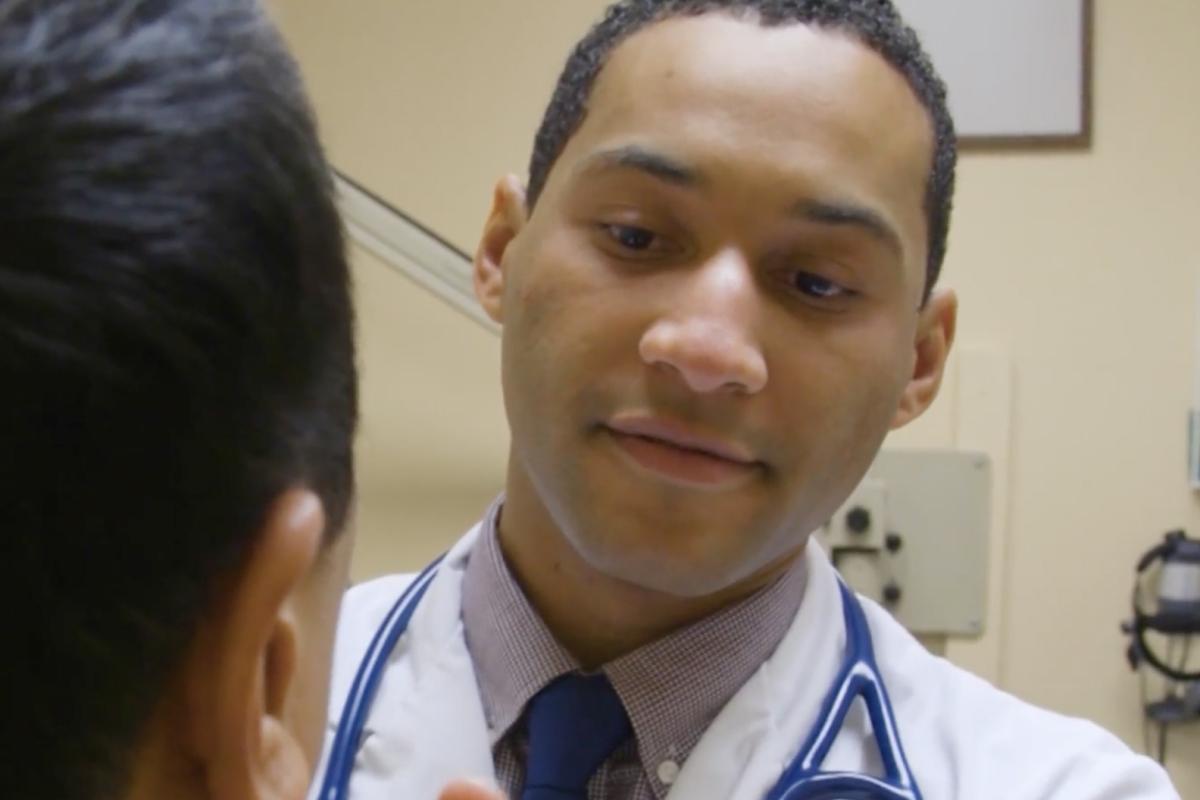

AT A GLANCE: Here are key things you will learn about choosing a primary care physician from Chelsea Traverse, MD, a family physician with Sanford Health, in this article:
- A primary care physician helps with preventive care, routine screenings, immunization, chronic disease management and guidance when new health concerns come up.
- When choosing a PCP, patients should think about location, office hours, insurance coverage, physician background and whether the doctor feels like a good personality match.
- Family physicians care for patients across the lifespan, internists focus on adult care and chronic disease management, and pediatricians care for infants, children and adolescents.
- The first visit with a new PCP often includes reviewing your medical, surgical and family history, discussing your priorities and starting to build trust for long-term care.
Whether you need an annual checkup, help managing a chronic condition or guidance on a new health concern, having a trusted physician to turn to can make all the difference. But finding the right doctor is not always easy. With so many options, knowing how to choose a primary care physician (PCP) who meets your needs is an important first step toward better health.
A primary care physician is often the first doctor patients see for routine medical care, preventive screenings and common health concerns. These physicians also help manage chronic conditions, coordinate care with specialists and guide patients through important health decisions. Building a lasting patient-physician relationship can help ensure care is consistent, coordinated and tailored to individual needs.
But not all primary care physicians have the same training or approach to care. From understanding the differences between family medicine and internal medicine to considering insurance coverage, communication styles and personal health needs, there are several factors to weigh when choosing a doctor. Knowing what to look for can help patients find a PCP they trust and feel comfortable seeing for years to come.
The AMA’s What Doctors Want Patients to Know™ series gives physicians a platform to share what they want patients to understand about today’s healthcare headlines.
In this installment, Chelsea Traverse, MD, a family physician in Fargo, North Dakota with Sanford Health, took time to discuss what patients should know about choosing a primary care physician.
Sanford Health is part of the AMA Health System Member Program, which provides enterprise solutions to equip leadership, physicians and care teams with resources to help drive the future of medicine.
A PCP doctor is someone who knows you
“It’s important to have somebody who knows you before you need something,” Dr. Traverse said, emphasizing that a primary care physician is “someone who can understand you as a person and it makes it easier to navigate when there are health challenges that come up.”
“A lot of times, people don’t always know what they’re due for a screening, so having a PCP can help guide you through that and make sure your medical history and needs are updated over time,” she said, “because it can change depending on family health history and other risk factors. So, it’s about staying on top of those medical needs.”
Find a PCP near you
When it comes to choosing a primary care physician, “some of the considerations are more practical in terms of knowing where the location is compared to where you live, the hours of the clinic and the doctor who you are going to be seeing,” Dr. Traverse said. “If the office is too far away or they’re not open on the days that are most convenient to you, that is going to make it challenging.”
“Then, of course, insurance coverage does play into that as well. But then there are other things such as personality matches,” she said. “With some organizations, you can fill out a form online and they can try to match you with a physician who they feel would be a good fit for you.”
“Sometimes a provider’s bio is online too. There are often reviews for primary care physicians. Sometimes that can be helpful too,” Dr. Traverse added.
A family medicine doctor covers the whole lifespan
While “there are some differences, there are some similarities too” between primary care physicians, Dr. Traverse said. “Internal medicine and family medicine overlap in a lot of ways. Family medicine is unique in the sense that we take care of patients across the lifespan—from newborns all the way until over 100.”
Family medicine is “really covering that full spectrum of care, so people do have the opportunity to stay with the same primary care provider throughout their life, assuming the doctor does not retire or leave the practice,” she explained, noting that family physicians have a “heavy focus on preventative care and then doing as many procedures as we can for our patients. Not all other primary care specialties do as many procedures.”
An internal medicine physician is for adults only
“Internal medicine is for adults only and tends to have a little bit more training and specialty in chronic disease management,” said Dr. Traverse, “as well as things that come with aging that can be a bit more complex.”
That is why internists often “have a little more specialized interest,” she noted, explaining that internists do not perform major operations or surgeries and instead focus on clinical evaluations, diagnostic testing, chronic disease management and minor office-based procedures.
Pediatricians take care of younger kids
Another primary care physician is a pediatrician who specializes in physical, emotional and social health of infants, children, adolescents and younger adults. Typically, pediatricians provide care from birth up to age 18 or 21.
“Children and adolescents have pediatrics as an option for primary care,” Dr. Traverse said. “Similar to other specialists, pediatricians focus on kids,” providing preventive care, immunizations—such as HPV, polio and measles vaccines—annual physicals and more.
Having a PCP helps improve preventive care
By having an established relationship with a primary care physician, it can improve preventive care and help patients stay on top of screenings, immunizations and other health needs.
“There are online resources available today but it’s helpful to have a trusted conversation with a primary care provider if you have questions or concerns,” Dr. Traverse said, noting that “some recommendations are getting more individualized based off of risk factors, family history and genetics, so having somebody who can walk along with you to understand those risk factors is important and that evolves over time as well.”
“Part of it, too, is understanding the priorities of the patient in terms of what is important to them, what things they might want to focus on. And having a person who you have a relationship with increases trust,” she noted. “There’s a lot of opportunity there for conversations that are individualized to your medical needs.”
“If you know someone better, you trust them more,” Dr. Traverse emphasized.

A new PCP visit will include health history review
“That first appointment with your new primary care physician, a lot of times, we’re going to review your whole health history,” Dr. Traverse said. “For that individual patient, knowing their medical and surgery history, but then also family history.”
“One of the things that can be helpful coming in for that first appointment in terms of preparation would be to talk to first degree relatives, which is parents, children and siblings, to get a good medical history from them,” she noted. “A lot of us like to get to know our patients too—who they are, what they do for work, what they do for fun and what their home life is like.”
This is to help physicians get “an understanding of who the patient is as a person,” Dr. Traverse said. “Then if there are concerns or questions that patients have, they should bring those along too. It helps sometimes to write down things you want to cover.”
“We cannot always cover everything in that first visit, so it is important to know which concern is the most important to you for that visit,” she said. “A lot of places have online check-ins too where people can write notes and sometimes it’s helpful to enter those things in there.”
It takes time to find the right PCP
When choosing a new primary care physician, “some of it is practical, such as checking insurance, locations, hours and things like that,” Dr. Traverse advised. “If you’re moving or just need to transition your care from a pediatrician to a family physician or internist, if you have trusted friends and family members, that’s a good place to ask.
“I know everyone is busy and nobody wants to take extra time or see more doctors than they have to, but sometimes it does take a couple tries to get the right fit and that’s OK,” she noted. “A lot of people are nervous that we’re going to feel offended if you find a different doctor. But in general, if it wasn’t the right fit, it’s OK to find another person.
“You don’t want to stay with somebody you’re not comfortable with because that’s just not going to be helpful for getting the best care for yourself,” Dr. Traverse added.
Even if you are young and healthy, a PCP is key
“If you’re young and healthy, getting to know somebody who is going to potentially walk through some health challenges with you before you’re in those health challenges can be really important,” Dr. Traverse said. “It’s always easier and more productive having those conversations in those more challenging moments if the physician already know that patient in their baseline.”
“Having an established relationship with a doctor also means we’re going to notice if something is different,” she emphasized. “Just having that relationship to say, ‘Something seems off today,’ can be really important for health concerns.”
It’s important to feel that you can speak up
Emphasizing the patient-physician relationship and “having those conversations, it’s really important for patients to feel like they can speak up when they have a concern or ask a question,” Dr. Traverse said. Patients should also feel comfortable with their primary care physician to be able to speak up and “question a recommendation if they don’t feel comfortable with it.”
“That’s where having that relationship and understanding is so important,” she said. “Even if someone’s healthy, this is a vulnerable area of life, so having that physician who you trust is really important in general.”
Additionally, it’s about “making sure that you can set some clear goals around what you want for your health and having somebody who can help you walk in that is just important,” Dr. Traverse emphasized.