More than 50 million people in the U.S. get their care at their local community health centers. These 1,500-plus organizations, with over 17,000 sites dotting every U.S. state and territory, are not last resorts for people who have been economically or socially marginalized.
Community health centers—aka federally qualified health centers (FQHCs)—are very often patients’ most-trusted healthcare resources. Besides primary care, many provide specialty care, behavioral health, dental care, laboratory services, pharmacy, case management and just about everything else people hope to find in an outpatient setting.
FQHCs are much more than clinics, though. They are experts at looking outside their walls to identify and remove the barriers people face in just getting, and getting to, their appointments. A great number also provide translation, transportation and help with public health insurance enrollment.
Because of this emphasis on treating the whole person, FQHCs are often thought of as one-stop shops for people in need of care. And because they are so good at what they do, FQHCs help ensure the financial viability of the larger healthcare system by preventing unnecessary emergency department visits and hospitalizations.
But even that is not a full accounting of what community health centers mean to society. Many are also tackling the broader forces that too often limit their patients’ social and economic mobility.
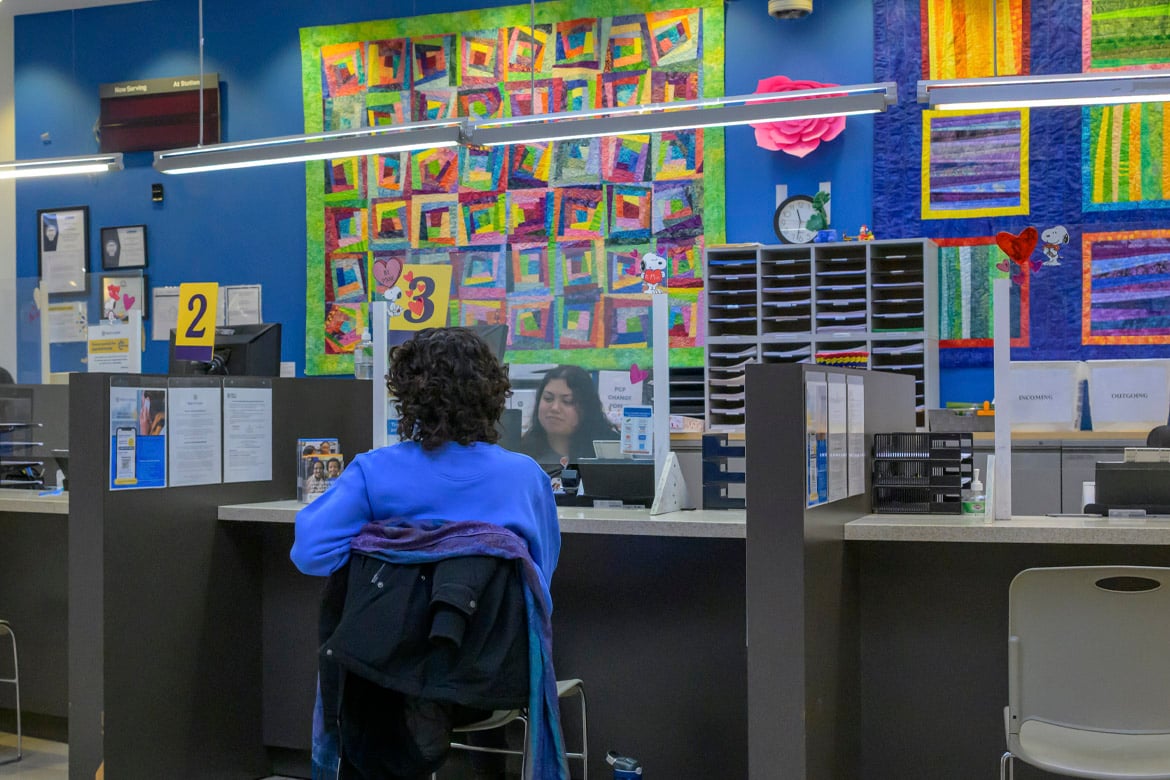
A prime example is Mary’s Center, an FQHC with five locations in Washington, D.C., and Maryland. Like a lot of other FQHCs, Mary’s Center screens patients for a variety of social determinants of health and then provides—either itself or through referrals to partner agencies—food distribution, housing assistance, legal help and other social services.
Inside each of its three D.C. locations, however, you will also spot something exceptional even among FQHCs: a school for children and adults.
Each helps the other
Since 1999, Mary’s Center has partnered with Briya Public Charter School, which specializes in two-generation education. The school offers English-language classes and job-training programs in healthcare for adults, early childhood education for young children, and integrated family learning experiences.
Briya educates more than 900 children and adults annually, including those at a fourth D.C. site, with a Boys & Girls Club. It was named a model education site by the U.S. Department of Education in 2002 and became a D.C. Public Charter School in 2006.
Mary's Center promotes Briya's programs to patients by placing flyers for the school in exam rooms and by proactively suggesting education opportunities during clinical visits.
“The connection between healthcare and education is straightforward,” Sandra Jones, the chief of staff at Mary’s Center, told a group of AMA officials during a visit earlier this year. “You’re not going to be able to focus on school if you're not healthy, and it's much harder to stay healthy if you have difficulties with language or reading.”
Briya’s early childhood education program is Reggio-inspired—focusing on natural materials and outdoor learning—and features dual-language classrooms. Its family integration model brings parents, children and teachers together weekly for play-based learning that supports school readiness and promotes home languages and cultures.
On the adult-education side, Briya offers students individualized pathways to help them attain their educational and life goals. Students can take English classes from pre-literacy to advanced levels, earn a high school diploma through the National External Diploma Program, and acquire nationally recognized credentials for careers in high-demand fields. Multilingual child development and family learning experiences are woven into almost every program. Morning, afternoon and evening classes are offered.
In addition, once patients become students, Mary's Center nurses and Briya teachers can interact directly regarding student health issues. Teachers are considered part of the care team.
Innovation is baked in
Education is a natural fit with Mary’s Center’s social change model, which prioritizes providing frictionless services, moving from theory to action via rapid prototyping, and person-centered policymaking. The model brings healthcare, education and social services together—because improving health means addressing the broader challenges people face in their daily lives.
The care at Mary’s Center is so impressive that Raymond K. Tu, MD—chief of radiology at Cedar Hill Regional Medical Center, vice chairman of community radiology, and a native Washingtonian—has been going there for his dental care since his days as the chief medical officer of the D.C. Medicaid health plan.
“We awarded an innovation grant to Mary Center’s because of their really out-of-the-box thinking,” said Dr. Tu, who is also a member of the AMA Council on Science and Public Health and chair of the board of directors of the Medical Society of the District of Columbia. He is a former president of the medical society.
“The grant funded a pilot program that linked primary care with dental care. When patients scheduled a primary care visit, we dovetailed a dental visit, and vice versa,” he said. “We saw an increase in utilization of both by about 20%, which is amazing because many patients who come in for care have to take unpaid time off from work, so you want to be efficient.”
Dr. Tu is now pushing to expand Mary’s Center’s work with local healthcare organizations. One is the Radiology Health Equity Coalition, which maps suboptimal use of healthcare to help develop foundational evidence for health policy and radiology.
“How can we use the data-mining tools of the coalition to help Mary’s Center identify further opportunities and expand?” he said in an interview with the AMA.
In parallel, the Radiology Health Equity Coalition plays a critical role in expanding cancer-screening access for Mary’s Center patients through a warm handoff model. In partnership with the Radiology Business Management Association’s Imaging for a Cause Foundation, this model helps ensure patients successfully connect to timely diagnostic imaging. The coalition also provides education at FQHCs such as Mary’s Center, empowering patients with information on cancer screening and image-guided treatment options, including uterine artery embolization for uterine fibroids.
Another opportunity for expansion and collaboration is D.C.’s newest hospital, Cedar Hill Regional Medical Center.
“It’s the first new hospital in the District of Columbia in a quarter century. It’s a beautiful place, everything is new, and the emergency department is busy, busy, busy,” Dr. Tu said, wondering about the possibility of the organizations’ working harmoniously to close the loop in patient care. “It could be amazing.”

A new challenge to overcome
Mary’s Center was founded by Maria Gomez, a Colombian immigrant who arrived in the U.S. with her mother at 13 and went on to earn a bachelor’s degree in nursing from Georgetown University and a master’s in public health from the University of California, Berkeley.
Along with a group of health advocates and the D.C. Mayor’s Office on Latino Affairs, Gomez founded the community health center in 1988 in the basement of a rowhouse in Washington’s Adams Morgan neighborhood, initially focusing solely on prenatal services for women fleeing civil wars in Central America.
It took decades to build Mary’s Center into what it is today—caring for more than 65,000 people annually from over 50 countries—but recent policy choices are making it more challenging for the physicians and other health professionals there to deliver care to the patients who need it.
The One Big Beautiful Bill Act of 2025 creates new administrative requirements and conditions on Medicaid eligibility—including work requirements—for patients seeking to enroll in or maintain Medicaid coverage and restricts states’ ability to use provider taxes to finance their Medicaid programs. Learn more with the AMA about changes to Medicaid, the Affordable Care Act and other key provisions of the One Big Beautiful Bill Act.
Mary’s Center’s CEO Nancy Ban said her organization relies on Medicaid for about 60% of its annual revenue.
"Coverage disruptions don’t just affect insurance—they interrupt care,” Ban said. “We’re preparing now to keep patients connected and prioritize continuity, even in a constrained environment.”
Medicaid eligibility for certain non-U.S. citizens will be narrowed Oct. 1, and work requirements will take effect Jan. 1, 2027.
Empowerment goes both ways
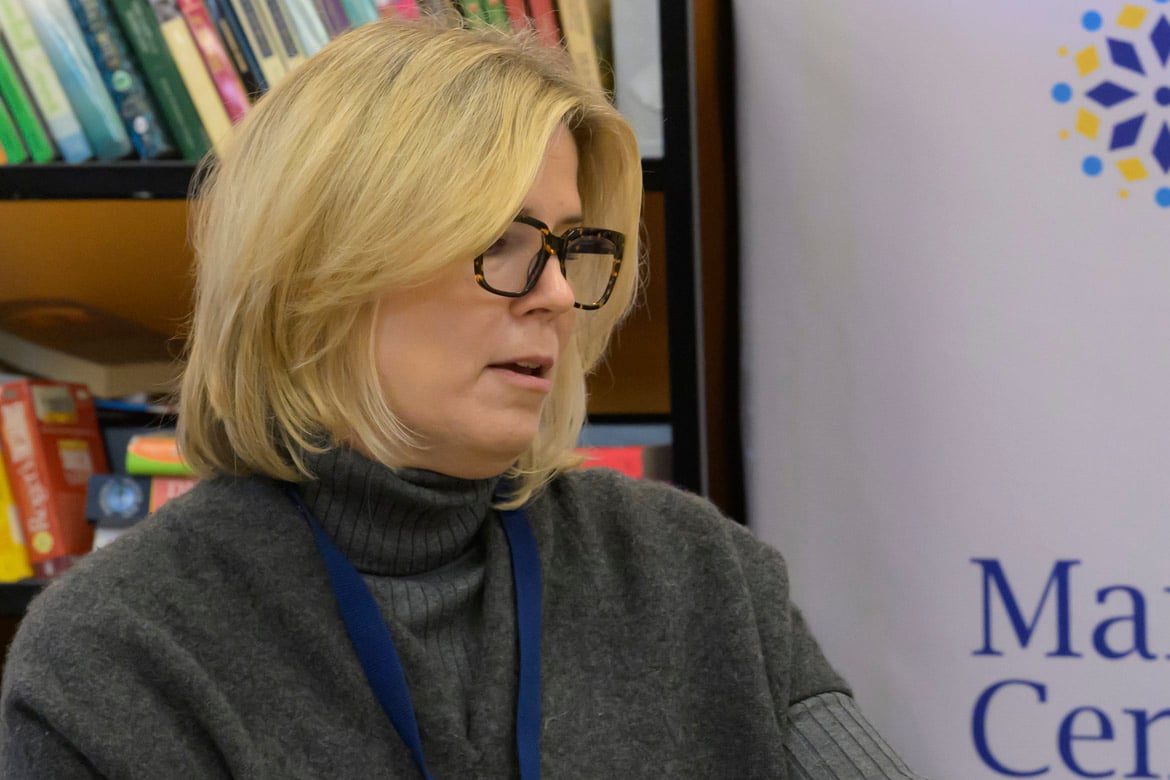
Back at Briya, the most robust connection with Mary’s Center is in the area of workforce development, said Dana Mueller, MD, the interim chief medical officer at Mary’s Center. Briya offers a Medical Assistant Program and a Child Development Associate Program.
Briya students in the Medical Assistant Program do their practicums at Mary's Center, creating a pipeline through which community members become trained colleagues. Those in the Child Development Program get equipped to become early childhood teachers or open their own home-based childcare centers.
“One of the things that makes Mary’s Center great is that our workforce comes from our community—the community we serve,” Dr. Mueller said. “Our patients are our colleagues, as are the families and their communities. It is very interdigitated.”
This emphasis on treating—and connecting with—the whole person also has positive effects on Mary’s Center physicians and other health professionals, she said. It’s not uncommon for physicians to have been on staff for more than 10 years. Some have been there for more than 20. She has been there for 12—ever since she completed her internal medicine residency—and in those years she has seen a big growth in the FQHC’s ability to meet the care needs of adults and other groups, such as patients with substance-use disorders.
“People quite happily spend their careers here,” Dr. Mueller said. “When people ask me why I’ve stayed at Mary’s Center for so long, I say it’s the mission of service in the community to those who need it. I've never seriously looked for other work because this job continues to be fulfilling and the community continues to be rewarding to serve.”
Learn more about AMA STEPS Forward® resources and customized support for FQHCs and safety-net healthcare organizations.