- Physicians show similar patterns of exposure and interest
- Patients don’t request data reviews regularly
- Environment in early transition and countries differ
- Multiple conditions influence integration
- Moving physicians toward integration requires investment
- Specialty remains an important second lens
- Related resources
The 2026 AMA Multi-Country Study on Consumer Wearable Data in Clinical Practice (PDF) was conducted by the AMA Center for Digital Health and AI and Medscape and was designed to assess how physicians across six countries interact with consumer-grade wearable devices in clinical practice. The survey examines current behaviors, barriers to integration, trust in device data, reimbursement dynamics and the structural factors that distinguish countries where integration is advancing from those where it remains stalled.
The survey’s definition for “consumer digital wearables” was non-prescription, commercially marketed technologies used by individuals to monitor personal health, fitness and performance. Excluded were prescription medical devices such as continuous glucose monitors and clinical diagnostic tools (e.g., mobile cardiac telemetry or home sleep apnea tests).
Survey findings are from 2,222 physicians surveyed from January through early March 2026, spanning the U.S., Canada, U.K., France, Germany and Spain.
Physicians show similar patterns of exposure and interest
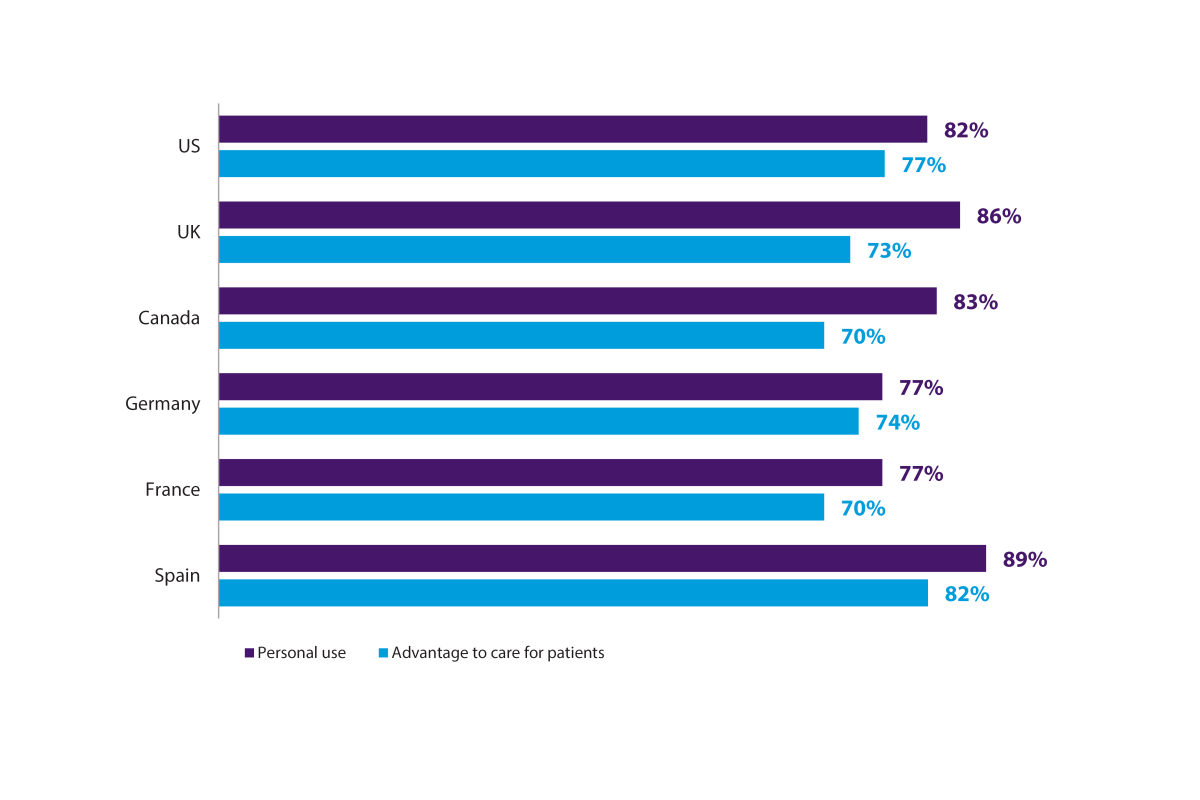
Most physicians already review wearable data in some capacity, with only 3% never reviewing. The most commonly reviewed data categories are broadly similar across countries, especially heart physiology, activity and function; biometric/physical events and alerts; and sleep. Most physicians use wearables personally, and large majorities in both the U.S. and outside report that wearable data offer at least some clinical advantage for patient care, even though countries differ in how easily that interest turns into routine clinical use.
- Figure 3, Physicians across countries see clinical advantage of wearable data for providing patient care
-
Patients don’t request data reviews regularly, but when they do, physicians typically act
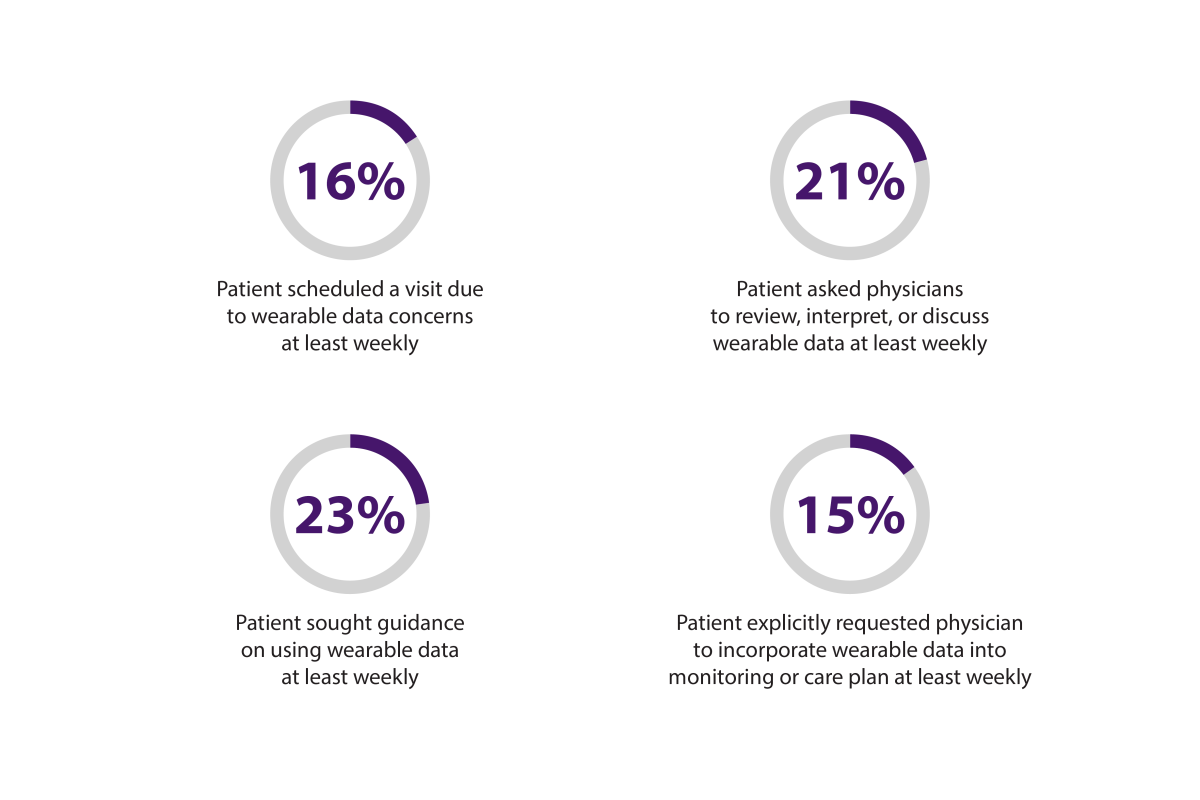
Patient-initiated engagement with wearable data is visible but not yet routine. Fewer than one in four physicians report weekly patient requests across any of the four measured demand indicators. That frequency suggests wearable data are entering clinical conversations selectively rather than systematically. When patients ask, physicians typically act. Activating demand, through patient education, wearable literacy tools and clinician-facing communication resources may be one of the most direct strategies for accelerating clinical use.
- Figure 4, Patient demand is present but not yet routine
-
Environment in early transition and countries differ in how far along
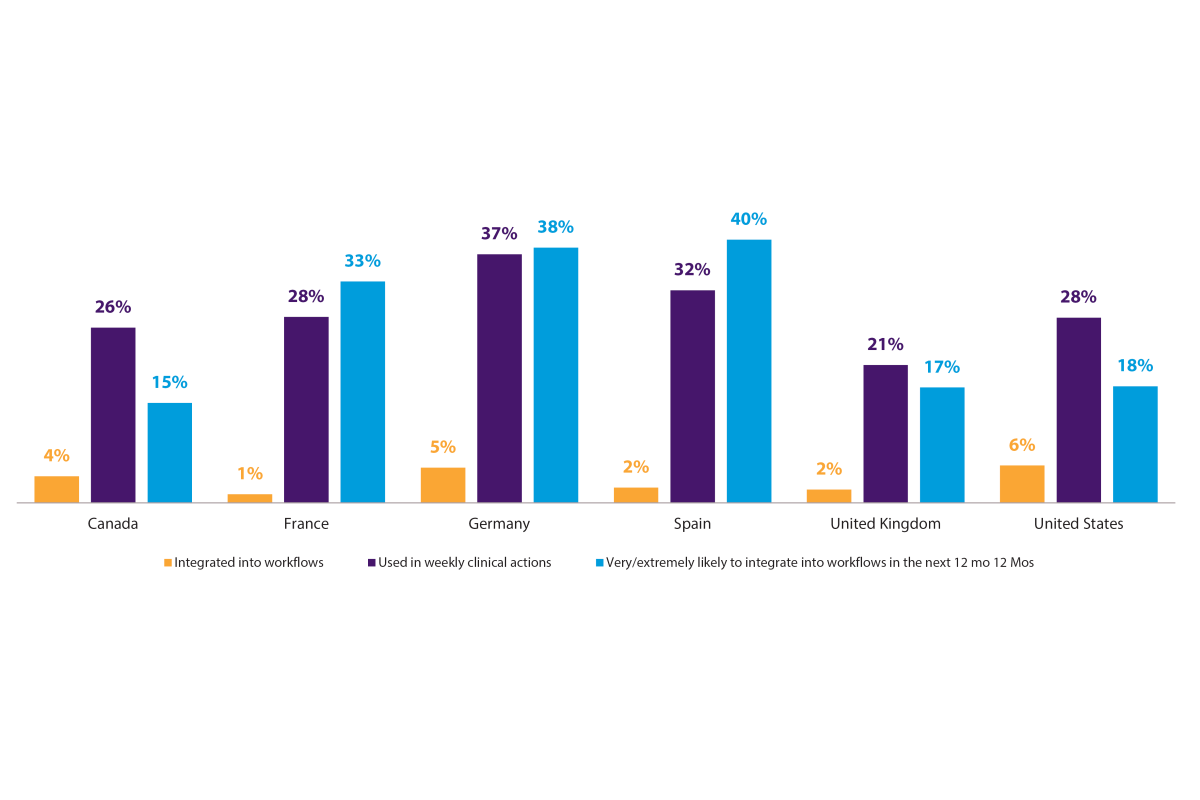
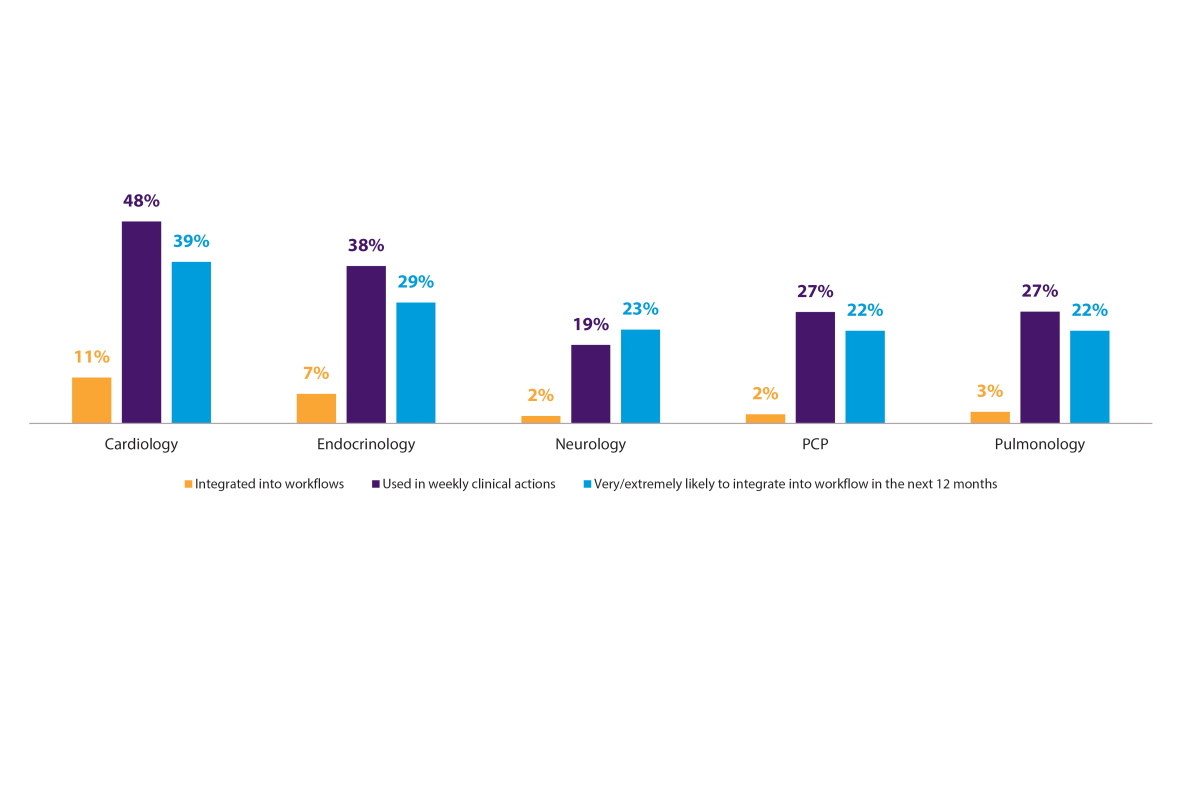
The six-country comparison makes clear that neither physician motivation nor patient demand is the primary factor separating countries where wearable data integration is advancing from those where it remains stalled. The share of physicians currently integrating wearable data into clinical workflows does not exceed 6% in any country, but the variation in who is moving toward integration and how quickly is closely tied to structural conditions. The environment—including payment mechanisms, regulatory frameworks and workflow infrastructure—shapes what is possible even when intention is present.
- Figure 6, Data are used for clinical actions despite lack of full workflow integration
-
Multiple, interacting conditions influence integration into clinical practice
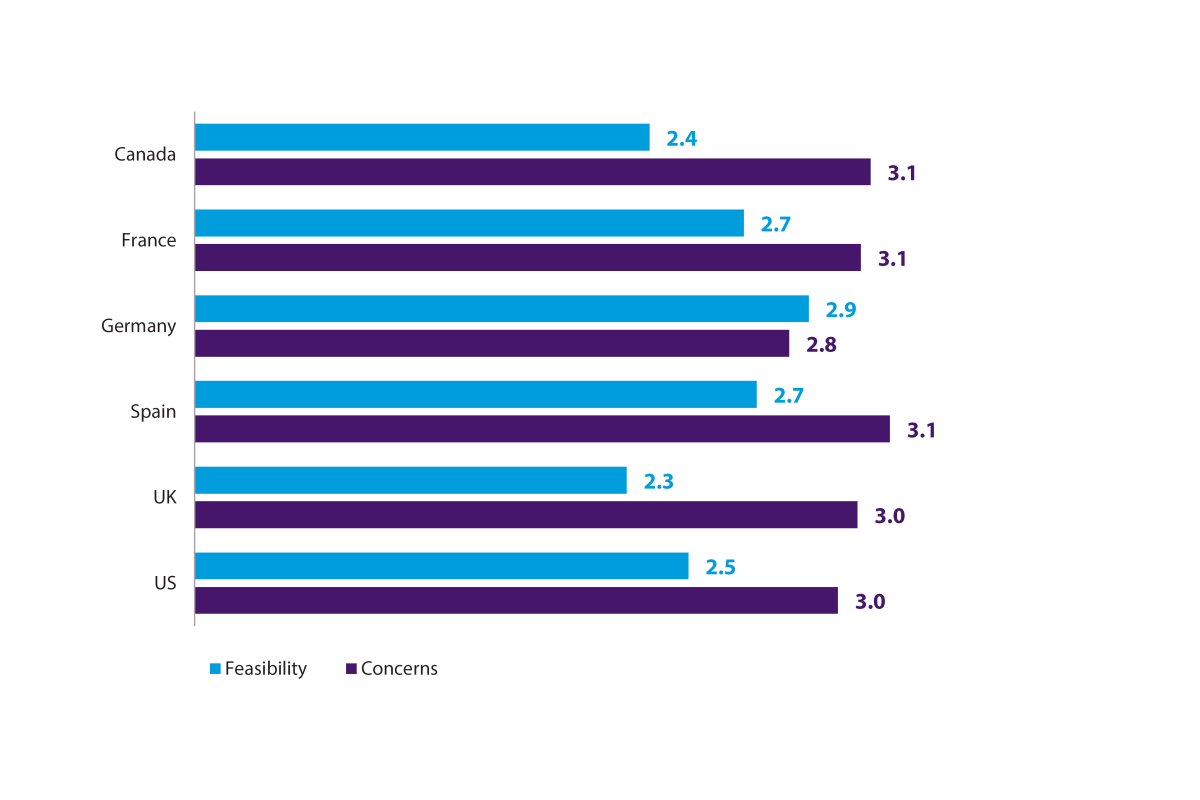
Across the six countries surveyed, integration readiness is a product of multiple, interacting conditions, including payment support, liability clarity, evidence confidence and workflow feasibility, among others, and that addressing any one condition in isolation is unlikely to move the needle broadly.
- Figure 8, Concerns outweigh optimism for feasibility in all countries but Germany
-
Moving physicians toward integration requires investment in implementation, concern resolution, data credibility and practical skills
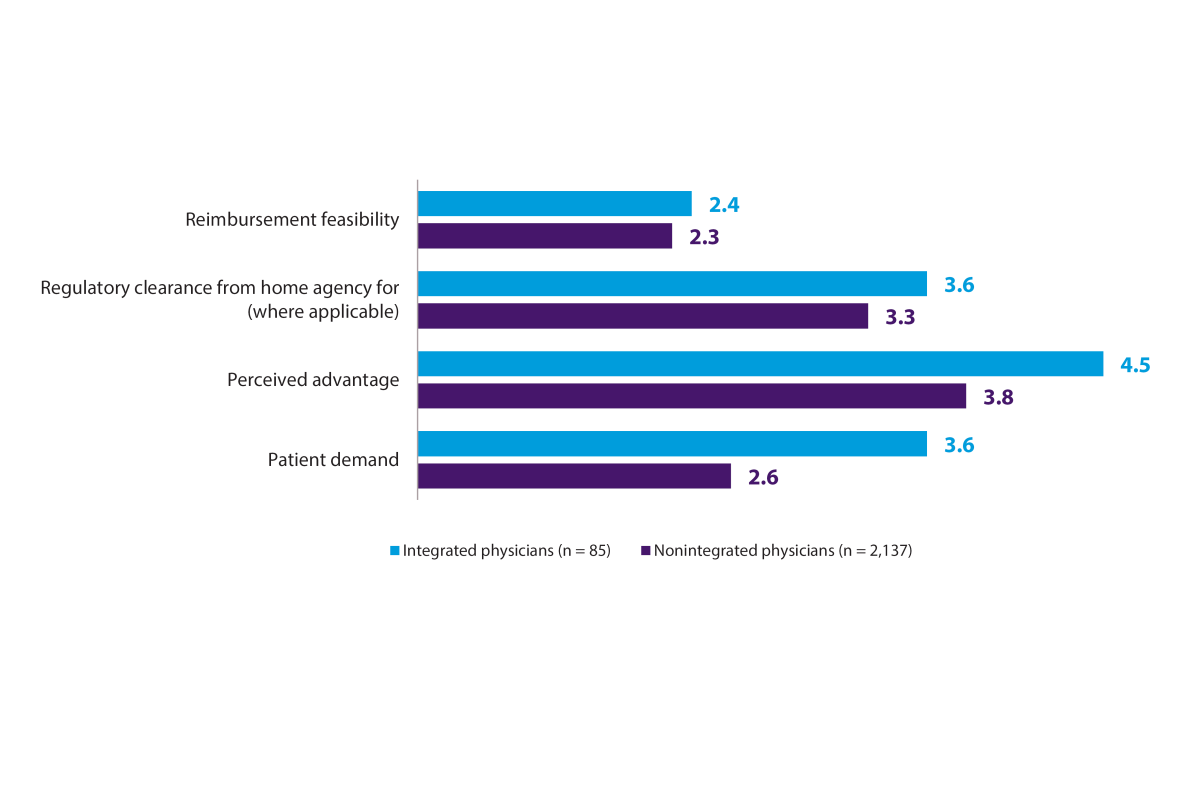
Physicians who said they have already integrated wearables data into clinical workflows and those who haven’t look similar on awareness, interest and regulatory trust—those are not the dividing factors. Instead, they are about clinical skills, data credibility and unresolved implementation concerns. Integrated physicians rate the clinical advantage of wearable data higher than their non-integrated peers and report meaningfully stronger patient demand, but the two groups are nearly identical on regulatory trust and reimbursement influence. What differentiates them is interpretive confidence, trust in data accuracy and lower levels of concern about false positives, liability and workflow burden.
- Figure 16, Perceived advantage sets wearables-integrated physicians apart—regulatory trust and reimbursement do not
-
Specialty remains an important second lens
Specialty shapes both how often physicians engage with wearable data and how much clinical value they see in it. Cardiologists and endocrinologists review wearable data more often and in more clinically relevant categories than other groups. Primary care physicians, neurologists and pulmonologists are also engaging with wearable data, but they report more limits in relevance, confidence or practicality.
- Figure 20, Workflow integration aligns with use of data for clinical actions
-
Related resources