When Natalie Davis, MD, co-founded PreventScripts—a digital platform that empowers patients to partner with their primary care providers on doable steps to achieve lasting behavior change—she was like many other physicians. While she ran her own practice for seven years, she had little experience in starting a new healthcare business venture. But, also like most other physicians, she had a drive to improve the healthcare experience.
“I have always been an independent thinker,” said Dr. Davis, also the chief medical officer at PreventScripts. “If you ask anybody about me, they would say I have always marched to the beat of my own drum, and I think of that as a good thing. That independent thinking has given me a problem-solving approach, a curiosity about breaking down complex issues into fundamental truths and building something new out of those foundational facts.”
The facts that drove her to start PreventScripts were apparent immediately after she returned to her native Western Kentucky following nearly a decade in pediatrics practice and consulting in Missouri and California.
“What really struck me was lifestyle disease. A friend of my brother's from high school died suddenly of a heart attack, and then I looked around and saw that unchecked metabolic disease had ballooned since I was gone,” she said.
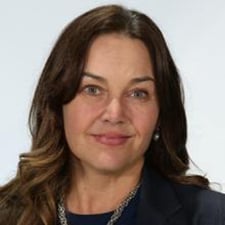
It wasn’t a giant leap to think that mobile technology could play a role in addressing the problem. Dr. Davis had been dubbed “the first iPhone doctor” by a writer for MobiHealthNews in 2009 for using cloud-based practice software to shift from a clinic-based practice to doing house calls.
“So the early thinking was what if we utilized this amazing mobile technology so doctors could help their patients self-track and be an accountability partner for the patient,” she said.
PreventScripts now has three key programmatic components: healthy weight through educational programming and connected scale technology; hypertension prevention through digital self-monitored blood pressure; and GLP-1 support that pairs lifestyle changes with weight-loss medications and side-effect management. PreventScripts’ previsit patient assessment stratifies the population and tees up eligible patients in clinic for enrollment. The platform features a patient app, a patient kit and reports in the physician’s EHR.
The company has achieved significant clinical outcomes across a cohort of more than 50,000 patients under contract, including clinically significant weight reduction, blood pressure reduction of 12% and A1C reduction of 1.4 points. The company is now in the seed stage of funding, with $2 million in venture capital.
And now Dr. Davis wants to help other physician entrepreneurs achieve their dreams of transforming the healthcare ecosystem.
In an interview in advance of her presentation at the AMA Physician Entrepreneur Forum, Aug. 7–8 at the Association’s Chicago headquarters, she detailed the three rules she thinks every aspiring physician entrepreneur should follow to get their ideas off the ground.
The AMA Physician Entrepreneur Forum will feature more than a dozen healthcare leaders who have built successful businesses, practices and ventures. Learn more and register now.
Rule No. 1: Solve a real problem
“It needs to be a problem that truly matters,” Dr. Davis said, noting that the most successful digital health companies are born of a deep understanding of pain points.
“When I started PreventScripts, we picked the biggest problem there is: metabolic condition intervention from age 13 to 74. That’s the full monty,” she said. “We thought about doing only teenagers, but that's a tiny little market.
“We came to market in family medicine clinics because family medicine doctors are seeing all of these patients, and they're seeing them upstream. To me, that is the real opportunity—to get to these patients before they're in the age of Medicare.”
Rule No. 2: Do the selling yourself
“Hiring for sales too early, when you don't understand exactly how long your sales cycle is, is a terrible problem to create for yourself as an entrepreneur,” Dr. Davis said. “The founding team—you, your CEO, chief medical officer—those are going to be your best salespeople. They bring passion, credibility and firsthand knowledge, and those are assets in building trust, in closing deals.”
She and PreventScripts’ CEO, Brandi Harless, closed all of the company’s early deals, she said. Dr. Davis has also joined Scrub Capital, a healthcare venture capital firm, as a part-time limited partner.
“Now, when I'm vetting deals at Scrub, I'm looking for pre-seed and seed-stage companies. We expect founders to be closing their first five to 10 deals,” she said. “You need to be hands-on with early customers. You need to be learning from them, and you need to learn about the market. It helps you refine your product and your pitch. You're building relationships that are going to shape your company's future.”

Rule No. 3: Know your stakeholders
“Healthcare is a multistakeholder environment. You need to understand the needs, incentives and pain points of patients, providers, payers and regulators,” Dr. Davis said, noting that healthcare has five major market segments: consumers, pharmaceutical companies, employers, payers and physician practices and healthcare organizations—but each of those has many types. That makes it essential to home in on your specific market.
For example, are you looking at specialists or primary care physicians? Ambulatory or inpatient? Employed or independent?
“You really have to define an ideal customer profile—that is really critical—and you need to understand not only that, but who the users of your product are. In our case, patients use our product; physicians and health professionals use our product; and the C-suite uses our product because we have a revenue-cycle piece. And you have to have a feedback system in play for each of those."
Get to know these touchstone texts
Dr. Davis frequently gets asked what she has read to get up to speed on physician entrepreneurship, so she made a list. You can find it on the resources page her website.
“It has every book that I’ve read over the last decade,” she said.
Learn more about how PreventScripts works for physicians and other health professionals.