As a medical student, do you ever wonder what it’s like to specialize in infectious diseases? Meet Amy Duckro, DO, MPH, an infectious diseases physician and a featured doctor in the AMA’s “Shadow Me” Specialty Series, which offers advice directly from physicians about life in their specialties. Check out her insights to help determine whether a career in infectious diseases might be a good fit for you.
The AMA’s Specialty Guide simplifies medical students’ specialty selection process, highlight major specialties, detail training information, and provide access to related association information. It is produced by FREIDA™, the AMA Residency & Fellowship Database®.
Learn more with the AMA about the medical subspecialty of infectious diseases.
“Shadowing” Dr. Duckro
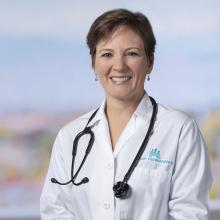
Specialty: Infectious diseases.
Practice setting: Group practice.
Employment type: Employed by Colorado Permanente Medical Group, which is part of Kaiser Permanente. Colorado Permanente Medical Group is part of the AMA Health System Member Program, which provides enterprise solutions to equip leadership, physicians and care teams with resources to help drive the future of medicine.
Years in practice: 22.
What the physician specialty of infectious diseases is: I love the specialty of infectious diseases (ID) because it involves every organ system. We collaborate routinely with specialists in almost every field. There are also so many unique potential pathogens—viruses, fungi, bacteria, mycobacteria and parasites. ID is very methodical and requires attention to detail. Finding the right diagnosis necessitates a thoughtful, systematic approach. There is always something ID-related unfolding in the world—Lyme disease, COVID-19, a salmonella outbreak, Ebola, Hantavirus, etc.
A typical day and week in my practice: My work has evolved during my career. Completing my master’s degree in public health allowed me to explore additional opportunities within my field. I currently work part-time in clinical care and part time as executive director of population management at Kaiser Permanente.
In my clinical role, I see patients in the hospital and in clinic. Hospital-based work is interesting because it often involves reviewing events that took place in the hours, days, weeks or even months before we are seeing the patient. We are frequently called when teams need help figuring out why a patient has a fever or a lab abnormality, or how a bacteria ended up in a patient’s bloodstream. In the clinic, our longitudinal practice is mainly comprised of patients living with HIV. We also see people who are sick after traveling, have FUOs (fever of unknown origin), or who are being seen in follow up from the hospital, such as those who have bone or joint infections.
In my administrative role, I lead process improvement work aiming to improve cancer screening rates, diabetes management, or improve vaccine uptake for large populations of people. I partner with colleagues to initiate programs, understand barriers to care, track outcomes and make ongoing modifications based on our rates of success. With Kaiser Permanente’s integrated care model, while specialists contribute to a patient’s health through their particular area of expertise, they are also part of a “whole person” care team and contribute actively to support a patient’s comprehensive well-being.
I find both aspects of my work satisfying. The roles complement each other well and each provides balance and perspective to the other.
My week usually includes a mix of clinical days—seeing patients in clinic or the hospital—and administrative days where I work with others to develop programs that improve the quality or safety of patient care. Our clinical service takes overnight call and covers the hospitals on weekends. Weekends can be tiring, especially when you are covering multiple hospitals, not only because of the patient volume but also because of the driving. In some ways, the clinical work has more boundaries, whereas the administrative work is never “done” because there is always something to address. It’s important to set limits and learn to prioritize (I’m still working on it!) or else you’d feel underwater constantly.
The most challenging and rewarding aspects of infectious diseases: The clues about what is driving an illness are not always obvious. It can take several conversations and iterations of testing to find out the cause. For example, a diagnosis can remain elusive in a patient who is experiencing recurring fevers or episodes of generalized malaise, even with extensive evaluation.
There are also times when there is not a satisfying answer for a patient about why something is happening or how to best manage it. For example, there is not good data on why or for how long patients experience symptoms after a viral illness, but we know they can and that the symptoms can be disabling. This can be frustrating for everyone. In these cases, using tools of good listening and expressing empathy can help a patient feel supported and better able to process what is happening.
Having a long-standing relationship with a patient where they feel supported, cared for, and seen is extremely rewarding. Being trusted to be with them in the most stressful and scary moments of their lives is an honor and a privilege. In the case of HIV infection, walking with someone through feelings of fear, shame, and uncertainty at the time of diagnosis, to then initiating treatment and seeing their labs stabilize, and further to see them living their lives with a sense of normalcy is gratifying. In my administrative role, it’s amazing to work on a project and know it can positively impact hundreds of thousands of people.
The impact burnout has on infectious diseases: As in many areas of medicine, infectious diseases physicians experience burnout, especially following the significant demands of the COVID-19 public health emergency. ID physicians are now navigating growing public skepticism around prevention and vaccination. Because successful public health programs often prevent diseases from occurring, their value can be overlooked. When support declines, preventable infections may reemerge.
How Colorado Permanente Medical Group is reducing physician burnout: Acknowledging the realities of burnout is an important component of addressing it. Our organization discusses signs of burnout and reinforces ways to reduce its impact. Fostering a sense of shared purpose and community is a valuable strategy.
While the health system can raise awareness and provide resources, it’s important that we as individuals continue to be mindful of how we are doing at any particular time in our careers and also check in with colleagues. Only by staying attentive to the signals of burnout can we take steps to manage the reality of this risk.
How my lifestyle matches, or differs from, what I had envisioned: Medicine is a profession, so there are inherent sacrifices. This said, where you choose to work—private practice, employer group, small or large group—can make a difference in the flexibility you have to define what is important to you. Creating time for things that bring you joy is critical to avoiding burnout and finding balance.
Skills every physician in training should have for Infectious diseases but won’t be tested for on the board exam: By nature, ID attracts people who are patient, reflective and methodical. In large part, many medical fields have a “type.” What is important to all specialties that isn’t tested, though, is good listening (listening to understand), expressing empathy and collaborating respectfully with colleagues. I highly recommend that even people who feel they have these skills take a class to help further them. There is so much to learn about caring for people, considering the complexity of human emotions and reactions.
One question physicians in training should ask themselves before pursuing infectious diseases: There are many directions a career in ID can go, which makes it very appealing. It’s fun to explore different iterations within a career and it can help to stave off burnout related to mundanity. Unfortunately, we’ve seen a decline in applicants to specialize in infectious diseases, which is said to be in part due to ID salaries being lower than those of other medical specialties, as we are not proceduralists.
I would encourage anyone interested in ID to not let income be a barrier. You want to land in a place that feels energizing and meaningful to you that will sustain you for decades.
Books, podcasts or other resources every medical student interested in infectious diseases should be reading: Reading about the HIV epidemic in its early years is powerful and gives context to the fear and stigma patients with HIV experience, the intensity of the pain the ID community endured with the deaths of so many otherwise healthy people, and the challenges of early treatment regimens with pill burden and toxicity. An example of this is AIDS Doctors: Voices from the Epidemic by Gerald Oppenheimer, PhD, MPH, and Ronald Bayer, PhD.
Infectious disease specialists also care for many patients who are marginalized or vulnerable for various reasons, and for conditions that are “neglected” or that proliferate where there is resource scarcity. For this reason, additional background in social determinants of health and the impact of power and economics in maintaining inequalities in health is valuable. Infections and Inequalities by Paul Farmer, MD, PhD, is a staple.
Another leader in this field is Peter Hotez, MD, PhD. I haven’t read his book Forgotten People, Forgotten Diseases: The Neglected Tropical Diseases and their Impact on Global Health and Development but it’s on my list.
A recent New York Times bestseller is Everything is Tuberculosis: The History and Persistence of Our Deadliest Infection by John Green.
One I really enjoyed reading was Mama might be better off dead: The Failure of Health Care in Urban America by Laurie Kaye Abraham, about the struggles people in underserved communities have in navigating healthcare in the U.S.
Additional advice I would give to students who are considering infectious diseases: ID is a fascinating field, always on the forefront, always evolving. If you are interested in ID, try to connect with physicians in the field to learn more. You’ll be intrigued by the diversity of work we do!