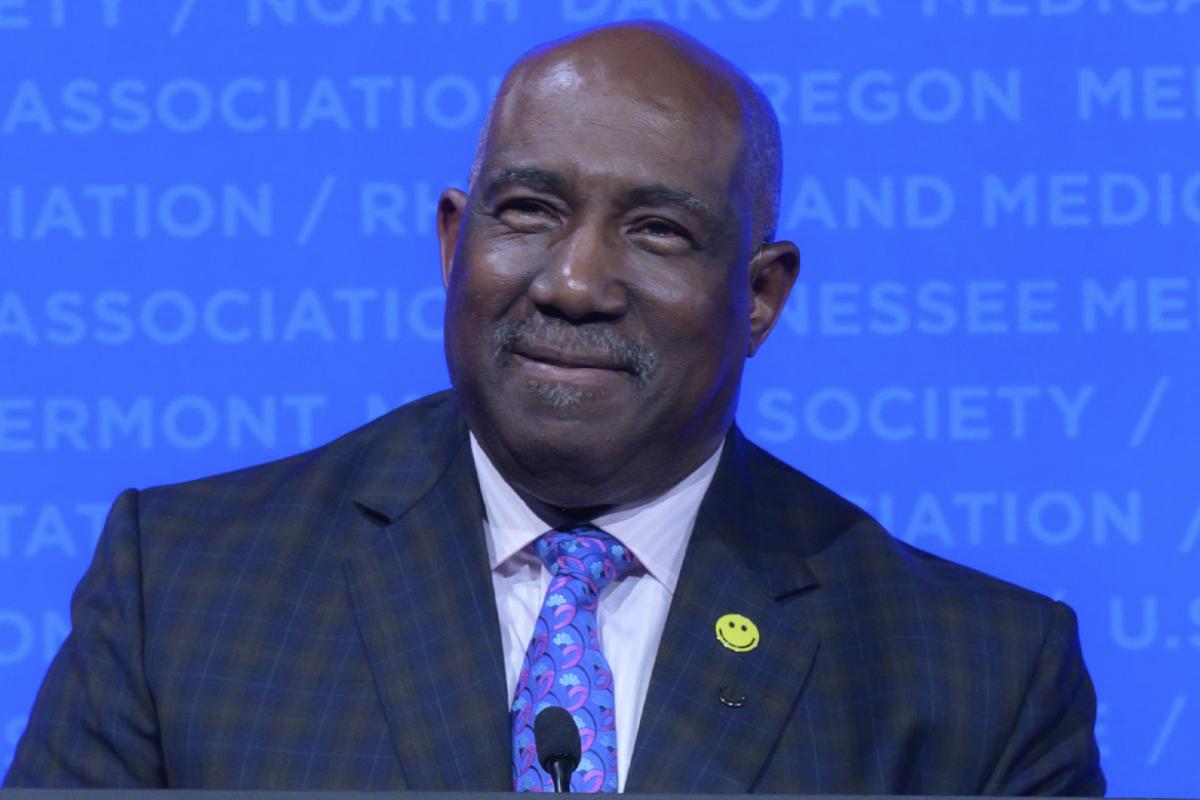
ORLANDO – At the Interim Meeting of the American Medical Association (AMA) House of Delegates, physicians and medical students adopted new policies to improve the health of the nation.
The policies include:
AMA calls for firearm manufacturers to help pay costs of gun violence
The AMA is calling for firearm manufacturers to share responsibility for the health and financial costs of gun violence.
Under policy adopted Monday, firearm manufacturers would contribute financially to the costs associated with firearm injuries and deaths. Supporters compared the approach to efforts involving opioid and tobacco manufacturers, who have been held financially accountable for harms associated with their products.
Funds raised through such payments would support evidence-based violence prevention efforts and services for people and communities affected by gun violence.
Firearm injuries are a leading cause of death among children and teens, and firearms are the most common and lethal method of suicide. Gun violence also imposes enormous costs on patients, hospitals and taxpayers, while disproportionately affecting minority communities and people covered by Medicaid or who are uninsured. The AMA has long recognized gun violence as a public health crisis.
“Firearm violence is a public health crisis whose heart-breaking consequences are borne by patients, families, communities and taxpayers,” said AMA Board of Trustees member Melissa J. Garretson, MD. “Firearm manufacturers should share responsibility for those costs. Requiring them to contribute can help fund evidence-based prevention efforts and encourage greater investment in firearm safety.”
Ensuring transparency of AI use in medical education assessments and admissions
With the growing use of Augmented Intelligence (AI) in medical education learner assessments, medical school admissions and residency and fellowship selection, the AMA adopted policy aimed at keeping humans in the loop and promoting fairness, accountability, and transparency in how the technology is used.
Many schools and programs are already using AI in examinations, for tasks such as generating multiple-choice questions and for analyzing learner performance. However, a lack of clarity about the role of AI in assessment and grading can lead learners to distrust the process or alter how they develop their answers. The AMA’s new policy supports risk-proportionate transparency on the use of generative AI, as well as meaningful human review in developing and using assessments for learners across the medical education continuum—including medical students, residents and fellows, and practicing physicians participating in continuing medical education and continuing board certification.
AI-based tools are also increasingly being integrated into medical school, residency and fellowship application review, including holistic file analysis, interview evaluation and predictive ranking systems used to assist admissions committees and residency selection programs. The AMA’s new policy supports promoting fairness, accountability, and due process related to the use of AI in the application processes for medical school, residency and fellowships.
“AI has the potential to help faculty manage a growing volume of applications and assessments of physicians-in-training and in practice, but it should support, not replace, human judgment in decisions that shape a physician’s career, and it is imperative that there is transparency for learners and prospective learners when AI is used to evaluate them. Applicants and learners deserve access to meaningful human review, reevaluation, and appeals processes to ensure fairness, due process, and equity. As the AMA develops guiding principles in this area, we will focus on guarding against bias so these tools widen opportunities in medicine,” said AMA Board of Trustees member Amar H. Kelkar, MD, MPH.
Eliminating added fees for international medical graduates taking exams outside the U.S. to ease physician workforce shortages
International Medical Graduates (IMG) play a vital role in patient care across the U.S., helping address physician shortages, often in rural and medically underserved areas. International medical students and graduates who take the United States Medical Licensing Examination (USMLE) at testing centers outside the U.S. and Canada are assessed substantial international test delivery surcharges in addition to standard registration fees, creating a financial barrier for physicians-in-training seeking to enter the U.S. healthcare workforce. The AMA adopted policy aimed at easing this financial burden to help support the physician pathway.
Under the new policy, the AMA will advocate with the National Board of Medical Examiners, the Federation of State Medical Boards, and Intealth ECFMG to establish fee parity between domestic and international test-takers for all USMLE examinations by eliminating geographic test-delivery surcharges. The AMA will also work with testing sponsors to ensure that any restructuring of the USMLE scheduling—including fixed exam administration windows and international center expansion—is implemented with transparent, standardized cost structures that do not disproportionately penalize candidates testing outside the U.S.
“Exam fees should not differ based on testing location. As the U.S. continues to face physician shortages, we should be doing everything we can to eliminate—not create—barriers for qualified physicians and physicians-in-training to join the U.S. physician workforce,” said AMA Board of Trustees member David J. Welsh, MD, MBA.
Media Contact
About the American Medical Association
The American Medical Association is the physicians’ powerful ally in patient care. As the only medical association that convenes 190+ state and specialty medical societies and other critical stakeholders, the AMA represents physicians with a unified voice to all key players in health care. The AMA leverages its strength by removing the obstacles that interfere with patient care, leading the charge to prevent chronic disease and confront public health crises and, driving the future of medicine to tackle the biggest challenges in health care.