If you’re preparing for the United States Medical Licensing Examination® (USMLE®) Step 2 exam, you might want to know which questions are most often missed by test-prep takers. Check out this example from Kaplan Medical, and read an expert explanation of the answer. Also check out all posts in this series.
A 55-year-old man is brought to his physician because of a feeling of pressure and fullness on the left side of his abdomen. He has also had a gradual onset of fatigue. On physical examination, his spleen is 6 cm below the left costal margin and firm.
In addition, the liver edge is palpable below the right costal margin; there is no adenopathy. A complete blood count shows a hematocrit of 27% and a white blood cell count of 3,800/µL with 2,200 neutrophils/µL and 50 monocytes/µL. The lymphocyte count is normal. Platelet count is 60,000/µL.
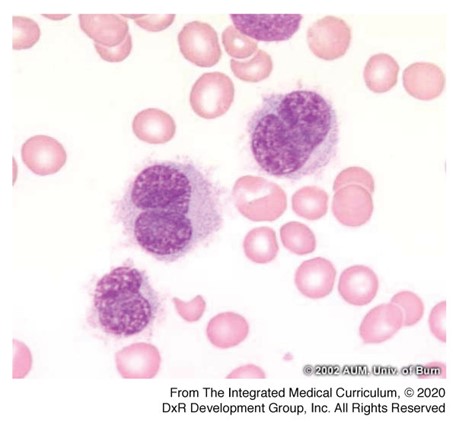
A bone marrow aspirate is unable to be obtained and the findings from a subsequent bone marrow biopsy is shown. The cells express the CD11c and CD22 antigens on immunophenotyping.
Which of the following is the most likely diagnosis?
A. Aplastic anemia.
B. Fanconi anemia.
C. Hairy cell leukemia.
D. Non-Hodgkin lymphoma.
E. Waldenstrom macroglobulinemia.
The correct answer is C.
Kaplan Medical explains why
This patient has abdominal fullness due to splenomegaly, pancytopenia and bone marrow fibrosis with biopsy examination significant for “hairy cells” that are positive for characteristic surface markers. The patient most likely has hairy cell leukemia.
Why the other answers are wrong
Choices A and B: Aplastic anemia and Fanconi anemia would both present with pancytopenia as in our patient. In aplastic anemia, the bone marrow is hypocellular and the other findings with respect to hairy cell leukemia are absent. Fanconi anemia is congenital pancytopenia associated with certain dysmorphic features that presents in the first 10 years of life.