As a medical student, do you ever wonder what it's like to specialize in abdominal transplant surgery? Meet AMA member Jenny Ngo, MD, an abdominal transplant surgery subspecialist and a featured doctor in the AMA's “Shadow Me” Specialty Series, which offers advice directly from doctors about life in their specialties. Check out her insights to help determine whether a career in abdominal transplant surgery might be a good fit for you.
The AMA's Specialty Guide simplifies medical students' specialty selection process by highlighting major specialties, detailing training information and providing access to related association information. It is produced by FREIDA™, the AMA Residency & Fellowship Database®.
Learn more with the AMA about the medical specialty of general surgery.
“Shadowing” Dr. Jenny Ngo
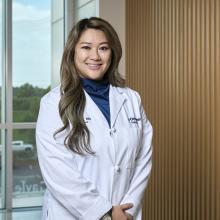
Subspecialty: Abdominal transplant surgery.
Practice setting: Group practice in a hospital.
Employment type: Employed by Ochsner Health, in New Orleans. Ochsner Health is part of the AMA Health System Member Program, which provides enterprise solutions to equip leadership, physicians and care teams with resources to help drive the future of medicine.
Years in practice: One.
What the specialty of abdominal transplant surgery is: Abdominal transplant surgeons have the privilege to care for patients at all stages of the transplant process in a multi-disciplinary teamwork setting. At Ochsner, I specifically work with both the pediatric and adult patient populations with respect to kidney transplantation, pancreas transplantation, liver transplantation, and hepatobiliary conditions.
We get to perform surgeries including not only organ transplantation but also organ recovery from deceased donors and live donor operations. Transplant Surgery provides an unparalleled opportunity to combine technically challenging surgeries with complex medical management in a multidisciplinary team environment. Each combination of donor and recipient is unique which essentially means there is never a mundane case in transplant!
A typical day and week in my practice: I am very fortunate that our group practice is set up so that we rotate every week on a different service or role. Examples of different weeks include liver transplant surgery, kidney transplant surgery, donor surgery, hospital rounds and clinic. Depending on its service, each week will vary in terms of its predictability and time requirement. For example, a liver transplant can take on average between five and eight hours and a kidney transplant can take between three and five hours. On average, we have at least 24 hours notice before a surgery will occur due to the logistics and testing required prior to a transplant taking place. Because of the unpredictable nature of donor availability, surgical weeks can be light or extremely busy. However, our practice is balanced because a clinic week is very predictable and can consist of three to four full days, meaning daytime hours.
In a typical day in a liver transplant surgery week, if I have a donor liver on machine perfusion overnight, I will check its labs/function around 5 to 6 a.m. and confirm with the operating room that we can proceed with surgery around 7 a.m. If straightforward, the surgery should be done by midafternoon, after which I will update family and touch base with my procurement team about any pending liver organ offers. For the rest of the day, I will follow up on my postoperative patient’s progress and also perform any reoperations needed by other liver transplant recipients. Depending on the day of the week, there may also be regularly scheduled meetings, such as selection committees or patient discussions.
The most challenging and rewarding aspects of abdominal transplant surgery: Considering organ offers is one of the most challenging aspects of our specialty. Using available information about the donor and recipient, we try to make the most informed decision about whether an organ is a good match for a patient and if the organ will ultimately function well. Despite our best intentions, complications and poor outcomes can still happen. How I personally try to guide these decisions is to ask myself if this is an organ I would offer a loved one. If it is, I will proceed with the offer and discussion with the patient.
The most rewarding aspect is how grateful transplant patients and their families are for the care they receive. The changes in their quality of life before and after transplant are drastic and immediate. Our patients trust us unconditionally during their most vulnerable time, making it the utmost privilege to care for them.
The impact burnout has on abdominal transplant surgery: I believe burnout exists especially in our field because of high stress (both inside and outside of the operating room), long and technically challenging surgeries, medically complicated patients and lack of schedule control, with unpredictable surgery times, long cases and call burden.
How Ochsner Health is reducing physician burnout: I am fortunate that Ochsner prioritizes physician well-being and is a national leader in this space. Our culture emphasizes not only taking care of patients but also taking care of each other, and this is heavily reflected in our group practice.
In addition, I believe our field is generally making technological advances that secondarily benefit the burnout rate. For example, the advent of machine perfusion has allowed for more control over logistics and timing of surgeries, thus reducing unpredictability.
How my lifestyle matches, or differs from, what I had envisioned: When I chose medicine, I chose surgery. With this goal in mind, I sought to learn and experience as much as I could during medical school to have the clearest expectations possible. My advice is for medical students, especially those who have yet to choose a specialty, to enter every rotation with this mindset. I am fortunate that my group practice prioritizes family and individual wellness. This is something I would advise all medical trainees to seek in their job pursuits.
Skills every physician in training should have for abdominal transplant surgery but won’t be tested for on the board exams: Patient and family communication are especially important in this specialty. Unfortunately, difficult conversations are commonplace and often occur in a multidisciplinary setting.
We frequently find ourselves discussing goals of care and end-of-life decisions with critically ill patients who never make it to transplant. Also, we may have difficult organ offers to consider and therefore need to discuss with patients and their families their options and possible outcomes to see what their goals and priorities are. Furthermore, transplant surgery is both technically challenging and specific with regard to the possible complications and ensuing life changes, which makes thorough conversations for informed consent essential.
One question physicians in training should ask themselves before pursuing abdominal transplant surgery: I would advise students to ask themselves these questions about every rotation they are on or specialty they are considering:
- What do I love about this field? Can I live without it?
- What do I hate about this field? Could I live with it?
Books, podcasts or other resources every medical student interested in abdominal transplant surgery should be reading or listening to:
- The Headlines in the New York Times. This is a brief, seven- to 10-minute daily podcast with the latest news to keep you in touch with and aware of things happening in the world outside of the hospital.
- The “Behind the Knife” podcast. It contains high-yield educational material for all levels, invaluable board review and updates on advances in all surgical fields.
- A podcast or book genre of your own personal choice not related to healthcare. This is extremely important for your well-being. It is an opportunity to mentally de-load from the rigors of healthcare. For example, I listen to podcasts about pop culture, wellness/fitness and personal finance, and I read fantasy and nonfiction biopic novels.
Additional advice I would give students who are considering abdominal transplant surgery: I chose transplant surgery fairly late in my training—fourth year of general surgery residency—and I made that choice solely because of my faculty during that rotation, who became a mentor and reminded me why I loved and chose general surgery.
I mention this because students should stay open-minded and realize that their passion may not always be evident or obvious early on. It may take another person to see that passion and talent within you. Ultimately, I dedicated my career to this specialty because this is how I want to help patients, so I would encourage students to ask themselves: How do you want to help people?