The transition can feel abrupt—one moment, you are a resident physician nestled in a group of fellow trainees. The next, you have graduated and are beset by new responsibilities and increasing demands.
There are no more “ask the attending” moments when you’re the attending.
“There's a real shock that hits you” in these transitions into and out of medical training, said Jerry P. Abraham, MD, MPH, CMQ. Dr. Abraham is a family and community medicine physician and director of public health, integration, street medicine and workforce development at Kedren Community Health Center, a federally qualified health center and acute psychiatric hospital in South Los Angeles, where he also teaches psychiatry and family and community medicine at Charles R. Drew University of Medicine and Science.
“Now you are responsible, and you will be held responsible. You feel that gravity,” Dr. Abraham said.
The transition to practice doesn’t have to be quite so destabilizing, though, if you work on building your confidence during residency, said Dr. Abraham, who is also an active AMA member and the immediate past chair of the AMA Council on Constitution and Bylaws and has served as a mentor to trainees in the AMA Foundation’s Leadership Development Institute for the past several years.
“The clock is ticking, and I try to remind trainees to just soak it all up, get as many experiences” as you can. It’s also important to “find what you love, find what you're passionate about in this work,” both where you thrive and where you don’t.
With that in mind, physicians who have been there discussed some of the ways they developed the confidence during residency to push back against the interior monologue that sometimes whispers that you’re not ready to be an attending.
Exiting residency, entering a new world
The internship year can be tough for new physicians. Similarly, the first year out of residency or fellowship training requires another shift—in mindset, in approach and in practice.
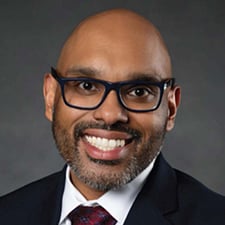
“When you start, it can feel very lonely,” Dr. Abraham said. “You have been a part of a cohort from the minute you were accepted into medical school. You've always felt like a part of a big group or family. You're part of a residency class, a fellowship class. You have attendings, you've got people looking out for you. You've got resources that you're not going to have in the real world, like perhaps access to a behavioralist or psychotherapy or counselors to program and admin staff. Those things all disappear overnight.”
It is vital that you remember, therefore, that you are not the only one who has felt that way in the early years out of training. All physicians, to some extent, go through moments that can feel like a crisis of confidence.
“You will get through this and everything will be OK,” Dr. Abraham stressed. “I think it's good to have some of those existential moments. It's good to remind ourselves why we're doing this. It's good to identify our weaknesses and keep continuously improving that. You have to believe you’ll figure it out.”
Prepare for the transition early
Physicians are not powerless, however, over their mindset during those early years after residency or fellowship. They can prepare themselves in a variety of ways, starting while they are in training. Taking on moonlighting shifts can help ease the transition, for example.
Adam Roussas, MD, MSE, is an emergency physician in Arizona who moonlighted in several locations during residency.
Dr. Roussas found it a rewarding experience, providing extra pay, helping him develop professional connections and serving as a confidence-building bridge between resident and attending status, particularly with external moonlighting.
“It was always validating to me to go and do that. It was this small taste of what I've been working towards for almost eight years, and I can do it. And I'm getting paid for it,” said Dr. Roussas, an AMA member. “Every moonlighting shift really is an educational opportunity while you're still in training. You go out and you have the shift, and then you can bring that [experience] back to your home institution.”
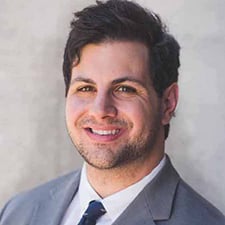
Explore more of Dr. Roussas’ advice on moonlighting during residency or fellowship.
Dr. Abraham said that residents who want more training also have other options.
“If you're not feeling ready, there are ACGME and non-ACGME fellowships that give you a little bit more time with training wheels on—for example, doing something like a faculty development fellowship or doing a fellowship in something that allows you to have some protected time, or even those chief resident years where it's an extra add-on year where you can flex your clinical independence,” Dr. Abraham said.
Learn more about how to decide if fellowship is right for you. And for those pondering their fellowship options, make use of FREIDA™, the AMA Residency and Fellowship Database®, which includes more than 14,000 Accreditation Council for Graduate Medical Education-accredited residency programs and offers a streamlined user experience.

Know what you already know
Part of defeating impostor phenomenon—commonly called “impostor syndrome”—in early career as a physician is reminding yourself how capable you already are.
“You do have to call upon those skills and remember: Wait, I was trained how to ride a bicycle. There are no training wheels. I can do this. And you've got to believe that and stick through that,” Dr. Abraham said, adding that “you have to remind yourself why you're doing it.”
Though “those first five years out of residency are really some of the most difficult times in medicine,” you will grow tremendously, he added. “I did feel like I learned the most during those first five years out. And in many ways, I did feel like I was still training, even though I had finished my formal training program. That's where I really picked up my stride and my style.”
Ultimately, he said, physicians should get comfortable with the fact that though they have been extraordinarily well-prepared, they will never know everything there is to know about medicine. And that is not only acceptable, but desirable.
“Part of the first five years or so years as an early-career physician, one of the most important things you can ingrain in yourself is that you are going to be a lifelong learner,” Dr. Abraham said. “That's the only way to be an effective, safe, quality physician who fulfills our social contract and obligations to the patient in the exam room as physicians but also to society.”