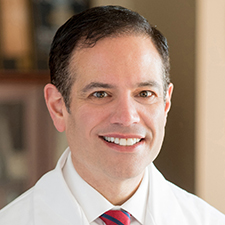
Most physicians don’t see being a doctor as a job. It's a way of life. At Henry Ford Health, the largest health system in Michigan, “we have always said that no matter how big we get … how do we grow but still maintain the heart of a family atmosphere?” said Steven Kalkanis, MD, executive vice president of Henry Ford Health and CEO of Henry Ford Hospital and the Henry Ford Medical Group.
Physician well-being is not a nice-to-have and something you do when all the other metrics are satisfied and you think, "OK, let's think about this,” said Dr. Kalkanis.
When you start with well-being, other key metrics that are so important to the lifeblood and functioning of an institution follow.
“Because if you have an engaged physician workforce, quality improves, outcomes improve, finances improve, access improves,” he said.
Henry Ford Health achieves those goals through physician-led enterprises while cultivating a strong work-life balance for its employees. Physicians want to come and be part of something larger than themselves, said Dr. Kalkanis.
“They don't want to check in and check out. They want to make a difference. They want to know about impact,” he said. “They want opportunities where they can see their careers flourish in the way that they want them to.”
Henry Ford Health maintains strong statistics in recruiting and retaining physicians because it offers multiple options on career paths while fostering a strong leadership program, he continued.
For those who want to be a nationally known expert in innovative design for a new therapy, a new clinical trial, or a new device, this is the place for you, Dr. Kalkanis emphasized. This is also true for physicians interested in teaching and academics, establishing community clinics and home-based care, and addressing social drivers of health.
“If you want to start here fresh out of residency and one day have an aspiration to become a chair or a hospital leader or any one of our executive positions, we have a very nationally known physician leadership institute,” said Dr. Kalkanis, a neurosurgeon who followed this trajectory 21 years ago when he first joined Henry Ford Health.
“I became chair of the department, and now I'm CEO of our medical group and our hospital,” he said.
While compensation is important, the health system needs to convey these other opportunities to prospective recruits, Dr. Kalkanis explained. “We want to make sure that we telegraph that Henry Ford Health is the place for ultimate career satisfaction, growth, and fulfillment.”
Henry Ford Health is part of the AMA Health System Member Program, which provides enterprise solutions to equip leadership, physicians and care teams with resources to help drive the future of medicine.
Focusing on physician well-being
It has also received Silver-level recognition from the AMA Joy in Medicine® Health System Recognition Program, which empowers health systems to reduce burnout and build well-being so that physicians and their patients can thrive.
Achieving this coveted recognition from AMA isn’t “just fluff,” said Dr. Kalkanis. “It's not an honorific designation. There are key metrics that involve physician engagement and satisfaction and this concept of discretionary effort.”
It recognizes Henry Ford Health’s commitment to address burnout, remove unnecessary, onerous administrative burdens and have support structures in place for mentorship. When life events happen, physicians feel like it's not just their employer or their workplace, “but it's truly their professional family that will take care of them,” he said.
As the leader in physician well-being, the AMA provides organizational solutions that help physicians and health systems optimize practice efficiency, reduce burnout, and rediscover the Joy in Medicine.

Building long-term careers at Henry Ford Health
Recruitment is not just about getting new people in, said Dr. Kalkanis. It’s about re-recruiting existing staff every year, every day.
“If you look across the country—and even within Henry Ford Health—our departments, programs, and service lines that are most successful have what we call the most cohesive social capital, but also discretionary effort,” he said.
You can pay people a salary, but you move the needle if people feel engaged and empowered and have a passion for showing up every day and making a difference, he added.
How do you get that discretionary effort from people? “You delight them. You preempt a concern if they have one, for instance, by being proactive, whether it's with compensation increases, which we try and stay ahead of,” Dr. Kalkanis continued.
It’s about making funds available for seed projects, programs and social events to bring people together and ensuring that support staff ratios are appropriate so that physicians feel that they can get through their day without an onerous administrative burden. These opportunities should also be available for physicians involved in research, teaching and academics.
“Even though we've had a 115-year history, the world is changing. And I remind our teams that what got us here may not get us to tomorrow,” said Dr. Kalkanis.
Just because Henry Ford Health has a successful model of one of the country's largest and most multidisciplinary medical groups, it's not one size fits all. One position in one department may have very different goals and sets of motivations than another, “and so we want to be able to be flexible in our structure,” he said.
Finding ways to improve work-life balance
One big catchphrase, of course, is work-life balance. For many physicians, that's 100% and 100%, so it never really balances out, Dr. Kalkanis acknowledged. However, it’s important not to gloss over that, because well-being and wellness are critical.
“We want to be a place that doesn't add unnecessarily to the stress, but thinks about ways, big and small, to make physicians feel like we've got their back,” he said.
This may come in the form of emergency childcare, safety-net support for younger doctors with younger families or making opportunities available for mentorship through the physician leadership institute.
Henry Ford Health has also had success with early augmented intelligence (AI) implementation and ambient listening in the clinic.
“People talk about how much more efficient we've been,” he said. It has saved costs, and physicians aren't spending as much time documenting and taking on administrative burden. They're spending more quality time with patients.
No patient wants to see their doctor turn 90 degrees with his or her head buried in a laptop, trying to get through the screen fields of documentation. With ambient AI, “we can go back to looking a patient in his or her eye and have a connection” with documentation happening in the background, Dr. Kalkanis explained.
This is also about improving well-being for doctors and reducing "pajama time," where physicians would run through a 10- or 11-hour day of clinic and then get home and stay up late at night doing chartwork and other tasks.
“The fact that people are home for dinner and they can enjoy their evenings … and have a life beyond the clinic, that's the real power of AI,” said Dr. Kalkanis. “Things like this resonate with physician teams and helps retain people over time.”
Shaping physician leadership opportunities
Henry Ford Health is a physician-led enterprise, meaning that all doctors from new hires to division heads, chairs, and physician executives come together on a regular basis to cut through the red tape and try to get to a solution.
“We have several leadership huddles that are meant to function in exactly that regard,” said Dr. Kalkanis.
Physician leadership is guiding the design of the Destination: Grand, the $2.2 billion campus expansion project at Henry Ford Hospital. The health system went from average to the best decile in the country for central line infections, specifically because of physician input over how to insert the lines in the intensive care units.
Additionally, physician leadership has improved the efficiency of rounding and patient flow.
“The list goes on and on, but we definitely value that input and, quite frankly, wouldn't be able to function without it,” said Dr. Kalkanis.
One particularly onerous administrative burden is the physician inbox. Patient and other team member requests often get dumped in one bucket without any organization.
This problem underscores another value of AI and having a multidisciplinary team to pre-sort these messages and single out high-priority items.
If people are working at the top of their license, whether it's medical assistants, nurses, physician assistants, or nurse practitioners, “it has the effect of the patient still getting an immediate response, but the physicians being much more efficient with their time,” said Dr. Kalkanis. “And that improves satisfaction for everybody.”
Previously, half the messages coming in from the outside would go directly to the physicians.
“Now we've cut that in half, to only about a quarter, 25%, because there are other ways to handle these questions,” he said. “We're continuously trying to make progress in that regard.”
Showing potential recruits life at Henry Ford Health
Younger physicians—the next generation coming up—are especially attuned to and concerned about well-being. But it’s often the case that they won’t ask about this during an interview.
“Because we want to preempt that, the best way we have is to just let them loose and show them our team,” said Dr. Kalkanis.
It’s one thing to talk about wellness and well-being, but it's quite another for potential recruits to walk into a clinic and see how teams flourish together and show respect for one another. This is the social capital that's built up over time between physicians, nurses, schedulers and administrative leaders, the “special sauce” Henry Ford Health cultivates, he said.
Dr. Kalkanis’ favorite part of the interview is when he invites people to go on a tour or have lunch. During this time, you "take them to the setting that they might be involved in, depending on which field they're in and so forth. And that often seals the deal on the recruitment,” he said.
Continuing to improve the patient-physician relationship
Healthcare is changing, and so is technology. There are unprecedented financial and reimbursement pressures. The expectation from patients is rising. All these things go into this “crucible of healthcare,” observed Dr. Kalkanis.
At the end of the day, there's only one thing that's going to make a difference: the sanctity of the patient-doctor relationship and having an institution where people feel that there's trust and everyone wakes up every day with the sole purpose of providing hope.
“You can only do that when physicians feel that they are part of an organization that has their backs,” said Dr. Kalkanis. “And that's what we try and convey to our board, to our executive teams every day.”